




- Medical Devices
- Cooling Therapy Devices Market
Cooling Therapy Devices Market Size, Share, and Growth Forecast, 2026 - 2033
Cooling Therapy Devices Market by Device Type (Cold Packs, Cryotherapy Units, Cooling Pads, Compression Systems), Application (Pain Management, Post-Surgical Recovery, Sports Injury Treatment, Inflammation & Swelling Reduction), End-Use (Hospitals, Physiotherapy Centers, Sports Centers, Personal Use), and Regional Analysis for 2026 - 2033

Cooling Therapy Devices Market Share and Trends Analysis
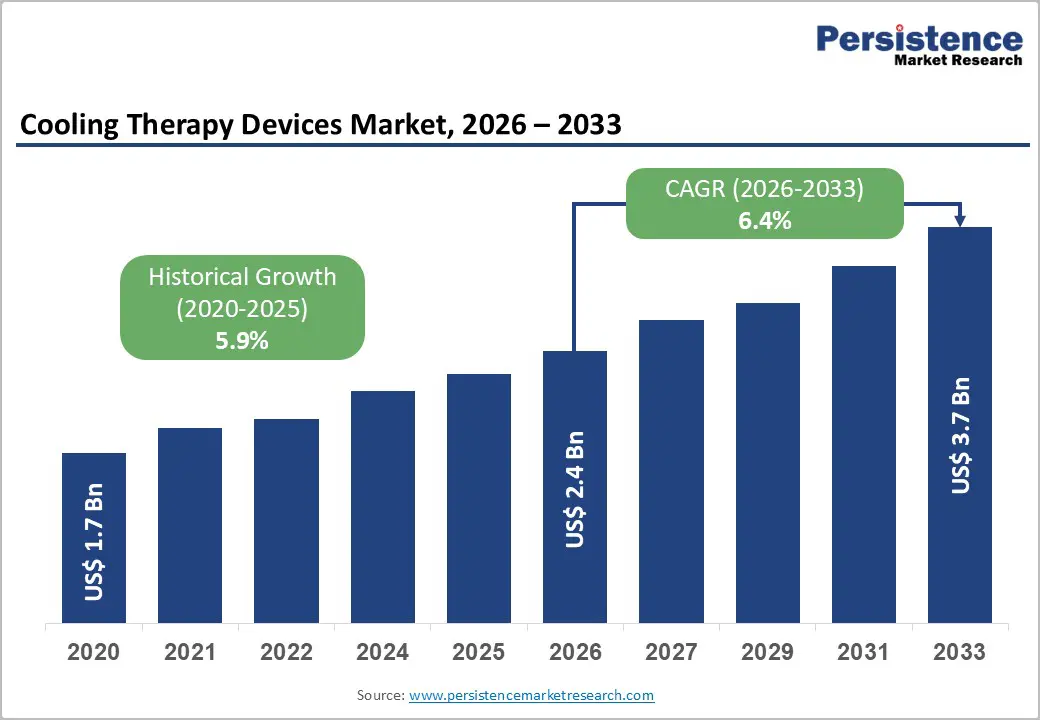
The global cooling therapy devices market size is likely to be valued at US$ 2.4 billion in 2026, and is projected to reach US$ 3.7 billion by 2033, growing at a CAGR of 6.4 % during the forecast period 2026 - 2033.
This growth trajectory reflects a significant surge in demand for non-invasive pain management solutions, driven by patients’ preference for drug-free interventions and rising healthcare costs associated with pharmacological treatments. The market is further propelled by the integration of advanced cold therapy systems into post-surgical care protocols, which helps reduce inflammation, accelerate healing, minimize recovery times, and improve overall patient outcomes. Additionally, the adoption of cooling therapy in sports injury rehabilitation is accelerating, as professional and amateur athletes increasingly rely on these devices for faster recovery, enhanced performance, and effective prevention of recurring injuries. Rising musculoskeletal disorder prevalence, aging populations, and growing awareness of home-based therapeutic solutions are further supporting widespread adoption across both clinical and personal care settings.
Key Industry Highlights
- Dominant Device Types: Cryotherapy units are set to command around 37% revenue share in 2026, while compression systems with cooling integration are likely to grow the fastest through 2033, driven by post-surgical and sports rehabilitation demand.
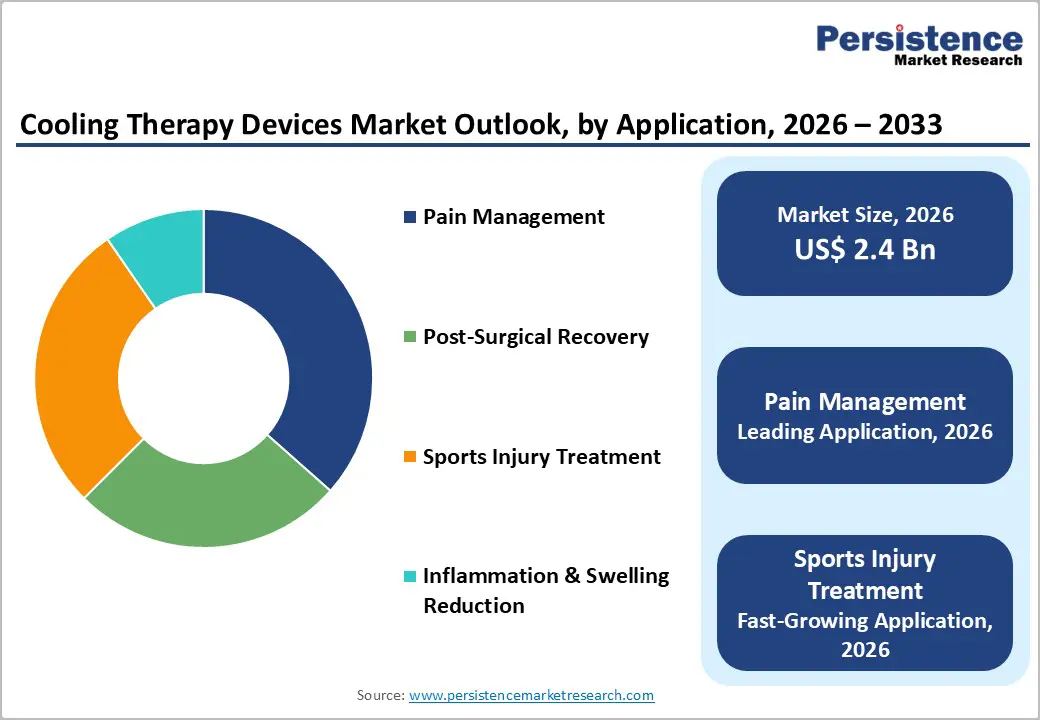
- Leading Applications: Pain management is projected to hold about 38% share in 2026, while sports injury treatment is expected to grow fastest at nearly 7.9% CAGR through 2033, fueled by rapid recovery needs among athletes.
- End-User Leadership: Hospitals are likely to lead with 42% revenue share in 2026, whereas personal/home-use devices are forecasted to grow at the fastest 2026-2033 CAGR, driven by rising self-care adoption.
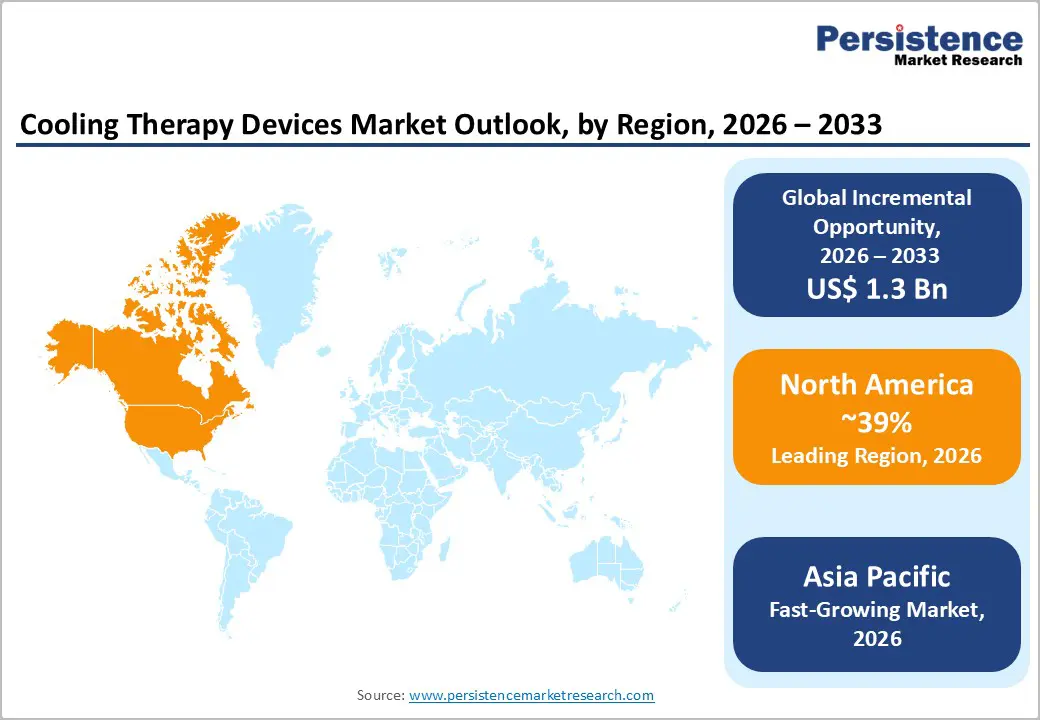
- Regional Dynamics: North America is set to dominate with 39% share in 2026, while the Asia Pacific market is projected to post the highest CAGR at 9.2% through 2033, supported by expanding healthcare infrastructure.
- Strategic Focus: Digital health integration, IoT-enabled therapy solutions, and home healthcare adoption are the main focal areas for market players.
| Key Insights | Details |
|---|---|
| Cooling Therapy Devices Market Size (2026E) | US$ 2.4 Bn |
| Market Value Forecast (2033F) | US$ 3.7 Bn |
| Projected Growth (CAGR 2026 to 2033) | 6.4% |
| Historical Market Growth (CAGR 2020 to 2025) | 5.9% |
Market Factors – Growth, Barriers, and Opportunity Analysis
Rising Prevalence of Musculoskeletal Disorders and Clinical Demand
According to the World Health Organization (WHO) musculoskeletal conditions affect over 1.7 billion people, ranking among the leading causes of disability and driving demand for non-pharmacological therapeutic solutions, including cooling therapy devices. Hospitals and clinics are increasingly incorporating these devices into pain management and post-surgical recovery protocols, offering safer, drug-free alternatives for patients. Regulatory approvals such as the U.S. Food and Drug Administration (FDA)’s October 2025 clearance of ProSense® cryoablation technology for low-risk breast cancer demonstrate institutional confidence in cryogenic therapies and reinforce adoption across clinical settings. This trend also highlights the growing recognition of temperature-based therapies as standard care adjuncts in modern medical protocols.
Cold therapy’s effectiveness in reducing inflammation, swelling, and acute pain makes it a preferred intervention for orthopedic procedures and sports injuries. Evidence reported in Drug Topics highlights significant pain reduction and improved joint mobility with cryotherapy applications. Increasing awareness among clinicians and patients, coupled with the availability of portable and home-use devices, is driving sustained procurement in hospitals, outpatient clinics, and home-care settings, supporting long-term market growth. This combination of clinical validation and patient preference is a key factor in the market’s robust adoption trajectory.
Technological Advancement and Home Healthcare Integration
The cooling therapy device landscape has evolved from traditional ice packs to smart, connected systems with automated temperature control, multi-zone cooling pads, and wearable designs. Recent regulatory expansions, such as Swissmedic’s live demonstrations of ProSense® at the CIRSE 2025 Annual Meeting, highlight increasing professional adoption of advanced cryotherapy technologies in clinical and interventional care. These innovations enhance treatment precision, improve patient comfort, and support faster recovery outcomes. Growing demand for devices that integrate data monitoring and adaptive therapy features further underscores the role of technology in expanding clinical and sports medicine applications.
The home healthcare and self-treatment adoption are on the rise, fueled by ergonomic hybrid systems that combine cryotherapy, compression, and portability. Integration with digital health platforms and tele-rehabilitation services allows patients to monitor therapy remotely, maximizing adherence and efficacy. The combination of technological innovation, regulatory validation, and professional acceptance is driving broader adoption across both institutional and personal use segments, positioning the market for long-term, sustained growth globally. Proliferation of e-commerce and telemedicine channels is also enabling wider accessibility, particularly in regions with limited clinical infrastructure.
High Upfront Costs and Affordability Challenges
Advanced cryotherapy and cooling therapy systems often come with substantial price tags due to sophisticated engineering, precise temperature control mechanisms, and regulatory compliance requirements. This financial burden can limit adoption, particularly in emerging markets and among price-sensitive consumer segments, where healthcare budgets are constrained. Hospitals and rehabilitation centers may delay procurement or opt for simpler, low-cost alternatives, affecting overall market penetration. These economic considerations also influence purchasing decisions in outpatient clinics and physiotherapy centers, where budgets are often tighter.
The insurance coverage and reimbursement policies vary significantly across regions. In many countries, device-based therapies require substantial out-of-pocket payments, discouraging widespread usage. Even in developed markets, the combination of high equipment costs and operational expenses can slow adoption in smaller clinics and outpatient settings. These financial barriers remain a persistent challenge for vendors seeking broader market access. The high cost structure also limits experimentation with advanced models, constraining innovation adoption in price-sensitive segments.
Regulatory Complexity, Safety, and Awareness Limitations
Cooling therapy devices must comply with stringent regulatory standards such as FDA 510(k) clearance, CE marking, and local health authority approvals. Recent regulatory actions highlight these challenges: the FDA expanded its Medical Device Recall Program in 2025, issuing early alerts for device safety concerns, the U.K.’s Medicines and Healthcare products Regulatory Agency (MHRA) published Field Safety Notices in late 2025, emphasizing post-market risk monitoring, and the Malaysia Medical Device Authority (MDA) mandated corrective actions for devices to ensure ongoing safety. These developments underscore the extensive regulatory oversight that manufacturers must navigate.
Safety concerns and limited clinical awareness further influence adoption. Improper usage or lack of training can cause skin burns, frostbite, or reduced treatment efficacy, particularly in non-institutional or home-use environments. Many smaller clinics and patients remain unfamiliar with advanced cooling systems, necessitating educational programs and hands-on training. These factors collectively temper uptake, slowing market expansion despite rising clinical demand and technological advancements. The combination of strict regulatory oversight, ongoing safety communications, and training requirements reinforces the market’s structural challenges, emphasizing the importance of continuous education and support.
Modernization of Healthcare Infrastructure in Emerging Economies
Developing economies Asia Pacific, Latin America, and the Middle East are witnessing substantial healthcare investments aimed at modernizing facilities and introducing advanced therapeutic devices. Public-private partnerships, government healthcare initiatives, and international funding programs are fueling the construction of new rehabilitation centers, sports medicine clinics, and outpatient facilities, creating attractive growth corridors for cooling therapy devices. Government initiatives such as India’s Ayushman Bharat Digital Mission (ABDM) are expanding healthcare infrastructure and digital integration, enabling broader patient access to advanced therapeutic solutions. These programs also encourage interoperability with telemedicine platforms, supporting remote patient engagement in urban and rural regions alike.
These expansions not only increase the institutional demand for post-surgical and pain management devices but also open channels for home-based therapies in urban and semi-urban areas. Government-backed grants, insurance expansions, and telemedicine infrastructure investments are projected to support hundreds of millions in incremental revenue through 2033. Increasing awareness of non-invasive recovery solutions, coupled with telehealth integration in emerging markets, further supports adoption across public hospitals and private care networks. Strengthened regulatory frameworks and patient education initiatives also reduce entry barriers for innovative therapeutic devices, creating a favorable ecosystem for market growth.
Digital Health Integration and Preventive Therapy Applications
The integration of digital health platforms, mobile apps, and tele-rehabilitation services presents a significant growth opportunity. Advanced cooling therapy devices now deliver personalized treatment protocols, remote monitoring, and real-time compliance tracking, allowing patients to manage recovery at home while reducing clinic visits. Government-supported programs such as the Medicare ACCESS pilot in the U.S. (2026) incentivize remote monitoring and digital care tools, creating an enabling environment for digital-enabled therapeutic devices. Combined with broader adoption of AI-enabled health solutions under national initiatives, these programs enhance patient adherence and optimize clinical outcomes.
Wellness, sports recovery, and occupational health markets are areas that have largely remained untapped. With over 25 million sports injuries reported annually, devices designed for performance recovery, injury prevention, and preventive care offer a high-growth niche. Increasing investments in telemedicine and AI-based remote care platforms across Asia Pacific and other emerging economies are facilitating access to these preventive therapies. Integration with government-backed digital health infrastructure ensures wider reach and enhances patient engagement, providing long-term avenues for market expansion beyond traditional clinical applications. The combination of digital tracking, remote supervision, and preventive wellness adoption positions cooling therapy devices as a core solution in modern, tech-enabled care.
Category-wise Analysis
Device Type Insights
Cryotherapy units are forecast to hold approximately 37% of the cooling therapy devices market revenue share in 2026, driven by widespread use in hospitals, sports medicine centers, and rehabilitation facilities. These devices range from localized units to next-generation whole-body electric chambers, simplifying installation and reducing operational complexity compared to nitrogen-based systems. For example, CryoBuilt launched the Polaris Cryo Chamber in March 2025, the first fully electric, plug-and-play solution enhancing clinical and wellness accessibility. Premium pricing reflects advanced features such as precise temperature control and safety systems for high-throughput use. Hospitals and outpatient providers integrate these units into standardized pathways for pain management, post-surgical recovery, and inflammation control, reinforcing their role as cornerstone therapeutic devices in the device type market.
Compression systems paired with active cooling are projected to register the fastest CAGR of 8.1% through 2033, driven by their hybrid ability to reduce swelling, improve circulation, and support recovery. These devices are increasingly incorporated into enhanced recovery after surgery (ERAS) protocols and athletic rehabilitation programs, improving clinical outcomes and enabling rapid return-to-activity. Adoption extends beyond hospitals to physiotherapy and sports centers, while innovations in cooling-compression integration enhance home rehabilitation and outpatient usability. Strategic collaborations between device manufacturers and mobility accessory providers are accelerating growth, and increasing awareness of evidence-based recovery tools among clinicians, athletes, and patients is expanding the addressable market for these combined systems.
Application Insights
Pain management applications are expected to capture around 38% of the cooling therapy devices market share in 2026, driven by growing emphasis on non-drug, non-invasive therapeutic pathways. Cooling therapy devices are widely used as a first-line intervention to relieve discomfort, reduce local inflammation, and support mobility in musculoskeletal conditions, while integration into postoperative care plans and chronic pain protocols underscores their clinical value across age groups. Broader healthcare shifts toward remote patient monitoring and digital care have further strengthened adoption, with U.S. initiatives enabling continuous recovery oversight and encouraging providers to integrate connected therapeutic tools into chronic and post-acute pain management models. These combined factors reinforce pain management as the dominant application segment.
Sports injury treatment is projected to register the highest 2026-2033 CAGR of 7.9%, driven by rising participation in organized sports, fitness activities, and preventive wellness programs. Cooling therapy devices tailored for rapid muscle recovery, inflammation control, and performance continuity are gaining traction in physiotherapy centers, fitness facilities, and wellness clinics. Applications range from acute injury recovery to routine post-exercise treatment, enhancing short-term outcomes and long-term fitness compliance. Professional and amateur athletes are increasingly integrating these devices into daily training and rehabilitation regimens, while real-world adoption in sports science programs and performance initiatives drives consumer awareness. As wellness centers expand evidence-based recovery offerings, demand for cooling therapy in sports injury treatment continues to outpace other applications.
Regional Analysis
North America Cooling Therapy Devices Market Trends
North America is expected to remain the largest regional market for cooling therapy devices, accounting for approximately 39% of global value in 2026, supported by advanced healthcare infrastructure, high disposable income, and widespread clinical adoption. The U.S. is projected to continue leading due to ERAS protocols, reimbursement frameworks favoring non-drug therapies, and high adoption of digital therapeutic tools. Regulatory support from the FDA is likely to facilitate faster introduction of connected and AI-enabled cooling devices, enhancing institutional uptake. Hospitals and outpatient centers are also estimated to increasingly integrate these devices into standardized care pathways, reinforcing consistent demand.
Recent initiatives, such as the FDA finalizing guidance on real-world evidence (RWE) in December 2025, are projected to accelerate device approvals and support adoption of digital-enabled therapeutic systems. Concurrently, state-level policies encouraging remote patient monitoring and digital care integration are estimated to increase the utilization of cooling therapy devices in hospitals, sports medicine, and outpatient clinics. Together with rising prevalence of musculoskeletal disorders, these trends are expected to sustain North America’s leadership and projected market stability over the forecast period.
Europe Cooling Therapy Devices Market Trends
Europe is projected to hold the second largest share, of the cooling therapy market in 2026, driven by healthcare systems in Germany, U.K., France, and Spain. Harmonized CE regulatory standards are expected to simplify cross-border commercialization, while an aging population and rising demand for outpatient rehabilitation are likely to support steady adoption of cooling therapy devices. Evidence-based clinical guidelines promoting non-invasive pain and post-surgical therapies are estimated to further bolster market penetration. Growing emphasis on digital health infrastructure and interoperability is also likely to facilitate broader adoption of connected cooling therapy solutions across hospital networks.
Policy developments, such as the European Health Data Space (EHDS) implementation and proposed revisions to medical device regulations, are likely to enhance digital health integration, improve device interoperability, and streamline market entry for innovative products. EU funding initiatives, including EU4Health, are estimated to support both institutional and outpatient adoption of advanced therapeutic devices, while ongoing investment in professional training and rehabilitation programs further strengthens market readiness. These combined trends reinforce Europe’s position as a stable, progressive market with sustainable growth potential over the forecast period.
Asia Pacific Cooling Therapy Devices Market Trends
Asia Pacific is expected to be the fastest-growing market for cooling therapy devices, projected to display a CAGR of roughly 9.2% between 2026 and 2033, driven by expanding healthcare infrastructure, rising middle-class health spending, and increasing sports injury prevalence in China, Japan, India, and ASEAN countries. Cost-effective locally manufactured devices are estimated to enhance accessibility across emerging clinical and home-use segments, supporting rapid adoption of cooling therapy systems. Growth is also likely to be accelerated by government initiatives promoting preventive healthcare, rehabilitation, and digital health integration, particularly in urban and semi-urban regions.
Recent regulatory developments in 2025, such as China’s National Medical Products Administration (NMPA) introducing measures to accelerate high-end medical device approvals and Japan’s revised medical device enforcement rules, are likely to improve market responsiveness and attract global investment. Public and private investments in telehealth and rehabilitation platforms in India, China, and Southeast Asia are projected to reduce barriers to access and expand adoption among clinics and consumers. Combined with rising awareness of non-invasive recovery solutions and preventive wellness programs, these initiatives position Asia Pacific as the fastest-growing regional market for cooling therapy devices in the forecast period.
Competitive Landscape
The global cooling therapy devices market structure is moderately consolidated, with leading players, including Zimmer Biomet, CryoBuilt, Game Ready, DJO Global, and Breg, estimated to collectively control over half of the market revenue in 2026. These established companies leverage strong relationships with hospitals, sports medicine centers, and rehabilitation facilities, while investing heavily in R&D, digital integration, and connected device innovations. They also focus on compliance with regulatory standards such as FDA 510(k) clearance and CE marking, which reinforces trust and adoption in institutional settings.
Regional and niche competitors, including Polar Products, Aircast, and Meditherm, are concentrating on specific therapy types, personal-use devices, and emerging geographies to carve out specialized market segments. While high costs, technical complexity, and regulatory hurdles remain barriers for new entrants, digital health trends and tele-rehabilitation platforms are enabling software-driven and home-use solutions to gain traction. The market is expected to consolidate gradually as leading players expand through strategic acquisitions, partnerships, and technology integration, while innovative startups continue collaborating to provide enhanced patient monitoring, AI-enabled temperature control, and connected recovery solutions.
Key Industry Developments
- In August 2025, T.N. Dickinson’s Witch Hazel introduced medicated cooling pads formulated with witch hazel extract and menthol to provide topical relief for muscle discomfort and irritation. The new product targets personal care and therapeutic segments by combining natural ingredients with soothing properties.
- In July 2025, Cooler Heads secured Series A funding to advance its scalp cooling technology designed to reduce hair loss in chemotherapy patients, supporting product development and expanded clinical adoption. The investment aims to enhance accessibility and comfort for users while accelerating commercialization and scaling of the solution globally.
- In July 2025, CryoBuilt bought a minority stake in Chillybox and secured exclusive U.S. and global distribution rights for its at-home cryotherapy chambers, marking its entry into the residential wellness market. The compact Chillybox unit delivers dry cryotherapy at -165°F via a standard outlet and includes remote monitoring features to support scalable home-based recovery solutions.
Companies Covered in Cooling Therapy Devices Market
- Game Ready
- BREG, Inc.
- Össur
- ThermoTek, Inc.
- PowerPlay Technologies
- Polar Products, Inc.
- Cryo Innovations
- MECOTEC
- Zimmer MedizinSysteme
- HyperIce, Inc.
- Cura Healthcare
- Mego Afek
Frequently Asked Questions
The global cooling therapy devices market is projected to reach US$ 2.4 billion in 2026.
Growing prevalence of musculoskeletal disorders, demand for non-invasive pain management, post-surgical recovery adoption, and sports injury rehabilitation are driving the market.
The market is poised to witness a CAGR of 6.4% from 2026 to 2033.
Opportunities lie in home healthcare, digital health integration, and healthcare infrastructure strengthening in Asia Pacific and Latin America.
Zimmer Biomet, CryoBuilt, Game Ready, DJO Global, and Breg are a few among the leading companies in the market.


