




- Food Ingredients & Additives
- Chia Seed Ingredient Market
Chia Seed Ingredient Market Size, Share, and Growth Forecast, 2026 - 2033
Chia Seed Ingredient Market by Product Type (Whole, Ground, Oil, Protein,), Application (Food and Beverages, Nutritional Supplements, Animal Feed, Cosmetics), Distribution Channel (Online Stores, Supermarkets), and Regional Analysis for 2026-2033

Chia Seed Ingredient Market Share and Trends Analysis
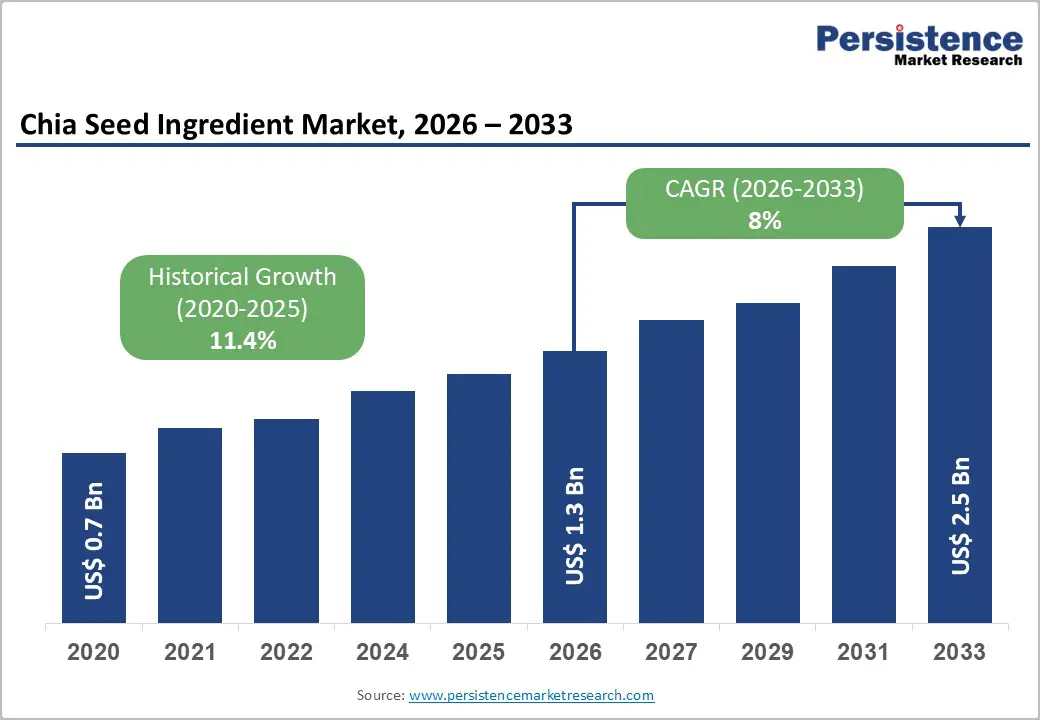
The global chia seed ingredient market size is likely to be valued at US$ 1.3 billion in 2026, and is projected to reach US$ 2.5 billion by 2033, growing at a CAGR of 8% during the forecast period 2026−2033. This expansion is being fed by consumers that are increasingly adopting functional foods and plant-based nutrition solutions. Rising awareness of preventive healthcare and wellness-focused consumption patterns is encouraging food manufacturers to incorporate chia-derived ingredients into products such as beverages, bakery formulations, and dietary supplements. Regulatory acceptance of chia seeds as a novel food ingredient across multiple regions is also supporting commercialization by enabling broader product innovation and market entry. Distribution channels are expanding through organized retail networks and digital commerce platforms, which is improving accessibility across both developed and emerging economies.
Growing body of scientific evidence is further strengthening market progress by validating the nutritional value of chia seeds and their functional properties. Studies are highlighting benefits such as improved cardiovascular health, enhanced digestive function due to dietary fiber content, and support for weight management through satiety effects. These health attributes are aligning with consumer preferences for natural, minimally processed ingredients with recognizable nutritional profiles. Food manufacturers and nutraceutical companies are therefore investing in product development and supply chain integration to secure reliable sourcing and quality consistency.
Key Industry Highlights
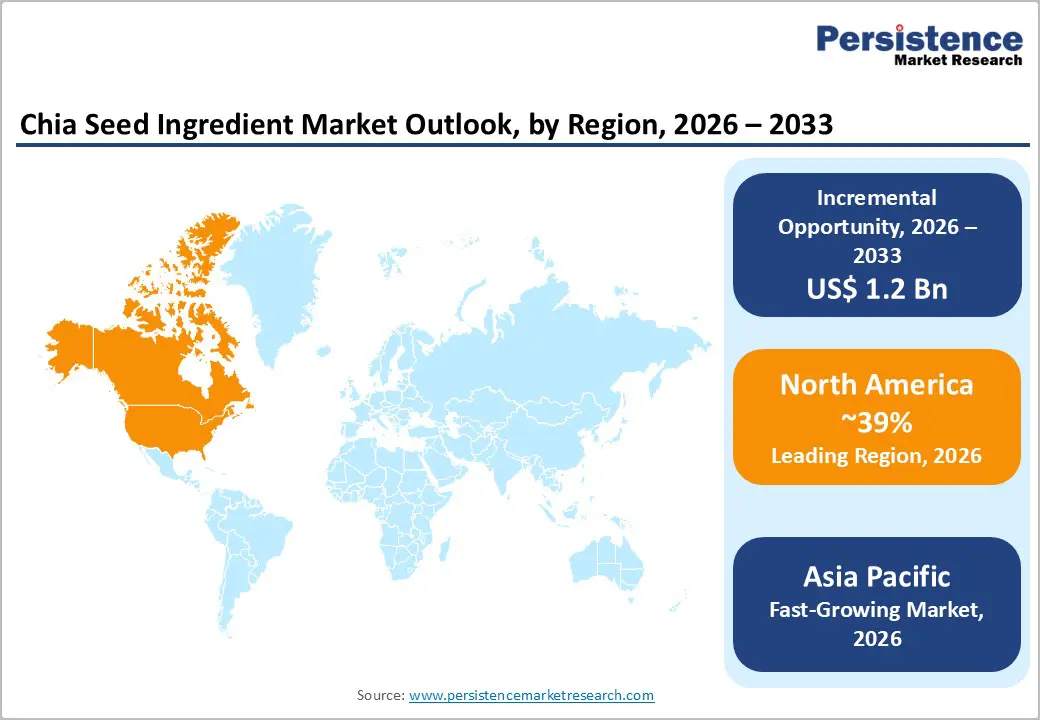
- Dominant Region: North America is expected to command about 39% market share in 2026, supported by a well-entrenched consumer familiarity with health-focused foods and ingredients.
- Fastest-growing Market: The Asia Pacific market is set to be the fastest-growing through 2033, aided by increasing consumer willingness to spend more on health-oriented food choices.
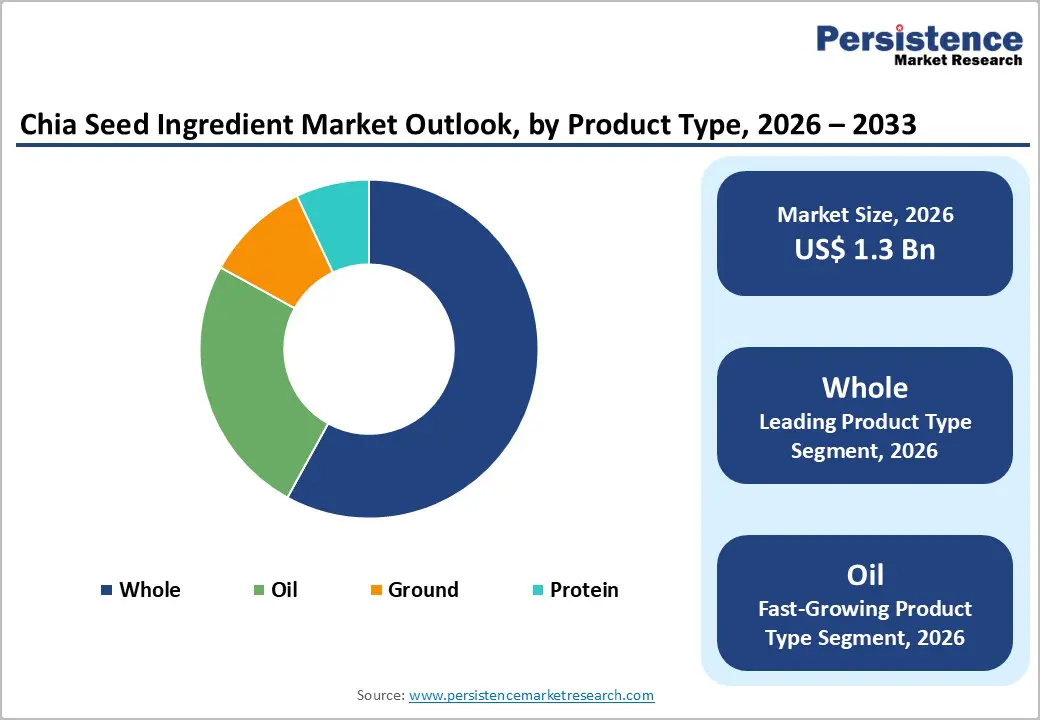
- Leading & Fastest-growing Product Type: Whole chia seeds are poised to dominate with approximately 58% revenue share in 2026, while oil seeds are likely to be the fastest-growing segment during the 2026-2033 forecast period.
- Leading & Fastest-growing Application: Foods and beverages are expected to lead by capturing a revenue share of about 75% in 2026, whereas nutritional supplements are slated to register the highest 2026-2033 CAGR.
| Global Market Attributes | Key Insights |
|---|---|
| Chia Seed Ingredient Market Size (2026E) | US$ 1.3 Bn |
| Market Value Forecast (2033F) | US$ 2.5 Bn |
| Projected Growth (CAGR 2026 to 2033) | 8% |
| Historical Market Growth (CAGR 2020 to 2025) | 11.4% |
Market Factors – Growth, Barriers, and Opportunity Analysis
Rising Consumer Demand for Plant-Based Omega-3 Alternatives
The supplement and functional food industries are transitioning from marine-derived omega-3 sources toward plant-based alternatives as manufacturers respond to changing consumer preferences and sustainability considerations. Chia seeds are gaining attention because they contain high levels of alpha-linolenic acid (ALA), which is an essential omega-3 fatty acid that supports cardiovascular and metabolic health. Compared with other plant sources such as flax seeds, chia seeds are offering advantages including superior mucilage properties that improve texture, hydration capacity, and formulation stability in food products. Processors are also favoring chia seeds due to their extended shelf stability, which is helping preserve nutritional quality during storage and distribution. Regulatory acceptance is further supporting adoption, as the U.S. Food and Drug Administration (FDA) has granted chia seeds Generally Recognized as Safe (GRAS) status, which is simplifying product labeling compliance and strengthening consumer confidence in blended formulations.
Plant-based omega-3 formulations are gaining momentum across functional foods, dietary supplements, and fortified beverages as consumers increasingly seek vegan and environmentally responsible nutrition options. Premium positioning is enabling manufacturers to command higher prices for plant-based omega-3 products compared to traditional fish oil formulations, which is improving margins for chia ingredient suppliers and processors. Sustainability concerns related to marine resource depletion and overfishing are encouraging brands to promote chia seeds as an environmentally responsible alternative, which is reshaping procurement strategies and supply chains. Companies are investing in innovation to develop versatile applications that align with vegan dietary trends and evolving regulatory standards, which is supporting long-term market competitiveness.
Expansion of Functional Food and Beverage Manufacturing
Beverage manufacturers are increasingly incorporating chia mucilage as a natural thickening agent and as a carrier of omega-3 fatty acids, particularly ALA, to improve both texture and nutritional value. This transition is reducing reliance on synthetic hydrocolloids and is supporting cleaner ingredient declarations that align with consumer demand for recognizable plant-based components. Product developers are integrating chia ingredients into formulations that require suspension stability, viscosity control, and consistent mouthfeel, especially in ready-to-drink beverages and functional drinks. Manufacturers are also optimizing hydration kinetics and dispersion characteristics to ensure efficient processing and uniform sensory outcomes during large-scale production. As clean-label positioning continues to influence purchasing decisions, chia mucilage is providing both functional performance and marketing differentiation, which is strengthening its adoption across beverage innovation pipelines.
Food producers are also expanding chia seed applications across categories such as bakery products, breakfast cereals, nutrition bars, and ready-to-drink smoothies to enhance structural integrity and nutrient density. Customized ingredient systems are improving binding capacity, moisture retention, and shelf stability while preserving flavor profiles, which is enabling formulation simplification without sacrificing product performance. Chia seeds are functioning as egg substitutes, natural thickeners, and nutritional fortifiers, which is helping manufacturers reduce ingredient complexity and meet plant-based formulation requirements. This multifunctional capability is positioning chia ingredients as a strategic component within future product development strategies for food and beverage companies.
Supply Chain Volatility and Geographic Concentration
Global chia seed production is concentrated in a small number of countries in South America, including Paraguay, Bolivia, Argentina, and Mexico, which is increasing structural exposure across the supply chain. This geographic monopoly is creating vulnerability to climate-related disruptions such as drought, irregular rainfall, and shifting seasonal cycles that directly affect crop yields. Cultivation is continuing to depend heavily on local weather patterns and agricultural conditions, which is reducing predictability for processors and ingredient buyers that require consistent raw material supply. The absence of diversified production hubs is limiting the industry’s ability to absorb environmental shocks, which is increasing procurement risk for manufacturers. Companies are therefore facing challenges in aligning sourcing volumes with production planning while maintaining continuity across distribution channels.
Market instability is also being intensified by underdeveloped price risk management systems and the predominance of smallholder farming structures within chia cultivation. Limited access to forward contracts, crop insurance, and commodity hedging tools is restricting the ability to stabilize prices across harvest cycles. Small-scale producers are bearing a disproportionate share of production risk, which is discouraging investment in yield optimization, certification programs, and infrastructure modernization. This environment is making cost forecasting more difficult for ingredient processors and food manufacturers that depend on reliable supply commitments.
Limited Consumer Awareness in Emerging Markets
Although chia seeds are gaining widespread acceptance in North America and Europe, consumer awareness is remaining relatively limited across many emerging economies. Traditional dietary preferences are continuing to influence food purchasing behavior, which is reducing openness toward unfamiliar functional ingredients. Knowledge gaps related to preparation methods, flavor compatibility, and nutritional benefits are restricting consumer trial and repeat consumption. Price sensitivity is also affecting purchasing decisions because chia products are often positioned at a premium compared to locally available staples. Retail visibility is remaining inconsistent outside major metropolitan areas, which is limiting product exposure and consumer confidence.
Market growth in regions such as Asia Pacific is therefore requiring sustained investment in consumer education, product localization, and affordability strategies. Brands are adapting formats to align with regional cuisines and consumption habits while focusing communication on practical usage rather than abstract health claims. Distribution networks are expanding through digital commerce platforms and organized retail channels to improve accessibility for first-time buyers. These initiatives will have reduced adoption barriers and supported gradual incorporation into routine diets. As awareness increases and trust develops, emerging economies are becoming positioned as important contributors to long-term market expansion.
Growing Interest in Plant-based and Functional Foods
Consumers are becoming increasingly focused on wellness and preventive nutrition, which is driving demand for food ingredients that offer balanced nutritional value and natural sourcing. Chia seed ingredients are gaining attention because they provide multiple health benefits within a single component, including dietary fiber, plant-based protein, and essential fatty acids. This nutritional profile is supporting applications designed for daily consumption across food and beverage categories. Manufacturers are responding by incorporating chia into formulations that emphasize ingredient simplicity, transparency, and minimal processing. The shift toward clean-label products is encouraging brands to reduce artificial additives and highlight recognizable plant-based ingredients, which is strengthening consumer trust and influencing purchasing decisions.
Ongoing research & development (R&D) activities are expanding the functional and commercial potential of chia seed ingredients across diverse applications. Researchers are exploring advanced processing technologies, improved nutrient bioavailability, and innovative formats such as fortified beverages, nutrition snacks, and dietary supplements. These efforts are enabling manufacturers to optimize texture, stability, and sensory performance while maintaining nutritional integrity. Collaboration between ingredient suppliers and food manufacturers is also gaining speed, which is accelerating product development cycles and improving market responsiveness.
Increasing Demand for Clean-Label and Organic Products
Consumers are intensely scrutinizing ingredient lists in both food and personal care products, which is strengthening demand for natural and minimally processed alternatives. This behavioral shift is encouraging brands to prioritize transparency, safety, and recognizable plant-based sources across product portfolios. Chia seeds are aligning well with these preferences because they are versatile, nutrient-rich, and widely perceived as wholesome ingredients. In personal care formulations, chia-derived components are supporting positioning that emphasizes gentle treatment and nutritional support for skin and hair. As clean beauty principles continue to influence purchasing decisions, manufacturers are reformulating skincare and haircare products to reduce synthetic additives and incorporate naturally sourced ingredients such as plant oils and botanical extracts.
The cosmetics sector is expanding its adoption of chia seed ingredients as demand for natural skincare and haircare solutions continues to rise. Chia seed oil and botanical extracts are being integrated into formulations that focus on hydration, skin barrier reinforcement, and scalp nourishment, which are key functional benefits sought by consumers. At the same time, the rapid growth of e-commerce platforms is transforming product distribution and consumer engagement. Online retail channels are enabling brands to communicate ingredient benefits more effectively, provide educational content, and reach broader customer segments beyond traditional retail locations. The combined momentum of clean beauty trends and digital commerce expansion is creating sustained opportunities for innovation, portfolio diversification, and long-term market growth.
Category-wise Analysis
Product Type Insights
Whole chia seeds are set to account for approximately 58% of the chia seed ingredient market revenue share in 2026, as they are widely used across everyday culinary applications. Consumers are incorporating them into foods such as smoothies, yogurt, salads, and baked products to enhance both texture and nutritional value. Their natural crunch and nutrient density are making them suitable for household consumption as well as commercial food preparation. Whole seeds are also valued for their convenience because they do not require additional processing before use, which simplifies preparation for consumers and manufacturers. This ease of incorporation is supporting strong acceptance, repeat purchases, and consistent demand across multiple food categories, reinforcing their leadership position within the market.
Chia seed oil is expected to be the fastest-growing segment from 2026 to 2033, owing to its high concentration of omega-3 fatty acids and expanding applications across health and personal care industries. The oil is typically produced through cold pressing, which preserves its nutritional integrity and bioactive compounds. It is being used in dietary supplements and functional food formulations where manufacturers are emphasizing cardiovascular and metabolic health benefits. In the cosmetics and personal care sector, chia seed oil is gaining traction because of its lightweight texture and skin-conditioning properties that support hydration and barrier protection. These characteristics are making it suitable for skincare and haircare products focused on nourishment and moisturization.
Application Insights
Foods and beverages are anticipated to dominate by holding an estimated 75% of the chia seed ingredient market share in 2026. Manufacturers are adding chia to formulations such as smoothies, yogurt, baked goods, breakfast cereals, and snack products to enhance nutritional value and improve texture. Their ability to absorb liquid and form gel-like structures is supporting stability and mouthfeel in various food systems, which is encouraging widespread adoption. Increasing consumer focus on health and wellness is also driving demand for ingredients that provide functional benefits while maintaining natural positioning. This shift is reinforcing the integration of chia seeds into everyday food and beverage products, which is sustaining strong growth within this segment.
Nutritional supplements are slated to be the fastest-growing application are during the 2026-2033 forecast period, as consumers prioritize preventive health and balanced nutrition. Chia ingredients are being incorporated into dietary supplement products such as protein powders, meal replacement formulations, and functional blends that support energy and metabolic health. Their plant-based origin and nutrient profile are aligning well with consumer preferences for clean-label supplementation and naturally sourced ingredients. Growing awareness of long-term wellness management is strengthening demand for nutrient-dense components across supplement categories.
Regional Insights
North America Chia Seed Ingredient Market Trends
North America is projected to capture around 39% of the chia seed ingredient market value in 2026, supported by strong consumer familiarity with health-oriented foods and functional ingredients. Consumers across the region are actively seeking natural and organic products that promote balanced nutrition and transparent sourcing, which is encouraging manufacturers to incorporate chia ingredients into mainstream offerings. Retailers are expanding shelf presence for functional foods and plant-based products, which is improving product accessibility and reinforcing adoption across multiple consumption occasions. Regulatory clarity and established quality standards are also supporting product development and market confidence by ensuring consistency in labeling and safety compliance.
The market here is also benefiting from a mature health and wellness ecosystem that is enabling continuous innovation and portfolio diversification. Companies are responding to increasing interest in plant-based diets by developing formulations that align with sustainability principles and clean-label expectations. Chia seed ingredients are being incorporated into products such as functional beverages, nutrition snacks, and dietary supplements to address evolving lifestyle needs and convenience preferences. Collaboration between ingredient suppliers, food manufacturers, and research institutions is strengthening scientific validation and product performance, which is supporting long-term market credibility. This innovation-driven environment is reinforcing North America’s leadership position and sustaining demand growth for chia seed ingredients across multiple industries.
Europe Chia Seed Ingredient Market Trends
Europe is a key market for chia seed ingredients, powered by shifting consumer inclination toward plant-based and clean-label food choices. Consumers across the region are increasingly examining ingredient lists and prioritizing products that highlight natural sourcing and nutritional value. Chia seeds are aligning well with these expectations because they provide functional benefits while supporting transparent labeling. Rising awareness of nutrient-dense foods is encouraging broader inclusion of chia in daily diets, particularly within health-oriented product categories. Retailers and manufacturers are responding by expanding product assortments and improving shelf visibility across both mainstream and specialty distribution channels. This supportive market environment is creating favorable conditions for continued adoption and product innovation across the region.
Germany, the U.K., and France are contributing significantly to regional growth due to strong consumer engagement with health and wellness trends. Food and beverage companies are introducing new formulations that incorporate chia ingredients into bakery products, snack items, and functional beverages to meet evolving dietary preferences. Distribution networks are expanding through organized retail and digital commerce platforms, which is improving accessibility and purchasing convenience. Regulatory consistency and quality standards are reinforcing consumer confidence while enabling innovation across product categories. These developments are positioning Europe for stable and sustained growth in chia seed ingredient adoption.
Asia Pacific Chia Seed Ingredient Market Trends
Asia Pacific is anticipated to emerge as the fastest-growing market for chia seed ingredients through 2033. Rising household income levels are enabling consumers to allocate more spending toward health-oriented food choices. Expanding urban populations are adopting modern dietary habits that emphasize convenience and nutritional balance, which is increasing the demand for functional ingredients. Awareness of preventive nutrition is steadily improving across the region, encouraging interest in plant-based components that support everyday wellness. Chia seeds are gaining attention because they align with consumer preferences for natural, minimally processed, and nutrient-rich foods.
Manufacturers are introducing accessible product formats that fit regional consumption patterns, including beverages, snacks, and supplement blends, which is supporting wider acceptance across multiple application categories. Both domestic brands and multinational companies are expanding product portfolios to address preferences for convenience, nutrition, and affordability. Distribution networks are strengthening through organized retail channels and electronic commerce platforms, which is improving product availability and consumer awareness. Regulatory frameworks are becoming more defined, which is supporting market confidence and encouraging innovation. Companies that can adapt product formulations and marketing approaches to regional taste preferences and usage habits will gain a definitive edge in this market over the next decade.
Competitive Landscape
The global chia seed ingredient market structure is moderately fragmented, dominated by Nutiva, Navitas Organics, Bob’s Red Mill Natural Foods, and Glanbia Nutritionals. These organizations are offering diversified product portfolios that address a wide range of applications across food, beverages, dietary supplements, and personal care products. Competitive dynamics are being shaped by factors such as product quality, pricing strategies, supply reliability, distribution coverage, and brand credibility. Established brands are leveraging certifications such as organic labeling and sustainable sourcing to strengthen consumer trust, while maintaining strong retail presence through both physical and digital channels. This competitive environment is encouraging continuous differentiation as companies seek to capture expanding demand across multiple regions.
Market participants are prioritizing product innovation and portfolio expansion to enhance their competitive positioning and respond to evolving consumer preferences. Investments in processing technologies, value-added ingredient formats, and functional blends are enabling companies to address diverse application requirements while improving margins. Many firms are also strengthening distribution networks through partnerships with retailers, electronic commerce platforms, and international distributors to increase product accessibility and visibility. Strategic initiatives such as supply chain integration, certification programs, and collaborative product development are supporting long-term growth and operational resilience.
Key Industry Developments
- In January 2026, Navitas Organics voluntarily recalled select lots of its 8-ounce Organic Chia Seeds due to a potential risk of Salmonella contamination linked to a supplier recall, although no illnesses have been reported.
- In January 2026, a recent study by Brazilian researchers published in the journal Nutrition highlighted that regularly consuming chia seeds can support digestive health and metabolic outcomes due to their high fiber and omega-3 content, with the study reporting measurable improvements in factors such as gut function and cardiovascular risk markers.
- In March 2025, Benexia launched Seeds of Wellness Chia Milk, the first plant-based milk made from whole chia seeds, delivering about 740 milligrams of omega-3 fatty acids along with higher fiber and protein compared to several traditional dairy alternatives, without added sugar.
Companies Covered in Chia Seed Ingredient Market
- Nutiva Inc.
- The Chia Co.
- Benexia / Functional Products Trading S.A.
- Navitas Organics
- Spectrum Essentials / Hain Celestial Group
- Bob’s Red Mill
- Glanbia Nutritionals
- Mamma Chia
- Sesajal
- Garden of Life
- Healthworks
- Vega Produce
- Chia Bia Slovakia
- Naturkost Übelhör
- Terrasoul Superfoods
Frequently Asked Questions
The global chia seed ingredient market is projected to reach US$ 1.3 billion in 2026.
Escalating demand for plant-based omega-3 sources and health-focused functional foods among urban consumers is primarily driving the market.
The market is poised to witness a CAGR of 8% from 2026 to 2033.
Major opportunities lie in expanding vegan product lines and sustainable superfood innovations for supplements and beverages.
Nutiva Inc, Navitas Organics, Bob’s Red Mill, and Glanbia Nutritionals. are some of the key players in the market.


