




- Biotechnology
- Bovine Lactoferrin Market
Bovine Lactoferrin Market Size, Share, Growth, and Regional Forecast, 2026 to 2033
Bovine Lactoferrin Market by Product Type (Freeze-dried, Spray-dried), Application (Infant Formula, Dietary Supplements, Pharmaceuticals, Food, Others), and Regional Analysis, from 2026 to 2033

Bovine Lactoferrin Market Share and Trends Analysis
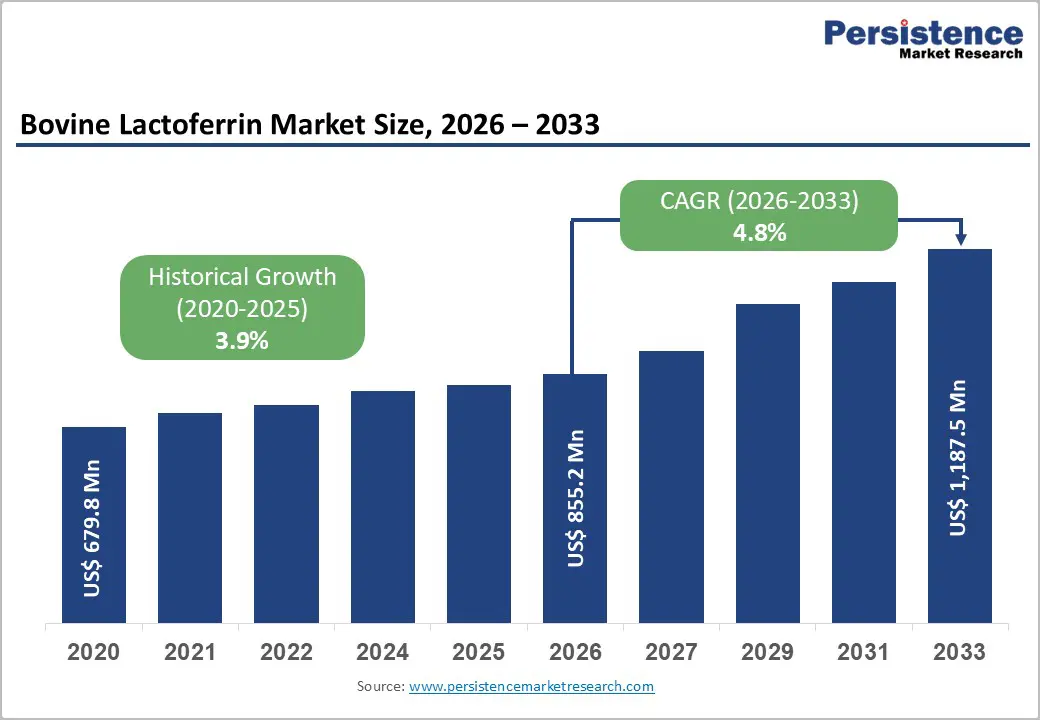
The global bovine lactoferrin market size is expected to be valued at US$ 855.2 million in 2026 and projected to reach US$ 1,187.5 million by 2033, growing at a CAGR of 4.8% between 2026 and 2033.
The market has demonstrated consistent growth over the past few years and is expected to maintain a positive trajectory. Bovine lactoferrin, a bioactive glycoprotein derived from cow’s milk, is valued for its antimicrobial, immune-supporting, and anti-inflammatory functions. Its application spans infant nutrition, dietary supplements, functional foods, and pharmaceutical formulations. Increasing consumer focus on preventive healthcare and gut health has significantly boosted demand, particularly among health-aware populations. The infant formula segment continues to gain traction as lactoferrin is increasingly associated with improved immunity and digestive development. Additionally, the shift toward natural and clean-label ingredients is strengthening market adoption. Ongoing clinical research supporting lactoferrin’s therapeutic potential is further driving innovation and long-term market expansion.
Key Industry Highlights:
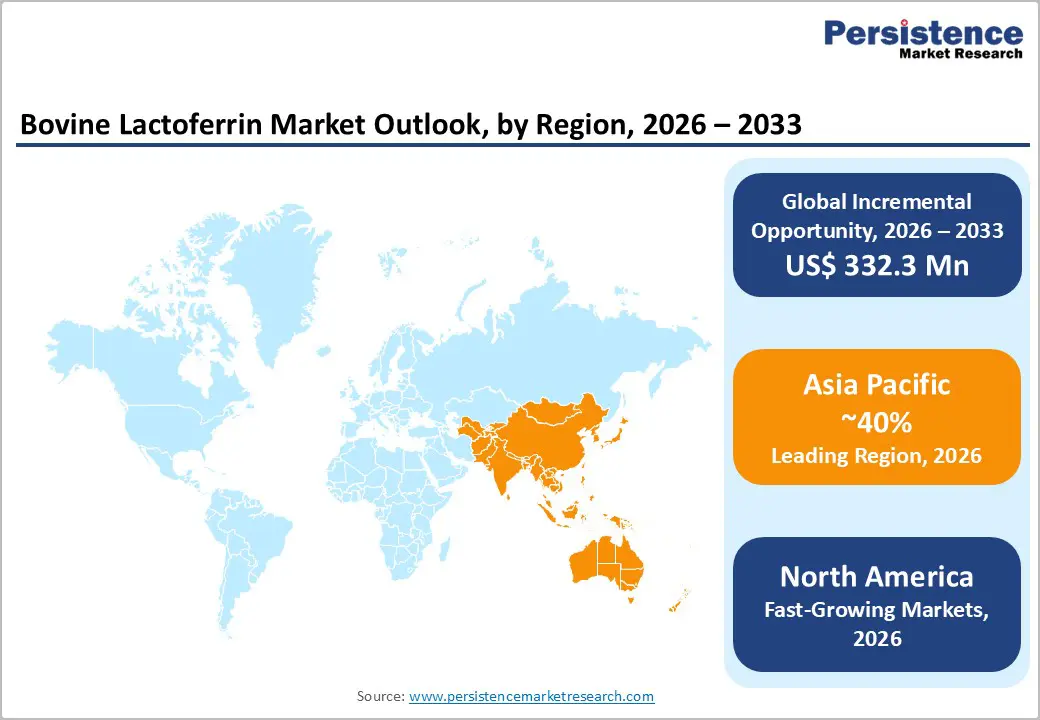
- Asia Pacific to reach a significant market size in 2026 due to rising demand for infant formula and dietary supplements.
- Declining breastfeeding rates amplify the need for lactoferrin in infant formula and other nutritious food products.
- Europe to grow substantially due to increasing health awareness and the consumption of nutritional foods.
- The market is gaining popularity due to superior product quality, enhanced antioxidant properties, and high iron-binding capacity.
- Rising demand for infant formula among working mothers and regulatory approvals propelling market growth.
- The shift towards natural and organic products influences the market extensively.
- The demand for functional foods and dietary supplements particularly among health-conscious consumers has contributed to the market growth.
| Key Insights | Details |
|---|---|
| Bovine Lactoferrin Market Size (2026E) | US$ 855.2 Mn |
| Market Value Forecast (2033F) | US$ 1,187.5 Mn |
| Projected Growth (CAGR 2026 to 2033) | 4.8% |
| Historical Market Growth (CAGR 2020 to 2024) | 3.9% |
Market Dynamics
Driver – Rising Demand for Functional Foods
The bovine lactoferrin market is strongly driven by the rising demand for functional foods as consumers increasingly prioritize health, immunity, and preventive nutrition. Growing awareness about the role of bioactive ingredients in supporting overall well-being has encouraged food manufacturers to incorporate naturally derived components into everyday diets. Bovine lactoferrin, recognized for its antimicrobial, anti-inflammatory, and immune-supportive properties, is gaining acceptance in dairy products, fortified foods, and beverages. Consumers are actively shifting away from synthetic additives and preservatives, favoring clean-label formulations that align with natural and holistic health trends. This transition toward functional nutrition, particularly among urban populations and aging consumers, is reinforcing sustained demand for lactoferrin-enriched products across multiple food categories.
Another factor is the expanding use of bovine lactoferrin in dietary supplements and infant nutrition. Health-conscious consumers increasingly prefer natural supplements that support immunity, gut health, and iron absorption, positioning lactoferrin as a key ingredient in premium formulations. Simultaneously, infant nutrition remains a critical growth area, as parents seek formula products that closely resemble the protective benefits of human breast milk. Lactoferrin’s proven role in supporting digestive health and reducing infection risks in infants has strengthened its inclusion in infant formulas. Continued clinical research and pediatric recommendations further support its adoption, contributing significantly to long-term market growth.
Restraints – High Production Costs and Competitive Pressure from Alternatives
High production costs remain a major restraint for the bovine lactoferrin market, primarily due to the complex extraction and purification processes involved. Isolating lactoferrin from bovine milk or colostrum requires advanced filtration technologies, controlled processing environments, and strict quality assurance protocols to maintain bioactivity and safety. These technical requirements significantly increase manufacturing expenses, which are often passed on to end users through premium pricing. In price-sensitive markets, especially across developing regions, higher product costs can restrict consumer adoption and limit the inclusion of lactoferrin in mass-market food and nutrition products, thereby slowing overall market expansion.
Another key restraint is the growing competition from alternative functional ingredients that provide comparable health benefits. Probiotics, plant-based proteins, and other bioactive compounds are increasingly preferred due to lower costs and broader consumer acceptance. Additionally, the rising demand for plant-based and vegan products challenges animal-derived ingredients such as bovine lactoferrin. This competitive environment makes product differentiation difficult and pressures manufacturers to justify premium pricing, ultimately restraining revenue growth.
Opportunity – Functional Food Innovation and Digital Sales Expansion
Expanding applications in functional foods present a strong growth opportunity for the bovine lactoferrin market. Consumers are increasingly seeking everyday food products that deliver added health benefits beyond basic nutrition, supporting immunity, gut health, and overall wellness. Bovine lactoferrin can be effectively integrated into products such as dairy-based foods, ready-to-drink beverages, nutrition bars, and fortified snacks. Its compatibility with multiple formulations enables food manufacturers to create value-added offerings targeted at health-conscious and aging populations. Product innovation focused on taste, convenience, and clean-label positioning can further improve consumer acceptance. Strategic partnerships between ingredient suppliers and food brands can accelerate product development, broaden application areas, and strengthen market penetration.
The rapid growth of e-commerce and direct-to-consumer sales channels also offers a major opportunity for market expansion. Digital platforms enable manufacturers to bypass traditional retail limitations and directly connect with consumers seeking specialized health products. Online channels support detailed education around lactoferrin’s benefits, transparent sourcing, and targeted marketing through personalized recommendations. Subscription models bundled wellness products, and influencer-driven promotions further enhance customer engagement. Improved accessibility through digital sales helps address geographic and pricing barriers, supporting wider adoption and sustained demand growth.
Category-wise Analysis
By Product Type Insights
The bovine lactoferrin market, segmented into freeze-dried and spray-dried forms, shows strong preference toward freeze-dried products due to their ability to preserve structural integrity and functional performance. Freeze-dried bovine lactoferrin is widely favored for applications requiring high purity, stable bioactivity, and extended shelf life, making it suitable for infant nutrition, clinical formulations, and premium dietary supplements. Its strong iron-binding capacity and protein stability support immune modulation and gut health benefits, reinforcing its commercial appeal.
Market expansion of this segment is also supported by increasing adoption of freeze-drying technology in product development, particularly within immune-support supplements. Several manufacturers have introduced lactoferrin formulations processed through freeze-drying to ensure minimal protein denaturation during manufacturing. Although certain studies suggest freeze-dried lactoferrin demonstrates slightly lower antioxidant activity approximately 6% less than spray-dried or liquid alternatives its superior consistency, safety profile, and functional reliability continue to sustain demand. As consumers increasingly seek high-quality bioactive ingredients, the freeze-dried segment is expected to retain a strong market position.
By Application Insights
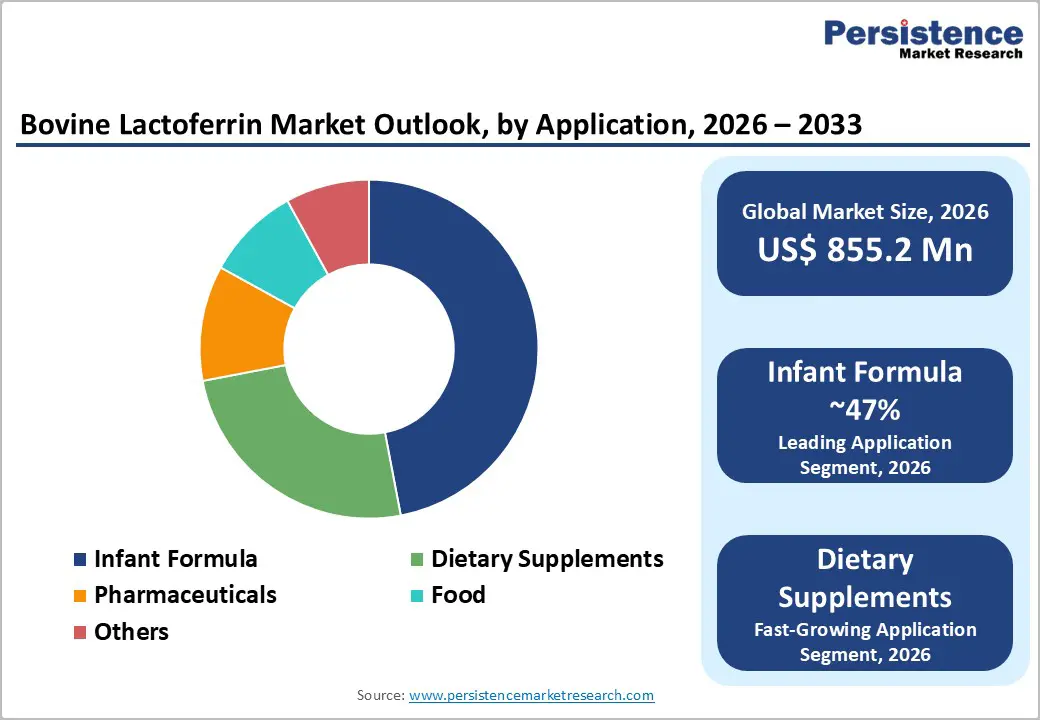
The bovine lactoferrin market is divided into applications including infant formula, pharmaceuticals, dietary supplements, food, and others, with the infant formula segment leading market growth. This dominance is primarily driven by the proven clinical benefits of lactoferrin, such as enhanced immunity, improved gut health, and better nutrient absorption in infants. Lactoferrin’s ability to mimic key protective components found in human breast milk makes it a preferred ingredient for infant nutrition, particularly in formula designed for newborns and infants at risk of infections or nutritional deficiencies.
The growing number of working mothers seeking reliable alternatives to breastfeeding has further increased demand for lactoferrin-enriched formulas. Research, including a 2023 study by MDPI, demonstrated that such formulas improve iron absorption, lowering the risk of anemia and supporting healthy growth in infants. Additionally, regulatory approvals, such as the Food Standards Australia New Zealand’s February 2023 authorization for bovine lactoferrin use in infant formula, are further enabling manufacturers to expand product offerings, boosting overall market expansion in this segment.
Region-wise Insights
Asia Pacific Bovine Lactoferrin Market Trends
The Asia Pacific bovine lactoferrin market is witnessing strong momentum, driven primarily by rising demand for infant nutrition and dietary supplements. Rapid urbanization, increasing disposable incomes, and heightened awareness of early-life nutrition have significantly influenced consumption patterns across countries such as China, Japan, India, and South Korea. Infant formula remains a major application area, particularly as changing lifestyles and a growing number of working mothers contribute to declining breastfeeding rates. This shift has increased reliance on fortified infant formulas, where bovine lactoferrin is valued for its immune-supporting and gut-health benefits. The expanding middle-class population and improving access to premium nutrition products further support regional demand growth.
In addition to infant nutrition, growing health consciousness among adults is boosting the use of bovine lactoferrin in functional foods and dietary supplements. Consumers across Asia Pacific are increasingly prioritizing immunity-enhancing ingredients, especially following heightened public focus on preventive healthcare. China stands out as a key contributor, supported by strong consumer trust in scientifically backed nutritional ingredients and widespread recognition of lactoferrin’s health benefits. Regional manufacturers are also investing in product innovation and localized formulations to meet diverse dietary preferences. These factors collectively position Asia Pacific as one of the most influential and high-growth regions within the global bovine lactoferrin market.
North America Bovine Lactoferrin Market Trends
The North America bovine lactoferrin market is shaped by strong demand for scientifically validated health ingredients across dietary supplements, pharmaceuticals, and functional food products. Consumers in the U.S. and Canada demonstrate high acceptance of premium nutrition solutions, supported by advanced product labelling standards and widespread access to clinical information. Bovine lactoferrin is increasingly incorporated into immune-support supplements, medical nutrition products, and specialized formulations for gut health and iron regulation, reflecting a mature and innovation-driven consumer base.
Regulatory clarity and strict quality benchmarks are crucial to supporting market development across the region. Food safety oversight and compliance requirements encourage manufacturers to invest in high-purity lactoferrin extraction and standardized formulations. In parallel, the presence of established dairy processing infrastructure and biotechnology capabilities supports consistent supply and product quality. Strategic collaborations between ingredient suppliers, nutraceutical brands, and pharmaceutical developers further accelerate commercialization. Growing interest in preventive healthcare, aging population needs, and clinically backed nutrition solutions continues to reinforce demand, positioning North America as a stable and high-value market for bovine lactoferrin applications.
Competitive Landscape
The bovine lactoferrin market exhibits a moderately competitive structure, with key participants emphasizing product innovation, quality enhancement, and application expansion. Leading manufacturers are investing in advanced extraction and purification technologies to improve bioavailability and functional efficacy. Strategic product launches, particularly within dietary supplements and clinical nutrition, highlight the industry’s focus on immune health and digestive support. Companies are also strengthening their portfolios through partnerships with food and nutraceutical brands to widen market reach. Continuous research, regulatory compliance, and differentiation through premium-grade formulations remain central competitive strategies, enabling established players to maintain strong positions while supporting steady market evolution.
Key Industry Developments:
- In June 2024, Strive Nutrition partnered with Singapore's TurtleTree to launch an immunity beverage and protein powder made from their precision-fermented lactoferrin. The partnership will be launched in Q1 next year, targeting adult and sports nutrition markets. The products will include an immunity-support beverage and a ready-to-mix protein powder, both containing LF.
In January 2024, Australian infant goat milk formula specialist Nuchev is launching its first bovine product for older children and adults aiming to introduce a series of products aimed at enhancing digestion and immunity over the next 12 months.
Companies Covered in Bovine Lactoferrin Market
- Glanbia Plc.
- Fonterra Co-operative Group
- Freisland Campine DOMO
- Milei GmbH
- Bea Bionutrients
- Beston Global Australia Pty Ltd.
- Saputo Dairy Pty Ltd.
- Synlait Ltd.
- Ingredia
- Savencia SA
- Freedom Food Group Limited
Frequently Asked Questions
The global bovine lactoferrin market is projected to be valued at US$ 855.2 Mn in 2026.
Rising infant nutrition demand, growing immune health awareness, expanding dietary supplement consumption, and increased incorporation of lactoferrin in functional foods
The global market is expected to witness a CAGR of 4.8% between 2026 and 2033.
Rapid expansion in Asia Pacific, growth of nutraceutical formulations, pharmaceutical applications, and increasing use of lactoferrin in fortified food products.
North America is the leading region in the global bovine lactoferrin market.


