




- Nutraceuticals & Functional Foods
- Berberine Supplements Market
Berberine Supplements Market Size, Share, and Growth Forecast 2026 - 2033
Berberine Supplements Market by Product Type (Capsules, Tablets, Powders, Liquid Extracts), by Source (Organic Berberine, Conventional Berberine), by Sales Channel (Supermarkets/Hypermarkets, Specialty Stores, Pharmacies & Drug Stores, Others), and by Regional Analysis, 2026-2033

Berberine Supplements Market Size and Trends Analysis
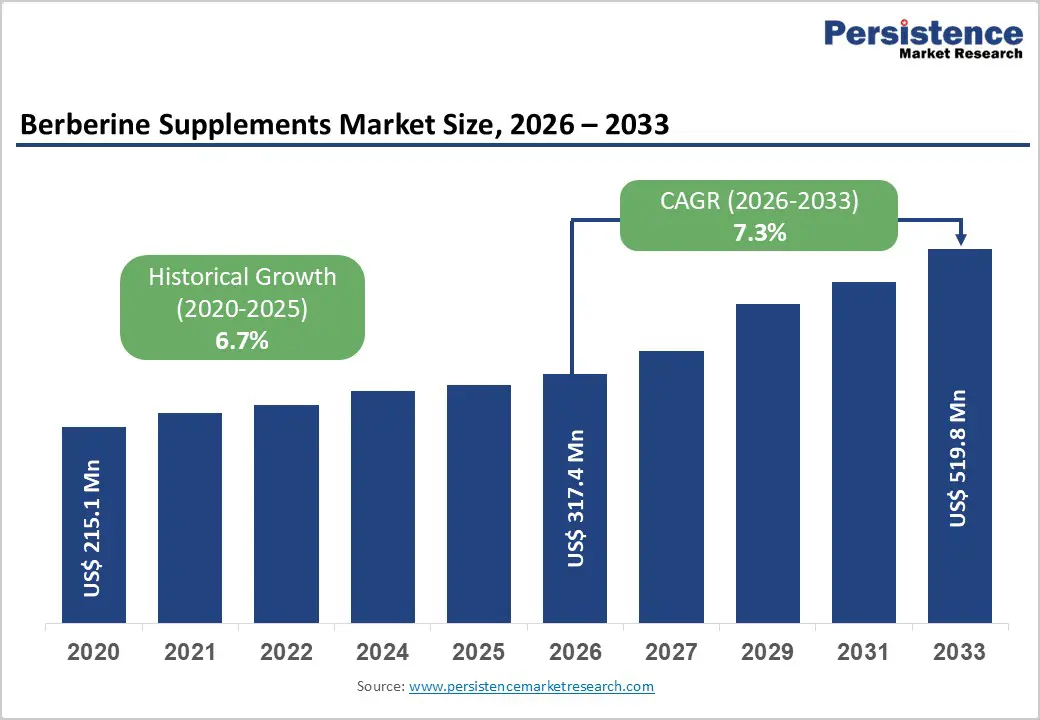
The global Berberine Supplements market size is expected to be valued at US$ 317.4 million in 2026 and projected to reach US$ 519.8 million by 2033, growing at a CAGR of 7.3% between 2026 and 2033
The global expansion of the Berberine Supplements Market is fundamentally anchored in the rising global incidence of metabolic syndrome and the escalating consumer shift toward "Nature's alternatives" for glucose management and weight loss. As clinical evidence solidifies berberine’s role as a potent AMPK activator supplement, it has transitioned from a niche traditional medicine to a mainstream nutraceutical powerhouse. Furthermore, the burgeoning popularity of berberine on social media as a "natural GLP-1 agonist" has catalyzed unprecedented demand among younger demographics, while advancements in bioavailability technologies—such as phytosomes and liposomal delivery are successfully addressing the ingredient's historical absorption challenges.
Key Industry Highlights
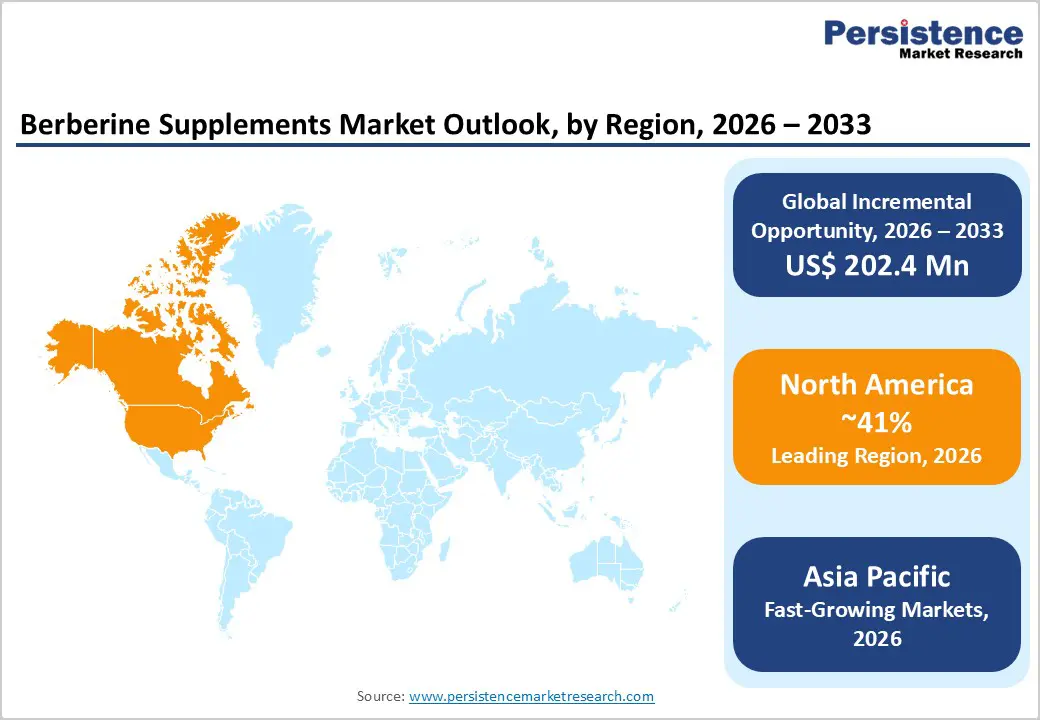
- Leading Region: North America, holding around 41% market share, supported by strong nutraceutical penetration, preventive healthcare adoption, biohacking trends, and rapid uptake of premium bioavailability-enhanced berberine formulations.
- Fastest-Growing Region: Asia Pacific, driven by cultural familiarity with berberine-containing botanicals, expanding middle-class health awareness, large-scale botanical manufacturing capacity, and accelerating e-commerce-led supplement access.
- Leading Product Type Segment: Capsules, accounting for nearly 64% share, favored for precise dosing, taste masking, stability, and compatibility with enteric and advanced release technologies.
- Market Drivers: Escalating incidence of metabolic disorders and type 2 diabetes is pushing consumers toward clinically supported natural AMPK activators as alternatives to long-term pharmaceutical dependency.
- Opportunities: Advanced delivery technologies such as phytosome, liposomal systems, and absorption enhancers enable premium positioning through low-dose, high-impact berberine supplements with improved tolerability.
- Key Developments: In October 2025, Gencor announced the launch of a new berberine ingredient at SupplySide Global, supported by newly presented metabolic health research strengthening evidence-based formulation trends.
| Key Insights | Details |
|---|---|
| Global Market Attributes | Key Insights |
| Global Berberine Supplements Market Size (2026E) | US$ 317.4 Mn |
| Market Value Forecast (2033F) | US$ 519.8 Mn |
| Projected Growth (CAGR 2026 to 2033) | 7.3% |
| Historical Market Growth (CAGR 2020 to 2025) | 6.7% |
Market Dynamics
Driver – Escalating Prevalence of Metabolic Disorders and Type 2 Diabetes
A primary catalyst driving the Berberine Supplements Market is the structural surge in global metabolic health concerns, specifically insulin resistance and obesity. According to the World Health Organization (WHO), over 422 million people worldwide suffer from diabetes, a figure that is projected to rise significantly by 2030. Berberine, an isoquinoline alkaloid traditionally used in Ayurvedic and Chinese Medicine, has gained significant clinical credibility for its ability to lower blood glucose levels through the activation of AMP-activated protein kinase (AMPK). This mechanism, often referred to as the "metabolic master switch," mimics the effects of exercise and calorie restriction.
As consumers become increasingly wary of the long-term side effects associated with synthetic pharmaceuticals, the demand for high-purity berberine as a metabolic health supplements market leader has intensified, particularly in North America and Europe where preventive healthcare is becoming a domestic priority.
Restraints – Inherent Bioavailability Challenges and Gastrointestinal Sensitivity
A significant technical barrier to the mass-market adoption of berberine is its poor oral bioavailability and associated gastrointestinal (GI) side effects. Research indicates that less than 1% of orally ingested berberine typically reaches systemic circulation due to poor intestinal absorption and rapid first-pass metabolism in the liver. This requires consumers to take high dosages (often 1,000mg to 1,500mg daily) to achieve therapeutic effects, which frequently results in digestive discomfort, including bloating, cramping, and diarrhea.
While innovative companies like Thorne and Double Wood Supplements are introducing enhanced delivery systems, the higher cost of these advanced formulations can deter price-sensitive segments. Consumers who experience initial GI distress often discontinue use, which negatively impacts the repeat-purchase rate and limits the segment’s penetration into the "sensitive stomach" demographic.
Opportunity – Technological Advancements in Enhanced Bioavailability and Liposomal Delivery
Technological Advancements in Enhanced Bioavailability and Liposomal Delivery Significant revenue pockets are emerging from the development of "Next-Generation" berberine formulations that solve the ingredient's historical absorption flaws. Manufacturers are increasingly utilizing phytosome technology a process where berberine is complexed with phospholipids to increase absorption by up to 10-fold. Strategic investments in liposomal delivery and the inclusion of natural absorption enhancers like Caprate (Sodium Caprate) are allowing brands to offer "low-dose, high-impact" supplements that reduce GI side effects.
Companies that successfully market these high-efficacy solutions can command premium pricing, targeting affluent consumers who prioritize clinical performance over unit cost. According to industry news, the shift toward these high-tech formats is expected to grow at a CAGR that is 1.5x higher than standard powder-filled capsules, providing a lucrative avenue for R&D-focused market participants.
Category-wise Analysis
Product Type Analysis
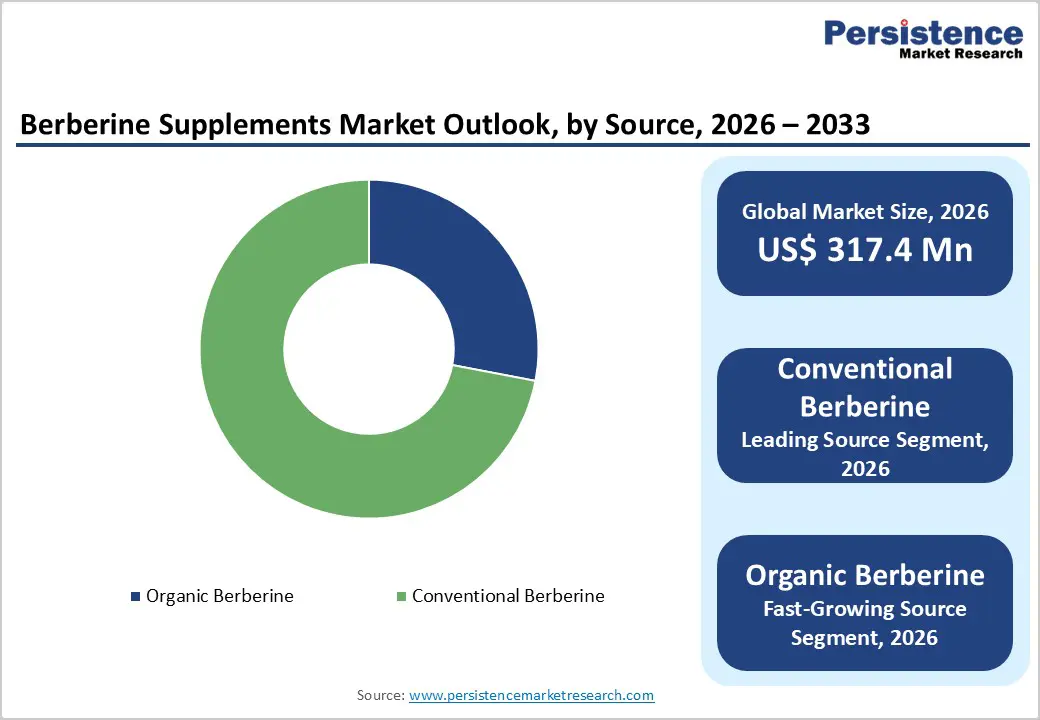
The Capsules segment held the leading position in the Berberine Supplements Market in 2025, accounting for a dominant 64% market share. This dominance is primarily attributed to the convenience of dosing and the ability of capsules to mask the intense bitter taste of the berberine alkaloid, which is often unpalatable in powder or liquid form. Capsules also offer superior protection against oxidation and allow for the integration of specialized enteric coatings that delay release until the supplement reaches the small intestine, thereby minimizing stomach irritation.
Justification for this leadership is further supported by the high degree of standardization possible in capsule production, ensuring that consumers receive a consistent 500mg dose per serving the most common therapeutic increment used in metabolic clinical trials. While Liquid Extracts are gaining traction for rapid absorption, the stability and consumer familiarity of encapsulated formats ensure their continued market dominance through 2033.
Sales Channel Analysis
Pharmacies & Drug Stores held the leading market share in 2025, capturing approximately 38% of the global revenue. The dominance of this channel is underpinned by the "medicalized" nature of berberine; consumers often view it as a pharmacological alternative and seek the perceived safety and professional guidance provided by pharmacists. This channel is particularly strong in Europe and Asia, where herbal medicines are deeply integrated into the formal healthcare system. Conversely, the Online Retail segment (categorized under "Others") is the fastest-growing sales channel.
The surge in e-commerce, driven by platforms like Amazon and specialized health portals like iHerb, has made niche berberine brands globally accessible. The ability to compare third-party lab results and read verified consumer reviews online is a critical factor for berberine users, leading to a significant migration of sales from traditional retail to digital marketplaces.
Region-wise Insights
North America Berberine Supplements Market Trends and Insights
North America remains the dominant region in the global landscape, holding a commanding 41% market share in 2025. The region's market leadership is almost entirely driven by the United States, where the "biohacking" and longevity movements have catapulted berberine into the spotlight as an AMPK activator supplement. High disposable income and a mature nutraceutical industry facilitate the rapid adoption of premium, high-bioavailability products. Regulatory frameworks in the U.S., governed by the DSHEA of 1994, allow for significant market agility, enabling brands like Herbalife Nutrition and Thorne to launch innovative combination products frequently.
The innovation ecosystem in the U.S. is currently focused on the synergy between berberine and other metabolic enhancers such as Silymarin (Milk Thistle), which has been shown to improve berberine absorption. Furthermore, the region is seeing a surge in "private label" berberine products through major retailers like Walmart and Costco, which is increasing price competition and accessibility. The prevalence of lifestyle-related metabolic disorders in the U.S. provides a consistent and growing consumer base, while the influence of North American medical influencers ensures that berberine remains a top-searched ingredient in the metabolic health supplements market.
Asia Pacific Berberine Supplements Market Trends and Insights
The Asia Pacific region is the fastest-growing market for berberine supplements, projected to record a high CAGR between 2026 and 2033. This growth is driven by the region's historical and cultural familiarity with berberine-containing plants, such as Coptis chinensis (Huang Lian). Nations like China, India, and Japan possess massive manufacturing advantages, as they are the primary global sources of the raw botanical materials. The rising middle-class population and increasing urbanization in the region have led to a surge in lifestyle diseases, creating a domestic demand that is rapidly matching the region's export capacity.
In China, the government's support for the modernization of Traditional Chinese Medicine (TCM) is fostering the development of highly standardized berberine extracts that meet international pharmaceutical standards. India is also emerging as a major player, leveraging its vast Ayurvedic heritage to produce "plant-pure" berberine for the global export market. The proliferation of digital healthcare apps and e-commerce in Southeast Asia is making premium supplement brands more accessible to a younger, health-conscious demographic.
As regional regulatory frameworks become more formalized and aligned with Western standards, the Asia Pacific region is expected to transition from being a primary supplier to a dominant consumer hub in the global Berberine Supplements Market.
Market Competitive Landscape
The Berberine Supplements Market is currently characterized by a "consolidated-fragmented" structure. At the top tier, a group of established global leaders, including Thorne, NOW Foods, and Herbalife Nutrition, command significant market share through massive distribution networks, robust clinical trial backing, and high brand trust. These leaders employ strategies of "premiumization," focusing on superior bioavailability and third-party certifications to justify higher price points. However, the market remains highly fragmented at the entry level, with hundreds of smaller "Amazon-native" brands competing primarily on price and viral marketing trends. Key differentiators in the market are shifting from basic ingredient concentration to "formula synergy," where brands add ingredients like Cinnamon, Chromium, or Alpha Lipoic Acid to create comprehensive metabolic support systems. Emerging business model trends include a shift toward "Direct-to-Consumer" (DTC) subscription models and the use of Blockchain technology to verify the "source-to-shelf" traceability of botanical ingredients, appealing to the increasingly skeptical modern consumer.
Key Developments:
- In October 2025, Gencor announced plans to introduce a new berberine ingredient at SupplySide Global, supported by fresh scientific research highlighting its role in metabolic and blood sugar management, reinforcing its position in evidence-backed nutraceutical innovation.
- In April 2024, Theralogix launched the first content-certified berberine supplement for metabolic health, emphasizing verified potency, clinical transparency, and quality assurance to strengthen consumer and practitioner trust in berberine-based formulations.
Companies Covered in Berberine Supplements Market
- Herbalife Nutrition Ltd
- Thorne
- Nature's Sunshine Products, Inc.
- Zhou Nutrition
- Swanson Health
- NOW Foods
- Dr Martins Nutrition
- Solaray
- Nestlé
- Double Wood Supplements
- Others
Frequently Asked Questions
The global Berberine Supplements Market is expected to be valued at approximately US$ 317.4 million in 2026, following a steady upward trend from its 2020 base.
The demand is primarily driven by the rising incidence of Type 2 Diabetes and insulin resistance, combined with a viral social media trend labeling berberine as a "natural alternative" for weight loss.
North America is the leading region, holding a 41% market share in 2025, fueled by a mature nutraceutical industry and high longevity-focused consumer spending in the United States.
A significant opportunity lies in the development of enhanced bioavailability technologies, such as phytosomes and liposomal delivery, which improve absorption and reduce digestive side effects.
Key market players include global giants like Herbalife Nutrition Ltd, Thorne, NOW Foods, Nestlé, and specialized brands like Nature's Sunshine Products and Double Wood Supplements.


