




- Retail
- Aquarium Accessories Market
Aquarium Accessories Market Size, Share, and Growth Forecast, 2026 - 2033
Aquarium Accessories Market by Product Type (Filtration Items, Lights & Hoods, Temperature Control Systems, Others), End-User (Residential, Commercial), Distribution Channel (Online, Offline), and Regional Analysis for 2026-2033

Aquarium Accessories Market Share and Trends Analysis
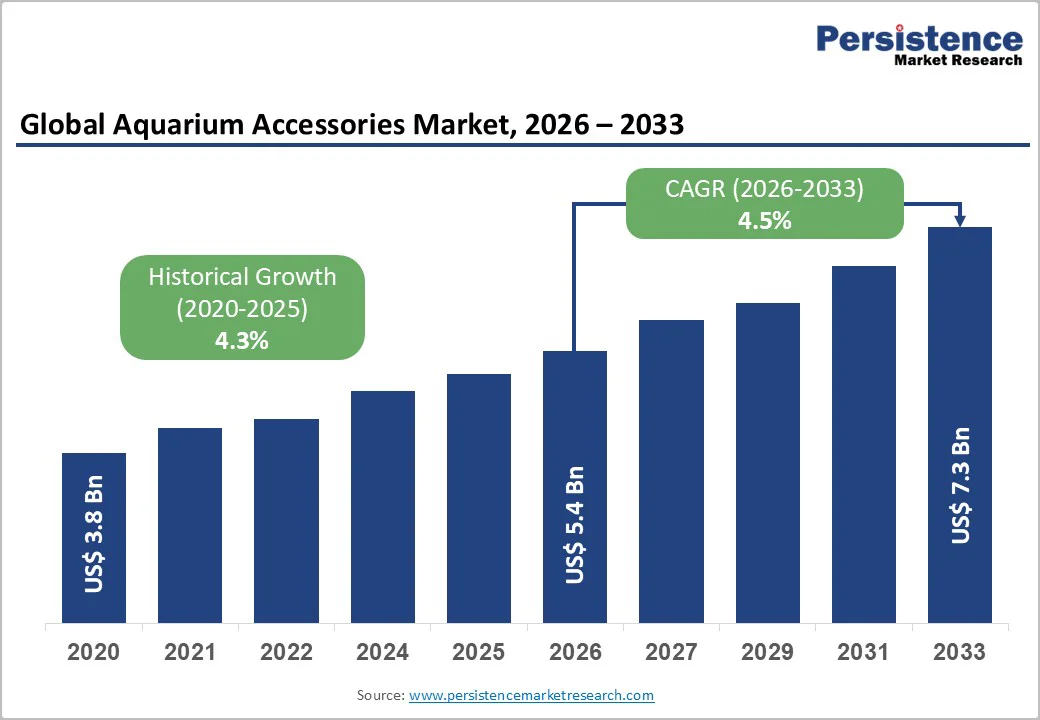
The global aquarium accessories market size is likely to be valued at US$ 5.4 billion in 2026, and is estimated to reach US$ 7.3 billion by 2033, growing at a CAGR of 4.5% during the forecast period 2026−2033. Steady market growth is derived from several lifestyle and economic shifts working together. As more people keep ornamental fish, they need reliable products like filters, lights, and decorations to keep tanks healthy and visually appealing, so every new aquarium typically generates ongoing demand for multiple accessories. Aqua scaping and the use of aquariums as home décor features mean people now treat tanks as design projects, investing in stylish substrates, rocks, plants, and lighting to match interior themes rather than just buying basic equipment once.
Key Industry Highlights
- Dominant Region: North America is expected to command about 30% of the market share in 2026, supported by strong spending capacity.
- Fastest-growing Regional Market: Asia Pacific is set to be the fastest-growing market through 2033, powered by rapid urbanization and a growing middle class.
- Leading Product Type: Filtration items are likely to lead with around 30% of the market revenue share in 2026, as they keep the water clear, remove waste, and support the biological processes.
- Fastest-growing Product Type: Lights & hood are poised to grow the fastest from 2026 to 2033, as they sit at the intersection of visual impact, animal/plant health, and technology upgrades.
- Dominant End-User: Residential end-users are expected to dominate with an estimated 70% of the market revenue share in 2026, due to the utilization of aquariums as both a hobby and a way to enhance interior spaces in homes.
- Fastest-growing End-User: Commercial users are projected to post the highest 2026-2033 CAGR, since an increasing number of offices now use aquariums as part of their customer experience.
- Market Drivers: Rising adoption of ornamental fish as pets has stoked the demand for essential products such as tanks, filters, lighting, decorations, and water-care items, driving the adoption of aquarium accessories.
- Market Opportunities: The discernible shift toward accessories that are kinder to the environment and safer for aquatic life is emerging as a highly lucrative opportunity.
| Key Insights | Details |
|---|---|
| Aquarium Accessories Market Size (2026E) | US$ 5.4 Bn |
| Market Value Forecast (2033F) | US$ 7.3 Bn |
| Projected Growth (CAGR 2026 to 2033) | 4.5% |
| Historical Market Growth (CAGR 2020 to 2024) | 4.3% |
Market Factors – Growth, Barriers, and Opportunity Analysis
Rising Ornamental Fish Ownership and Pet Humanization
The rising popularity of ornamental fish as household companions has led to a growing demand for aquarium accessories that support both the health and aesthetic appeal of aquatic environments. Essential items such as tanks, filtration systems, decorative elements, lighting solutions, and water-care products are now integral to maintaining vibrant and thriving aquariums. This trend reflects a broader cultural change in which pets are increasingly viewed as valued members of the family, prompting owners to prioritize their well-being and comfort. As a result, there is a heightened focus on creating safe, visually attractive habitats that cater to the specific needs of ornamental fish species.
Aquariums are no longer limited to hobbyist spaces; they are becoming central features in both living and working environments. Homeowners and businesses alike are setting up freshwater or saltwater aquariums to enhance the ambiance of living rooms, home offices, reception areas, and other communal spaces. The gentle movement of fish and water provides a calming effect, contributing to a more relaxing and visually engaging atmosphere. By integrating aquariums into everyday spaces, individuals are not only supporting the welfare of their aquatic pets but also enriching their own surroundings with a unique, tranquil focal point.
High Lifecycle Cost and Sensitivity to Discretionary Spending
Setting up an aquarium can seem affordable at the beginning, since the first purchase often focuses on a basic tank and a few accessories. Over time, however, a fully functional and visually appealing aquatic environment depends on continuous spending on filtration media, water testing kits, treatments, bulbs, pumps, and replacement parts that keep systems reliable. Hobbyists also incur recurring expenses for electricity, water, and routine maintenance services, which can add up significantly over the lifetime of the tank. For suppliers and retailers, this pattern highlights the importance of educating customers about long-term ownership costs and offering value propositions such as bundled care packages, starter kits with clear upgrade paths, and loyalty programs for consumables that support both fish health and customer retention.
When the broader economy weakens and households feel pressure on disposable income, consumers usually reduce discretionary spending on hobbies and nonessential home décor. In these conditions, aquarium enthusiasts may delay upgrading equipment, postpone new lighting or decorative features, and shift from premium accessories to lower priced alternatives, which slows sales growth for high margin and advanced products even if interest in the pastime remains stable. Commercial buyers, such as hotels, restaurants, corporate offices, and healthcare facilities, face comparable budget constraints and often treat large display tanks and elaborate installations as optional projects that can wait until revenues recover.
Premium Eco?Friendly and Sustainable Product Lines
The aquarium market is undergoing a marked transformation as consumers increasingly favor accessories that promote environmental sustainability and aquatic well-being. Hobbyists are seeking products such as natural decorative elements, biodegradable filtration materials, and energy-efficient equipment, including lighting, heating, and pumping systems produced from recyclable or responsibly sourced materials. This trend reflects a broader cultural and environmental awareness, as buyers become more conscious of issues related to plastic waste, carbon emissions, and the ecological footprint associated with fishkeeping. The shift also highlights a strong alignment between personal lifestyle choices and environmental stewardship, extending the ethics of sustainability into recreational and aesthetic pursuits at home.
Growing awareness of climate change and biodiversity conservation is now shaping purchasing behavior across the aquarium sector. Campaigns by environmental organizations and strategic messaging from conscientious brands have made sustainability a key differentiator in consumer decision-making. Pet owners who already value eco-friendly food, packaging, and cleaning products increasingly expect aquarium accessories to meet the same ethical and environmental standards. Items with reduced plastic content, transparent supply chains, and recyclable or biodegradable packaging are gaining favor, reinforcing the idea that environmental responsibility and product performance can coexist. For manufacturers and retailers, this evolution presents a clear opportunity to innovate, reposition product lines, and strengthen brand loyalty through authentic, sustainability-driven narratives.
Category-wise Analysis
Product Type Insights
Filtration items are poised to lead with an approximate 30% of the aquarium accessories market revenue share in 2026, since they are instrumental in ensuring the smooth functioning of a fish tank. A filter is the main system that keeps water clear, removes waste, and supports the biological processes that make the tank livable for fish and plants. For hobbyists, this means their fish thrive and their tanks require less frequent cleaning, making the whole experience more enjoyable and sustainable. Because filters are essential for these benefits, they are one of the first purchases when setting up an aquarium and remain a priority for both beginner and experienced owners.
The lights & hood segment is likely to be the fastest-growing from 2026 to 2033. Lights and hoods are at the intersection of visual impact, animal/plant health, and technology upgrades. Good lighting is essential for showing the true colors of fish, supporting plant and coral growth, and turning an aquarium into a standout feature in a room. As aqua scaping and reef keeping become more popular, hobbyists pay much closer attention to spectrum, brightness, and coverage, which naturally directs more spending toward advanced lighting systems rather than basic fixtures.
End-User Insights
The residential segment is slated to dominate with an estimated 70% of the revenue share in 2026. Most people who keep ornamental fish at home, using aquariums as both a hobby and a way to enhance interior spaces, which makes households the primary buyers of filters, lights, décor, and water?care products. This large installed base means that even routine activities like replacing filter media, upgrading lighting, or refreshing decorations generate steady, repeat demand from residential users. For several homeowners, aquariums are a way to bring nature indoors, reduce stress, and create a calming focal point in living rooms, bedrooms, or home offices.
The commercial segment is predicted to register the highest CAGR between 2026 and 2033, as a growing number of office spaces use aquariums to enrich their customer experience, while enhancing their branding and interior design strategies. Hotels, restaurants, shopping malls, corporate offices, clinics, and wellness centers increasingly install prominent tanks in lobbies, waiting areas, and dining spaces to create a calming, memorable environment.
Distribution Channel Insights
Offline channels are forecasted to capture a market share of around 65% in 2026. Physical stores are still the most trusted and convenient route for many aquarium buyers when they need advice, reassurance, and in-person product inspection. In pet stores and specialist aquarium shops, customers can see tanks, filters, lights, and décor in person, compare sizes and finishes, and immediately judge build quality and compatibility. Staff can test water, recommend suitable accessories for specific fish or tank types, and help troubleshoot problems, which is particularly valuable for beginners or for complex setups.
Online channel is anticipated to be the fastest-growing segment during the 2026-2033 forecast period. Online channels are more convenient, wide choice, and provide information in a way that strongly fits how aquarium owners now research and buy products. Hobbyists can browse hundreds of filters, lights, décor items, and maintenance tools in one place, compare features and prices in seconds, and read detailed reviews from other users before deciding what to buy. This reduces uncertainty, especially for higher?involvement items like advanced lighting or external filters.

Regional Insights
North America Aquarium Accessories Market Trends
North America is projected to capture a substantial portion of the aquarium accessories market share, estimated at roughly 30% by 2026. This dominant position stems from a mature culture of fishkeeping in the United States and Canada, where high disposable income allows enthusiasts to invest in premium aquatic setups. Households prioritize aquariums for aesthetic appeal and stress reduction, fueling consistent requirements for essential components such as advanced filtration systems, custom lighting, and ornate decorations. A robust distribution infrastructure supports this demand, characterized by a seamless blend of brick-and-mortar specialty shops, mass-market retailers, and sophisticated e-commerce platforms. These diverse channels ensure that hobbyists can easily access maintenance supplies or upgrade to high-end equipment, thereby maintaining consistent revenue streams for manufacturers and vendors.
Regulatory frameworks regarding electrical safety standards, environmental sustainability, and the trade of live species enforce high compliance barriers across the region. These stringent requirements naturally advantage established market players that possess the necessary capital to navigate complex certification processes and secure consumer trust. Leading companies are consolidating their positions by investing in product innovation, targeted digital marketing campaigns, and recurring subscription models for consumable items. Such strategic initiatives foster long-term customer loyalty and point toward a trajectory of steady, reliable expansion rather than volatile spikes in demand. By focusing on quality and compliance, the North American sector sets a benchmark for stability that attracts continued investment and professionalization within the industry.
Europe Aquarium Accessories Market Trends
Europe maintains a prominent position in the global aquarium accessories market due to its longstanding fishkeeping traditions and robust manufacturing capabilities. Key countries such as Germany, the United Kingdom, France, Spain, and Italy drive this strength through established brands, particularly in Germany and the UK. Enthusiast communities, aquascaping events, and specialized retail networks sustain high engagement levels among hobbyists. Online platforms are gaining ground rapidly, which broadens access to specialized equipment and rare components that local stores often lack. These factors create a resilient ecosystem that supports steady product innovation and positions Europe as a leader in premium, design-focused accessories.
European Union (EU) regulations profoundly shape the design and production of aquarium products across the continent. Directives on energy efficiency, chemical safety via the Registration, Evaluation, Authorisation and Restriction of Chemicals (REACH) framework, and waste management compel manufacturers to prioritize sustainable features. Filters, heaters, lighting systems, and decorations must incorporate elements such as low-energy light-emitting diode (LED) technology, durable parts, and recyclable materials to comply. Manufacturers that exceed these standards gain competitive edges through certifications and consumer preferences, opening pathways for premium pricing and export opportunities.
Asia Pacific Aquarium Accessories Market Trends
Asia Pacific is poised to become the fastest-growing aquarium accessories market worldwide between 2026 and 2033. Rapid urbanization and rising disposable incomes in China, India, and members of the ASEAN are reshaping consumer lifestyles. As more households move into apartments and compact residences, nano tanks and space-saving aquariums offer an appealing way to integrate nature into limited living areas. These smaller systems still require dependable filtration, heating, lighting, and decorative elements, which drives demand for premium, space-efficient accessories instead of generic, low-cost alternatives.
The region also possesses formidable manufacturing strength. Production centers in China and neighboring nations manufacture tanks, pumps, lighting systems, and ornaments at competitive price points, serving both global export channels and burgeoning domestic demand. Indigenous brands are maturing rapidly and now challenge established international competitors by aligning pricing with local income levels, tailoring designs to cultural preferences, and leveraging prominent visibility on e-commerce platforms such as Shopee, Lazada, and Taobao. This dual advantage of cost-effective production and localized market strategies positions Asia Pacific as a dynamic hub where supply capabilities and consumer demand reinforce each other, creating sustainable growth opportunities for manufacturers and distributors alike.

Competitive Landscape
The global aquarium accessories market structure exhibits moderate fragmentation, with leading players such as Aqua Design Amano Co., Ltd., Aqueon, Qian Hu Corporation Limited, Interpet Limited, and Guangdong Boyu Group Co., Ltd. collectively controlling approximately 40% to 45% of global sales. Major manufacturers maintain extensive operations across North America, Europe, and Asia Pacific, capitalizing on regional demand variations and consumer preferences. Their competitive advantage stems from well-established distribution networks that reach both specialty retailers and mass-market channels, coupled with longstanding relationships spanning aquarium shops, pet superstores, and e-commerce platforms.
The scale and financial strength of industry leaders support continuous investment in R&D, enabling innovation in energy-efficient systems, eco-friendly materials, and smart connectivity features. Multi-brand portfolios allow diversified positioning across consumer segments, from affordable starter kits to premium aquascaping equipment. By prioritizing sustainability initiatives and integrating Internet of Things (IoT) technology into products such as automated feeders, remote monitoring systems, and app-controlled lighting, dominant firms set industry standards while creating barriers to entry for smaller competitors. This strategic approach reinforces market leadership and aligns with evolving consumer expectations for convenience, environmental responsibility, and advanced functionality.
Key Industry Developments
- In September 2025, Shrimpin Ain’t EZ, a Tri-Cities aquarium shop specializing in freshwater plants, neocaridina shrimp, fish supplies, and cleaning services, expanded to a larger store in Kennewick amid rising local aquarium hobby demand. Owner Thomas Dobbins emphasized sustainable sourcing, exclusive regional distribution of Aquarium Co-Op and Extreme fish foods, and plans for workshops, themed rooms, and advanced plant offerings such as carbon dioxide-dependent species.
- In April 2025, Mumbai's Taraporevala Aquarium, India's oldest public facility opened in 1951, will undergo an INR 296-crore redevelopment by the Maharashtra government into a world-class complex with a 3.5 million-liter main tank, modern exhibits, offices, and research center. Closed since 2020 due to structural damage from salty air and Coastal Road construction, the project aims to boost tourism, education, and marine conservation.
- In March 2025, seven ocean-tech startups graduated from the New England Aquarium's BlueSwell accelerator program, receiving US$ 25,000 each and pitching to investors after a six-month mentorship focused on water and ocean innovations. Participants such as Hydrophos Solutions (phosphorus extraction from wastewater), Watabot (AI robots for algal bloom prevention), and Crewless Marine (acoustic marine noise monitoring) addressed issues from algal detection to aquaculture sensors and stormwater filtration.
Frequently Asked Questions
The global aquarium accessories market is projected to reach US$ 5.4 billion in 2026.
The soaring popularity of home aquariums for relaxation and aesthetics, along with technological innovation in smart, energy-efficient, and eco-friendly products, is driving the market.
The market is poised to witness a CAGR of 4.5% from 2026 to 2033.
Key market opportunities include smart, automated aquarium accessories for remote monitoring, and eco-friendly, sustainable product lines appealing to environmentally conscious consumers.
Aqua Design Amano Co., Ltd., Aqueon, Qian Hu Corporation Limited, Guangdong Boyu Group Co., Ltd. are some of the key players in the market.


