




- Pharmaceuticals
- Anti-pollution Nasal Spray Market
Anti-pollution Nasal Spray Market Size, Share, and Growth Forecast 2026 - 2033
Anti-pollution Nasal Spray Market by Product Type (Pollution Defense Products, Symptomatic Relief Nasal Sprays), Age Group (Pediatric, Adults), Application (Allergy, Sinus Congestion), Distribution Channel, and Regional Analysis, 2026 - 2033

Anti-pollution Nasal Spray Market Size and Trends Analysis
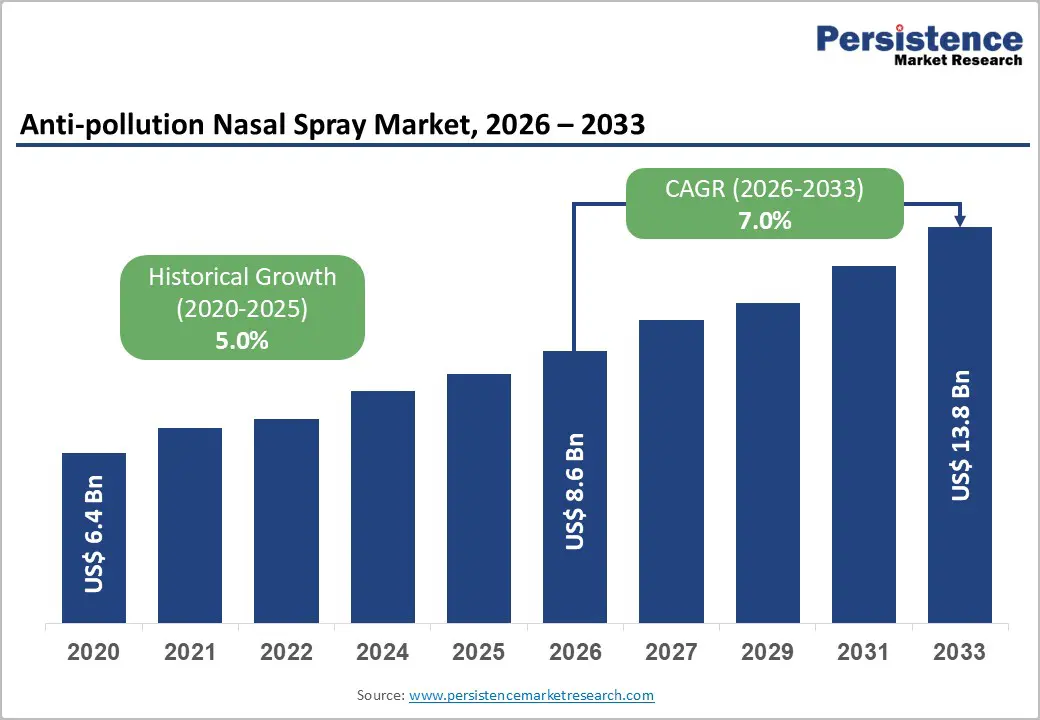
The global anti-pollution nasal spray market size is likely to be valued at US$8.6 billion in 2026 and is expected to reach US$13.8 billion by 2033, growing at a CAGR of 7.0% during the forecast period from 2026 to 2033, driven by increasing levels of air pollution and their harmful effects on human health.
As cities become more crowded and air quality continues to decline, individuals are turning to preventive measures to reduce daily exposure. Nasal sprays are hence being adopted as a convenient option that helps limit the entry of harmful particles into the respiratory system.
Key Industry Highlights:
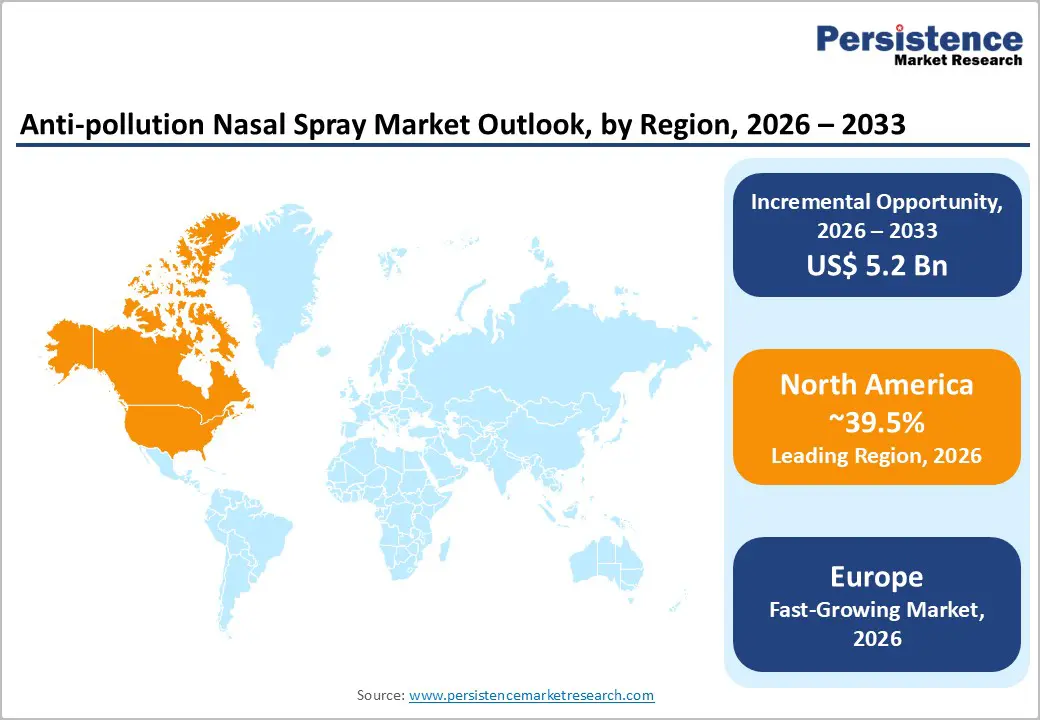
- Leading Region: North America, with nearly 39.5% of share in 2026, pushed by high awareness of preventive respiratory care and widespread availability of OTC nasal products through strong pharmacy networks.
- Fast-growing Region: Europe, amid increasing concerns about air pollution, is further pushing consumers toward personal protection solutions despite stringent norms.
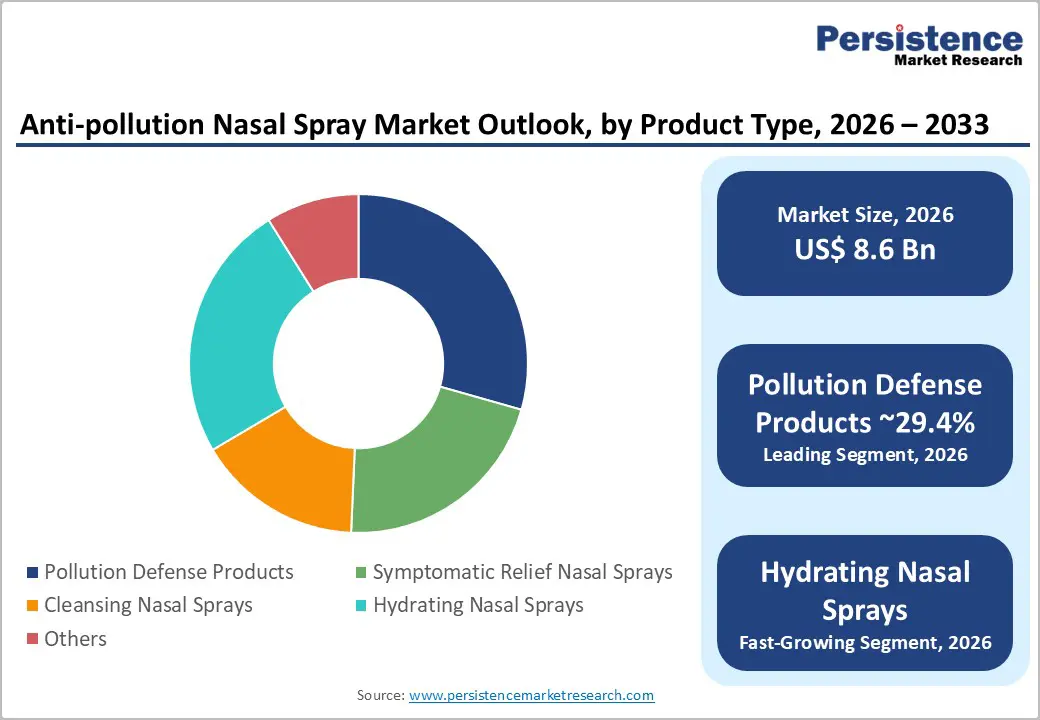
- Leading Product Type: Pollution defense products are expected to hold approximately 29.4% of the market share in 2026, as they act as a first line of defense, preventing pollutant entry rather than treating symptoms after exposure.
- Dominant Distribution Channel: Retail pharmacies, with around 33.2% of share in 2026, due to their ability to provide immediate access and trusted recommendations, making them the preferred point of purchase.
- Latest Regulatory Approval: Glenmark Specialty bagged approval in China for its nasal spray Ryaltris, with commercialization handled by a local partner, Grand Pharma, in November 2025.
DRO Analysis
Driver - High Air Toxicity to Augment Demand for Daily Protective Nasal Solutions
Ongoing industrial growth and dense urban living are constantly increasing exposure to harmful airborne particles such as PM2.5, nitrogen dioxide, and industrial smoke. Cities, including Delhi and Beijing, frequently record AQI levels in the severe range, with PM2.5 concentrations exceeding the World Health Organization (WHO) limits by 10-15 times during peak pollution months.
It has shifted consumer behavior from reactive treatment to daily protection habits, mainly among commuters and outdoor workers. Anti-pollution nasal sprays are thereby gaining popularity as a first-line defense, forming a physical barrier in the nasal cavity to block pollutant entry before it reaches the lungs.
Rising Prevalence of Respiratory Disorders to Broaden Use of Nasal Sprays
The prevalence of respiratory conditions, including asthma, chronic obstructive pulmonary disease, and allergic rhinitis, is rising at a steady pace worldwide. It has spurred demand for solutions that go beyond treatment and focus on prevention. As per the Global Burden of Disease Study, in India, more than 34 million individuals suffer from asthma, totaling to nearly 13% prevalence globally.
Allergic rhinitis, on the other hand, affects approximately 20-30% of the population and is often triggered by exposure to pollution. This has led to increased adoption of adjunct products such as anti-pollution sprays alongside inhalers and antihistamines. These sprays are not only used for relief but also for preventive care, especially among sensitive groups such as children, the elderly, and individuals with pre-existing respiratory issues.
Restraint - Side Effects Associated with Multiple Ingredients to Hinder Growth
A key limitation in terms of product adoption comes from ingredient-related side effects that affect user experience. Preservatives such as Benzalkonium Chloride have been shown in clinical observations to slow down ciliary movement in the nasal lining, which is essential for clearing dust and microbes. With repeated exposure, this can lead to dryness, irritation, and a blocked yet dry sensation that users often find uncomfortable.
In steroid-based sprays, prolonged use has been linked to micro-bleeding and thinning of the nasal mucosa, especially in dry climates or during winter pollution peaks. Antihistamine sprays introduce another layer of friction. Users frequently report lingering bitterness and mild sedation, which becomes inconvenient for daytime use, mainly for working professionals. These discomforts are problematic for many consumers, making them hesitant to continue using despite the pollution risks.
Opportunity - Introduction of Non-medicated and Daily-use Solutions
The ongoing development of drug-free nasal sprays designed for everyday use without dependency concerns is expected to create new opportunities for leading players. These products rely on mechanical barriers or natural ingredients rather than active drugs, making them suitable for long-term, preventive use.
For instance, cellulose-based powder sprays, such as those from Nasaleze, create a gel-like layer in the nose that blocks pollutants and allergens. Also, xylitol-based formulations from Xlear are gaining impetus for their antimicrobial and moisturizing properties. This category is expanding rapidly as consumers seek safe, non-habit-forming alternatives, especially for children and pregnant women.
Development of All-in-one Nasal Sprays to Improve User Convenience
Another key opportunity is the emergence of multi-benefit sprays that go beyond single-function use. Instead of merely acting as a barrier, new formulations combine pollutant filtration, nasal cleansing, and mucosal hydration into a single product. Brands such as Stérimar are already delivering isotonic and hypertonic seawater sprays enriched with trace minerals to both cleanse and soothe irritated nasal passages.
The multifunctionality reduces the need for multiple products, making it more appealing to urban users exposed to daily pollution. The convenience factor is key. Modern consumers now prefer compact, all-in-one solutions that fit into routine hygiene habits, similar to hand sanitizers or face masks, thereby propelling growth.
Category-wise Analysis
Product Type Insights
Pollution defense products are estimated to account for approximately 29.4% of the market share and dominate in 2026. It is due to their ability to directly address the root problem, i.e., pollutant entry into the body, rather than just symptoms. These sprays form a physical or gel-based barrier inside the nasal cavity, blocking dust, smoke, and PM2.5 before irritation begins. With air pollution linked to about 6.7 million premature deaths annually, consumers are shifting toward these preventive sprays that can be used daily, especially during commutes or outdoor exposure.
Hydrating nasal sprays are projected to be the fastest-growing segment, owing to their ability to prevent dryness and damage to the nasal lining. These help restore moisture while soothing inflamed tissues, making them suitable for frequent use. New formulations combine saline, minerals, and gentle ingredients to maintain mucosal health while providing mild protection. This appeals to users experiencing chronic dryness from AC exposure and pollution, thereby pushing demand.
Distribution Channel Insights
In 2026, retail pharmacies are expected to lead, recording nearly 33.2% of the market share, driven by their ability to offer convenient access, professional assistance, and trusted product authenticity. Most anti-pollution nasal sprays are over-the-counter. Consumers hence rely on pharmacists for quick recommendations, especially when dealing with respiratory discomfort. High footfall and strong distribution networks ensure broad product visibility, while in-store promotions drive purchase decisions.
Online channels are expected to be the fastest-growing segment in 2026, driven by their ability to eliminate barriers such as limited store availability and time constraints. Consumers can access a wide range of brands, compare formulations, and read reviews. These are considered important in a category where product differentiation is subtle. E-commerce also supports demand spikes during pollution peaks in metro cities, where users prefer doorstep delivery over visiting stores.
Regional Insights
North America Anti-Pollution Nasal Spray Market Trends
North America is predicted to account for a share of about 39.5% and lead the market in 2026. This is because consumers are already familiar with preventive respiratory care, not just treatment. The region also combines a high awareness of nasal health with easy access to OTC products through pharmacies and insurance-backed healthcare systems.
Respiratory illnesses are also a key trigger. According to the Journal of the American College of Cardiology, Respiratory Syncytial Virus (RSV) alone causes up to 160,000 hospitalizations annually in older adults in the U.S. It is expected to accelerate demand for preventive solutions such as nasal sprays.
U.S. Anti-Pollution Nasal Spray Market Trends
Growth in the U.S. is pushed by a combination of high allergy prevalence and ongoing product development. Seasonal allergies affect nearly one in three adults, propelling demand for daily-use nasal protection. Several local pharmaceutical companies are also launching improved formulations that are long-lasting, preservative-free, and multi-functional. These developments are expected to make the products more appealing for routine use rather than occasional relief.
The U.S. is further witnessing a steady growth as pollen is becoming highly unpredictable, mainly due to wildfires. Recent years have seen wildfire smoke push air quality into hazardous ranges across multiple states, even in regions previously considered clean. Also, nearly 30% of adults suffer from seasonal allergies in the country, creating a large base of users already familiar with nasal sprays.
Europe Anti-pollution Nasal Spray Market Trends
Europe is projected to be the fastest-growing region in the market through 2033. Growth is mainly associated with government-led air quality initiatives and public awareness campaigns. Despite strict emission controls, several urban areas still exceed WHO limits for PM2.5 and ozone, keeping pollution a visible health concern. The European Commission’s target to cut pollution-related deaths by 55% by 2030 is augmenting both awareness and preventive product adoption, including nasal sprays.
Germany Anti-Pollution Nasal Spray Market Trends
Germany’s growth is driven by a high preference for clinically validated, safe formulations and a large aging population more prone to respiratory sensitivity. The country also has one of Europe’s strongest pharmacy networks, where pharmacists play a key role in recommending preventive nasal products. Strict environmental monitoring further keeps pollution risks visible, encouraging consistent usage.
As per the European Environment Agency, air pollution contributes to hundreds of thousands of deaths annually in Europe, with older adults being the most affected. In 2022, in the EU-27, around 239,000 deaths were caused by exposure to PM2.5 concentrations above the WHO guideline level of 5µg/m3 (micrograms per cubic meter of air). Today’s consumers also prefer clinically tested products, which favors the adoption of medically positioned nasal sprays.
U.K. Anti-Pollution Nasal Spray Market Trends
The U.K. market is surging steadily because of persistent urban air pollution in cities such as London, as well as a superior self-medication culture. Consumers increasingly rely on OTC solutions for daily protection, especially during winter smog episodes and pollen seasons. The National Health Service (NHS) also actively promotes early management of respiratory symptoms, indirectly supporting routine nasal spray usage.
Asia Pacific Anti-Pollution Nasal Spray Market Trends
Asia Pacific stands out because it combines extreme pollution levels with a massive urban population. South Asia remains one of the most polluted regions globally, with consistently high PM2.5 levels across countries, including India and Bangladesh. This has created an urgent requirement for daily protective solutions, making nasal sprays increasingly relevant for commuters and outdoor workers.
Japan Anti-Pollution Nasal Spray Market Trends
Japan’s growth is associated with its strong preventive healthcare culture, where daily hygiene practices are widely accepted. High pollen exposure, especially cedar pollen, affects a large portion of the population every year, encouraging regular nasal care routines. Consumers hence prefer non-invasive and easy-to-use products such as anti-pollution nasal sprays.
China Anti-pollution Nasal Spray Market Trends
China’s market is expanding at a steady pace because of frequent air quality spikes in key cities such as Beijing and Shanghai. During high-smog periods, demand for protective products surges sharply. At the same time, rising e-commerce penetration has made these sprays more accessible, turning them into a daily-use product rather than an occasional purchase.
Competitive Landscape
The global anti-pollution nasal spray market is moderately consolidated but evolving fast, with the presence of various niche innovators, consumer healthcare brands, and big pharma companies. They are constantly competing based on formulation, trust, and positioning rather than price alone. Companies such as GlaxoSmithKline, Merck & Co., Haleon, and Himalaya Wellness Company utilize superior brand recall and pharmacy distribution.
A few other brands are competing on safety and tolerability, clinically validated formulations, and trust built through existing respiratory portfolios. A second layer of competition comes from specialist and niche brands such as Nasaleze, Sterimar, and Xlear. These players differentiate through natural or drug-free formulations. A handful of large firms are partnering or acquiring small-scale companies to enter the field of preventive respiratory care.
Key Industry Developments:
- In November 2025, Mucinex, a Reckitt brand, broadened its portfolio by introducing Mucinex Clear & Cool Saline Nasal Spray. It is a drug-free solution that helps consumers clear their nasal passages and prevent regular nasal discomfort.
- In June 2025, LUCA AICell launched LUCA V-Defense, a drug-free nasal spray, to provide a safe and non-pharmaceutical defense for mycoplasma pneumonia, influenza, and COVID-19. The product was made by using lipid nanocoating technology and natural algae-derived compounds.
- In January 2025, NeilMed Pharmaceuticals announced its new initiative to donate Sinus Rinse products for free to first responders battling wildfires across Los Angeles. The program was designed to help provide relief from the severe nasal discomfort caused by dust, smoke, and other airborne pollutants that emergency personnel and firefighters face.
Companies Covered in Anti-pollution Nasal Spray Market
- Haleon plc
- GSK plc
- Merck & Co., Inc.
- Himalaya Wellness Company
- Jadran-galenski laboratorij d.d. JGL d.d.
- NeilMed Pharmaceuticals, Inc.
- Aurena Laboratories AB
- Church & Dwight Co., Inc.
- Xlear, Inc.
- Sandoz International GmbH
Frequently Asked Questions
The global anti-pollution nasal spray market is projected to be valued at US$8.6 billion in 2026.
The market is expected to reach US$13.8 billion by 2033.
Development of preservative-free sprays to reduce irritation and the move from symptom relief to everyday prevention are the key market trends.
Pollution defense products are the leading product type category, accounting for around 29.4% of the market share in 2026, owing to their ability to address the root problem.
The market is expected to grow at a CAGR of 7.0% from 2026 to 2033.
Haleon plc, GSK plc, and Merck & Co., Inc. are a few key market players.


