


1. Executive Summary
1.1. Africa Safari Tourism Market Snapshot, 2025 and 2032
1.2. Market Opportunity Assessment, 2025 – 2032, US$ Bn
1.3. Key Market Trends
1.4. Future Market Projections
1.5. Premium Market Insights
1.6. Industry Developments and Key Market Events
1.7. PMR Analysis and Recommendations
2. Market Overview
2.1. Market Scope and Definition
2.2. Market Dynamics
2.2.1. Drivers
2.2.2. Restraints
2.2.3. Opportunity
2.2.4. Challenges
2.2.5. Key Trends
2.3. Macro-Economic Factors
2.3.1. U.S. Sectorial Outlook
2.3.2. U.S. GDP Growth Outlook
2.3.3. U.S. Healthcare Spending Outlook
2.4. COVID-19 Impact Analysis
2.5. Forecast Factors – Relevance and Impact
3. Value Added Insights
3.1. Straw Length Adoption Analysis
3.2. Technology Assessment
3.3. Regulatory Landscape
3.4. Value Chain Analysis
3.4.1. List of Distribution Channel/Marketplaces
3.4.1.1. Retail
3.4.1.2. E-Commerce
3.4.2. List of End User (Industry)
3.5. Key Deals and Mergers
3.6. PESTLE Analysis
3.7. Porter’s Five Force Analysis
4. Price Trend Analysis, 2019 – 2032
4.1. Key Highlights
4.2. Key Factors Impacting Straw Length Prices
4.3. Pricing Analysis, By Straw Length
4.4. Regional Prices and Straw Length Preferences
5. Africa Safari Tourism Market Outlook: Historical (2019 – 2023) and Forecast (2025 – 2032)
5.1. Key Highlights
5.1.1. Market Size (US$ Bn) and Y-o-Y Growth
5.1.2. Absolute $ Opportunity
5.2. Market Size (US$ Bn) Analysis and Forecast
5.2.1. Historical Market Size (US$ Bn) Analysis, 2019-2023
5.2.2. Current Market Size (US$ Bn) Analysis and Forecast, 2023–2032
5.3. Africa Safari Tourism Market Outlook: Type
5.3.1. Introduction / Key Findings
5.3.2. Historical Market Size (US$ Bn) Analysis, By Type, 2019 – 2023
5.3.3. Current Market Size (US$ Bn) Analysis and Forecast, By Type, 2023 – 2032
5.3.3.1. Adventure Safari
5.3.3.2. Luxury Safari
5.3.3.3. Cultural Safari
5.3.3.4. Honeymoon/Family Safari
5.4. Market Attractiveness Analysis: Type
5.5. Africa Safari Tourism Market Outlook: Accommodation Type
5.5.1. Introduction / Key Findings
5.5.2. Historical Market Size (US$ Bn) Analysis, By Accommodation Type, 2019 – 2023
5.5.3. Current Market Size (US$ Bn) Analysis and Forecast, By Accommodation Type, 2023 – 2032
5.5.3.1. Safari Resorts & Lodges
5.5.3.2. Safari Camps
5.5.3.3. Treehouses
5.5.3.4. Others
5.6. Market Attractiveness Analysis: Straw Length
5.7. Africa Safari Tourism Market Outlook: Group
5.7.1. Introduction / Key Findings
5.7.2. Historical Market Size (US$ Bn) Analysis, By Group, 2019 – 2023
5.7.3. Current Market Size (US$ Bn) Analysis and Forecast, By Group, 2023 – 2032
5.7.3.1. Friends
5.7.3.2. Families
5.7.3.3. Couples
5.7.3.4. Solos
5.8. Market Attractiveness Analysis: Group
5.9. Africa Safari Tourism Market Outlook: Booking Mode
5.9.1. Introduction / Key Findings
5.9.2. Historical Market Size (US$ Bn) Analysis, By Booking Mode, 2019 – 2023
5.9.3. Current Market Size (US$ Bn) Analysis and Forecast, By Booking Mode, 2023 – 2032
5.9.3.1. Direct Booking
5.9.3.2. Agents and Affiliates Account
5.9.3.3. Marketplace Booking
5.10. Market Attractiveness Analysis: Booking Mode
6. Competition Landscape
6.1. Market Share Analysis, 2023
6.2. Market Structure
6.2.1. Competition Intensity Mapping By Market
6.2.2. Competition Dashboard
6.3. Company Profiles (Details – Overview, Financials, Strategy, Recent Developments)
6.3.1. &Beyond
6.3.1.1. Overview
6.3.1.2. Segments and Straw Lengths
6.3.1.3. Key Financials
6.3.1.4. Market Developments
6.3.1.5. Market Strategy
6.3.2. Wilderness Safaris
6.3.3. Singita
6.3.4. Asilia Africa
6.3.5. Abercrombie & Kent
6.3.6. Elewana Collection
6.3.7. Sanctuary Retreats
6.3.8. Thomson Safaris
6.3.9. Nomad Tanzania
6.3.10. Great Plains Conservation
6.3.11. African Bush Camps
6.3.12. Ker & Downey
6.3.13. Kwandwe Private Game Reserve
6.3.14. Robin Pope Safaris
6.3.15. Chobe Game Lodge
7. Appendix
7.1. Research Methodology
7.2. Research Assumptions
7.3. Acronyms and Abbreviations


- Travel and Tourism
- Africa Safari Tourism Market
Africa Safari Tourism Market Size, Share and Growth Forecast for 2025 - 2032
Africa Safari Tourism Market by Type (Adventure, Cultural, Luxury, Honeymoon/Family), Accommodation Type (Safari Camps, Safari Resorts and Lodges, Treehouses), Group, Booking Mode, and Region Analysis from 2025 to 2032
Africa Safari Tourism Market Size and Share Analysis
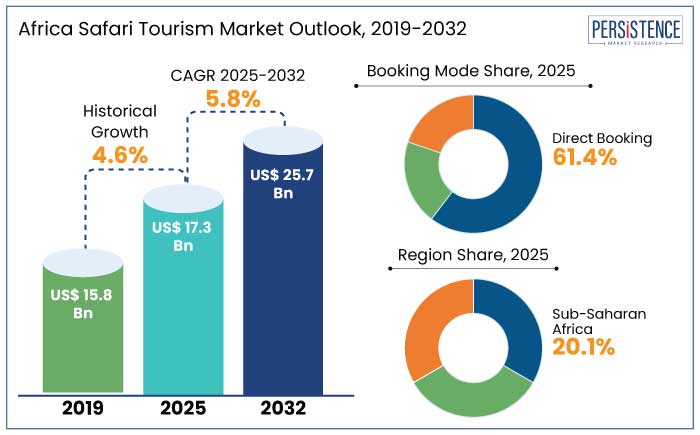
The Africa safari tourism market is estimated to increase from US$ 17.3 Bn in 2025 to US$ 25.7 Bn by 2032. The market is projected to record a CAGR of 5.8% during the forecast period from 2025 to 2032.
Africa offers some of the most iconic safari destinations, such as the Serengeti in Tanzania, Kruger National Park in South Africa, and the Maasai Mara in Kenya. Tourists are drawn to witness the ‘Big Five’ (lion, leopard, rhinoceros, elephant, and buffalo) and natural phenomena like the Great Migration.
The Serengeti's Great Migration, often referred to as the ‘World Cup of Wildlife,’ attracts over 1.5 million wildebeests annually and brings in tens of thousands of tourists from around the globe. Kenya reported a 44% increase in safari bookings in 2023 compared to pre-pandemic levels, highlighting the rising interest in wildlife.
The lifting of travel restrictions and the recovery of the tourism sector have contributed significantly to the resurgence of safari tourism. Several international travelers are now prioritizing outdoor and nature-based activities, making safaris a preferred choice. The World Tourism Organization (UNWTO) noted a 48% rise in international tourist arrivals to Africa in 2023, with wildlife tourism being a significant draw.
Key Highlights of the Market
- Increasing demand for sustainable and eco-friendly safari experiences is likely to be a leading trend.
- Surging interest in high-end accommodations and personalized safari packages is projected to bolster the market.
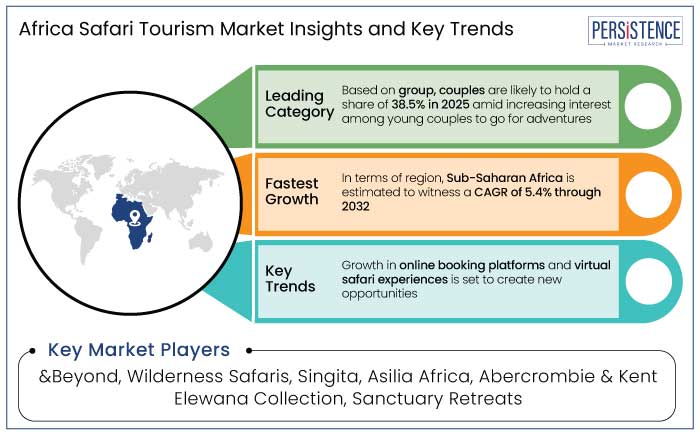
- Growth in online booking platforms and virtual safari experiences is set to create new opportunities.
- Travelers seeking immersive experiences with indigenous African communities are anticipated to augment demand.
- Safaris integrating conservation activities are likely to attract responsible travelers.
- In terms of region, Sub-Saharan Africa is estimated to witness a CAGR of 5.4% through 2032 and hold a share of 20.1% in 2025.
|
Market Attributes |
Key Insights |
|
Africa Safari Tourism Market Size (2025E) |
US$ 17.3 Bn |
|
Projected Market Value (2032F) |
US$ 25.7 Bn |
|
Africa Market Growth Rate (CAGR 2025 to 2032) |
5.8% |
|
Historical Market Growth Rate (CAGR 2019 to 2023) |
4.6% |
Direct Bookings to Gain Traction with Easy Access to Information Online
In 2025, direct bookings in Africa safari tourism industry are set to account for 61.4% of share. Several travellers could not have imagined booking directly a few years ago.
The advent of the Internet, increased awareness of global tourism, and easy access to information about safari tours and their nature are projected to create opportunities for growth. The presence of various booking platforms and the benefits obtained through direct bookings have also encouraged customers to use this type of booking rather than agents or third-party organizers.
Couples to Boost Revenue Amid Desire to Travel to Adventurous Destinations
In 2025, couples are likely to account for 38.5% of the share in the Africa safari tourist industry. Couples overwhelmingly chose safari tourism as one of the most exciting adventure destinations. Younger and middle-aged couples from all over the world seek unique experiences.
A few of these include the ability to explore the natural beauty of landscapes, thrilling encounters with wild animals, memorable vistas, and similar others. Such couples frequently pick safari vacations that combine luxury accommodations with increased chances of seeing animals. They often prefer camps and resorts that combine wellness comforts with adventurous activities.
Africa Safari Tourism Market Introduction and Trend Analysis
The Africa safari tourism market is a dynamic sector characterized by its rich biodiversity and unique wildlife experiences, attracting millions of international tourists annually. Recent trends indicate a surging preference for sustainable and eco-friendly tourism options.
Travelers are now increasingly seeking authentic experiences that prioritize conservation and community engagement. Luxury safari lodges are also witnessing high demand, as affluent travelers desire personalized and exclusive adventures.
The rise of digital technologies, such as virtual safaris and social media marketing, is transforming how potential tourists engage with safari offerings. These trends highlight the industry’s responsiveness to changing consumer preferences and the importance of sustainability in shaping future growth.
Historical Growth and Course Ahead
The Africa safari tourism industry experienced robust growth in the historical period, driven by the allure of the continent's unique wildlife and natural landscapes. It witnessed a CAGR of 4.6% from 2019 to 2023.
Over the past decade, increased global interest in adventure travel and conservation efforts fueled this growth. However, challenges such as political instability and over-tourism have impacted growth in certain regions.
The market is poised for continued development, with a strong emphasis on sustainable tourism practices, community engagement, and personalized experiences. Adapting to changing consumer preferences will likely be important for operators to thrive in the evolving landscape of safari tourism.
Market Growth Drivers
Africa's Big Five Animals to Attract Global Tourists
Africa's rich biodiversity serves as a primary market driver for tourism, particularly through its iconic ‘Big Five’ animals, namely, lion, elephant, buffalo, leopard, and rhinoceros. These species represent the continent's unique wildlife and natural heritage, attracting international tourists seeking unforgettable experiences in their natural habitats.
National parks and reserves, such as the Serengeti and Kruger, offer opportunities for wildlife viewing and immersive encounters, making these prime destinations for safari-goers. The allure of witnessing these majestic animals in the wild not only promotes tourism but also raises awareness about conservation efforts. As travelers increasingly seek authentic experiences and connections to nature, demand for safari tourism centered around Africa's biodiversity continues to surge, boosting the market.
Rising Demand for Luxury and Exclusive Safaris to Push Growth
Growing demand for high-end safari lodges and personalized travel experience is a significant market driver in Africa's safari tourism industry. Affluent travelers increasingly seek unique and luxurious accommodations that provide exclusivity and comfort while immersing them in the natural environment.
Such upscale lodges often feature lavish amenities, private guides, and tailored itineraries, catering to the desire for customized adventures that align with individual preferences. Additionally, the trend toward experiential travel has led to a greater focus on unique offerings, such as gourmet dining, wellness retreats, and specialized wildlife experiences. As consumers prioritize quality over quantity, this shift toward luxury and personalization not only enhances their safari experience but also drives revenue growth in the market, attracting a wealthier clientele.
Market Restricting Factors
Political Unrest May Hinder Tourism Activities and Decline Demand
Political unrest in certain regions of Africa poses a significant restraint on tourism, deterring potential visitors and negatively impacting the market. Travelers often prioritize safety and stability when planning trips, and areas experiencing conflict or instability may be perceived as risky destinations.
The concern can lead to decreased tourist numbers, affecting local economies that rely heavily on safari tourism. Additionally, negative media coverage of unrest can damage a region's reputation, leading to long-term declines in tourist interest. As a result, tourism operators may face challenges in sustaining their businesses, ultimately hindering growth of the broader market.
Over-tourism Threatens Habitat, Hindering Sustainable Growth
Over-tourism presents a significant restraint on the sustainable growth of the Africa safari tourism market by threatening the delicate ecosystems that attract visitors. As more tourists flock to popular destinations, the pressure on natural habitats intensifies, leading to potential degradation of wildlife and landscapes.
It can result in issues such as soil erosion, pollution, and disturbances to local wildlife, which diminish the very attractions that draw tourists. Furthermore, habitat degradation may prompt strict regulations and limitations on visitor numbers, restricting access and impacting revenue for operators. Consequently, balancing tourism growth with environmental conservation becomes increasingly challenging, jeopardizing the future sustainability of the market.
Key Market Opportunities
Emergence of Sustainable Safaris to Attract Responsible Travelers
Rising offerings of sustainable and conservation-focused safaris presents a significant future opportunity for the Africa safari tourism industry, particularly in attracting a new generation of responsible travelers. As awareness of environmental issues and conservation efforts rises, millennials and Gen Z travelers increasingly prioritize experiences that align with their values.
By developing eco-friendly safari options, such as low-impact accommodations, wildlife rehabilitation programs, and community-based initiatives, operators can cater to this demographic's desire for meaningful and responsible travel. This shift not only enhances the travel experience but also fosters greater support for conservation efforts, ensuring long-term sustainability for both the industry and Africa's rich biodiversity.
Community-based Tourism Involving Locals in Operations to Create Avenues
Developing community-based tourism initiatives offers a promising future opportunity in the Africa safari tourism industry by actively involving local populations in safari operations and profit-sharing. This approach fosters economic empowerment and encourages community participation, ensuring that the benefits of tourism are distributed locally.
By engaging communities in decision-making and providing training for hospitality and guiding roles, operators can create authentic experiences that resonate with travelers seeking cultural immersion. Additionally, profit-sharing models incentivize conservation efforts, as communities are more likely to protect their natural resources when they directly benefit from tourism. This collaborative strategy not only enhances the travel experience but also promotes sustainable tourism growth and community development.
Competitive Landscape for the Africa Safari Tourism Market
The competitive landscape of the Africa safari tourism market is characterized by a diverse range of operators, including luxury safari lodges, eco-tourism companies, and adventure travel agencies. Key players like &Beyond, Abercrombie & Kent, and Wilderness Safaris dominate the luxury segment, offering bespoke experiences and high-end accommodations.
Companies such as G Adventures and Nomad Tanzania focus on budget-friendly and eco-conscious travelers. The market also includes community-based operators that emphasize local involvement and sustainability, appealing to responsible tourists.
Digital platforms and travel agencies also play a crucial role in facilitating bookings and enhancing customer experiences through personalized itineraries. Increasing emphasis on sustainability, conservation, and unique experiences drives competition, pushing companies to innovate and adapt to evolving traveler preferences, ultimately shaping the future of the safari tourism landscape in Africa.
Recent Industry Developments
- In February 2024, Radisson Hotels, an international and innovative hotel business with 10 distinct brands and over a thousand hotels throughout the world, announced the opening of its first safari hotel in South Africa, the Radisson Safari Hotel Hoedspruit.
- In September 2023, Ximuwu Lodge announced the launch of their latest safari offering, which includes wheelchair-accessible safaris in South Africa. The goal is to ensure that seeing animals is a pleasure that anybody and everyone can enjoy. This contains sightings of animals including hyenas, leopards, lions, rhinos, and giraffes.
Companies Covered in Africa Safari Tourism Market
- &Beyond
- Wilderness Safaris
- Singita
- Asilia Africa
- Abercrombie & Kent
- Elewana Collection
- Sanctuary Retreats
- Thomson Safaris
- Nomad Tanzania
- Great Plains Conservation
- African Bush Camps
- Ker & Downey
- Kwandwe Private Game Reserve
- Robin Pope Safaris
- Chobe Game Lodge
Frequently Asked Questions
The market is set to be valued at US$ 17.3 Bn in 2025.
The industry is being propelled by rising influence of social media platforms and desire for unique travel experiences.
&Beyond, Wilderness Safaris, Singita, Asilia Africa, Abercrombie & Kent, and Elewana Collection and Sanctuary Retreats are a few leading players.
The market is set to witness a CAGR of 5.8% through 2032.
A prominent opportunity lies in developing community-based tourism initiatives, which empower local populations and enhance authentic experiences.


