

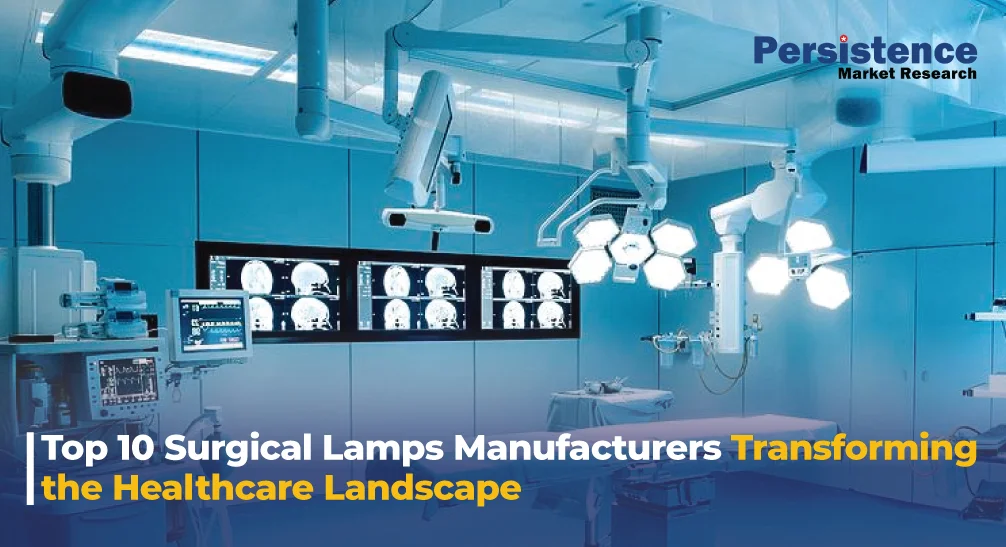
Below are ten companies leading this transformation with cutting-edge surgical lamps adopted by hospitals and specialty centers worldwide.
1. Stryker Corporation
Stryker remains a prominent force in the surgical imaging and illumination market. Its Visum LED II and Visum LED 120 lamps offer exceptional shadow management, adjustable color temperature, and efficient heat control. Many North American and European hospitals deploy these systems to support robotic and minimally invasive procedures. Facilities using Visum LED solutions report improved surgeon comfort and enhanced visibility during long, complex cases.
2. Drägerwerk AG & Co. KGaA
Dräger’s Polaris 600 and Polaris 200 are recognized for advanced optical technology and intuitive touch controls. These lamps integrate seamlessly with Dräger OR infrastructure, enabling synchronized lighting presets for trauma rooms and hybrid operating theaters. Hospitals such as Charité in Berlin have adopted Polaris systems to reduce room turnover time and maintain consistent lighting across multidisciplinary surgical teams.
3. Hillrom (now part of Baxter International)
Hillrom’s TruLight series has become a preferred choice for high-acuity hospitals due to its precise color rendering index (CRI) and configurable light fields. The TruLight 7000, in particular, is known for its adaptive illumination that maintains brightness even when obstructed. Surgical facilities across the US and Asia use Hillrom lamps to optimize lighting for cardiac, neurosurgical, and transplant procedures, improving visualization of fine anatomical structures.
4. Philips Healthcare
Philips leverages deep expertise in medical lighting to deliver LED-based surgical lamps with long operational life and low energy consumption. The company’s innovations in thermal management and uniform beam control make Philips lights ideal for high-demand operating environments. Several multi-specialty hospitals in Europe have adopted Philips surgical lighting to lower maintenance cost per procedure while achieving consistent illumination quality.
5. Skytron
Skytron’s Aurora Four and Spectra LED lamps stand out for their outstanding depth of illumination and high intensity at low power levels. Skytron also focuses on infection-control-friendly design, incorporating smooth surfaces and minimal crevices. US-based surgical centers have reported shorter cleaning cycles and improved OR scheduling efficiencies after switching to Skytron systems.
6. Steris Corporation
STERIS offers the HarmonyAIR M-Series, well-known for advanced shadow-control performance and ceiling-mounted configurations that support hybrid ORs. Features such as adjustable lighting profiles and integrated camera systems enable real-time surgical documentation and teaching. Teaching hospitals in North America and the UK often deploy HarmonyAIR lamps for image-guided and multi-disciplinary surgeries.
7. Getinge AB (Maquet brand)
Getinge’s Maquet PowerLED II lamps provide outstanding light homogeneity and controlled heat generation, ideal for long procedures. They are widely used in cardiovascular and neurosurgical departments across Europe and the Middle East. Maquet lighting systems integrate with Getinge’s OR table and ceiling systems, creating a comprehensive surgical workspace that enhances coordination and efficiency.
8. Mindray Medical International
Mindray continues to expand rapidly with its HyLED series, designed for cost-efficient, high-performance illumination. Features include adjustable color temperature, smart brightness stabilization, and long LED lifespan. Hospitals in Asia Pacific and emerging markets rely on HyLED lamps for dependable performance in high-volume operating environments. The lamps have contributed to reduced downtime and lower maintenance expenditure.
9. ACEM Medical Company
ACEM’s Starled and OT System surgical lamps are engineered for superior color fidelity and true-to-life tissue differentiation. Designed with ergonomic handles and flexible mounting, they offer surgeons improved control during delicate procedures. Many European outpatient surgery centers use ACEM systems to support ophthalmology, ENT, and plastic surgery procedures where precision illumination is essential.
10. KONINKLIJKE NV (KLS Martin Group)
KLS Martin’s marLED E and marLED X series apply advanced LED modules that create exceptional shadow-free fields and allow surgeons to personalize lighting profiles. Noted for durability and sleek, lightweight design, these lamps are used widely in maxillofacial and craniofacial surgery centers. Clinics adopting marLED technologies report better lighting uniformity and ergonomic ease during extended operations.
Market Trends Driving Innovation in Surgical Lighting
The surgical lamps market continues to transition toward advanced LEDs, with adoption now exceeding 80% in many developed healthcare systems. Hospitals increasingly prefer lights that integrate with surgical cameras, navigation systems, and OR management platforms. The rise of ambulatory surgery centers has also created demand for compact ceiling-mounted and mobile LED lamps with lower lifecycle costs.
Energy efficiency is another major priority. LEDs consume up to 70% less power than legacy halogen systems, supporting hospitals’ sustainability goals and reducing cooling loads in confined operating spaces.
Real-World Impact on Surgical Outcomes
- Across the healthcare landscape, upgrading from older halogen lamps to high-end LED systems has yielded measurable improvements:
- Enhanced tissue visualization supports accurate cutting planes and reduces the risk of errors.
- Lower heat emission helps prevent tissue drying and improves patient safety in long surgeries.
- Reduced shadowing allows surgeons to maintain uninterrupted focus and speed.
- Smart lighting presets enable rapid room setup, accelerating OR turnover by several minutes per case.
- These improvements directly influence hospital efficiency metrics, including surgical throughput and staff satisfaction.
Outlook: Where Surgical Lamp Innovation Is Heading
The next wave of surgical lighting will emphasize deeper integration with OR digital ecosystems. Manufacturers are already developing lamps with AI-assisted illumination adjustments, automated shadow compensation, and wireless control via sterile interfaces. Sterile-field imaging, augmented reality compatibility, and 4K camera integration will further transform surgical visualization.
As healthcare systems continue to modernize their operating rooms, companies that combine robust optical engineering with connectivity, user-centric design, and long-term energy savings will remain at the forefront.


