

1. Evolution from single-function devices to integrated care platforms
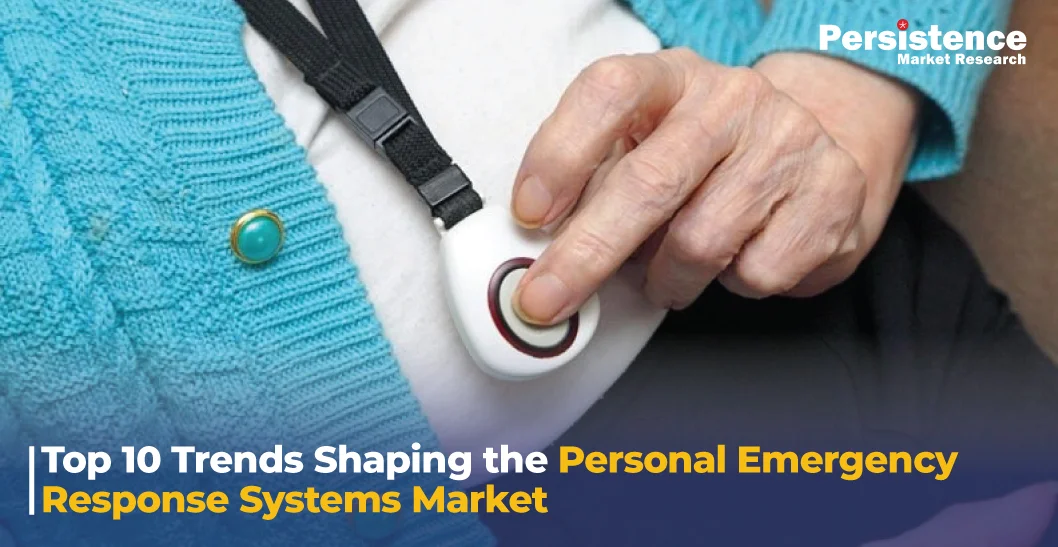
Traditional pendants and wall-mounted alert units are being replaced with multifunctional systems that serve as connected care hubs. Modern PERS devices now incorporate voice assistance, GPS tracking, motion sensing, and two-way communication. This integration allows users, caregivers, and monitoring centers to access contextual information about an event, improving the quality and speed of response. The shift indicates a move toward holistic home safety rather than isolated emergency alert functions.
2. Growth of wearable PERS and enhanced fall detection
Wearable devices remain central to the market, but their capabilities have advanced significantly. Wrist-based sensors, smart pendants, and smartwatches equipped with fall detection and health indicators are being adopted widely due to their convenience. Machine learning algorithms that analyze movement patterns have reduced false alarms and improved detection accuracy. Wearables have also gained user acceptance because they resemble consumer smart devices rather than clinical tools.
3. Emergence of non-wearable and camera-based detection technologies
A growing share of users prefer non-wearable systems that eliminate the need to remember to wear a device. Radar sensors, wall-mounted modules, and camera-based fall detection solutions are expanding within residential settings. These systems track motion and posture changes in real time and send alerts when abnormalities are detected. They also support individuals who have mobility limitations or cognitive conditions that make consistent use of wearables challenging.
4. Increasing use of artificial intelligence for predictive monitoring
AI is gaining prominence in the PERS market as providers begin incorporating predictive analytics. Instead of responding only after an incident, platforms now analyze activity levels, movement irregularities, and historical patterns to identify risks early. This helps detect declines in mobility or rising fall probability. AI-enabled insights help monitoring teams interpret events more accurately, reducing unnecessary interventions and enabling more informed follow-up.
5. Integration with telehealth and remote patient monitoring ecosystems
PERS devices are increasingly linked with telehealth platforms and remote patient monitoring applications. When vital signs, symptom data, and emergency alerts are integrated, health professionals can review contextual information before taking action. This helps create coordinated care pathways where clinicians can initiate virtual consultations, adjust treatment plans, or verify alerts. Health systems and home care agencies are accelerating adoption as these integrations support aging in place initiatives and continuity of care.
6. Diversification of service and subscription models
The market continues to expand through new business models that focus on flexibility. Subscription monitoring remains dominant, but providers now offer tiered service levels such as family notification plans, self-monitoring options, mobile app access, and expanded emergency verification services. Retail distribution of PERS devices is also increasing, making the systems more accessible for consumers who prefer purchasing directly and activating services independently.
7. Increasing focus on data privacy and regulatory compliance
As PERS devices capture audio, motion patterns, location data, and in some cases video, privacy expectations have become more stringent. Compliance with local and regional health data protection laws is now a critical requirement. Service providers are investing in secure data management frameworks and transparent user consent mechanisms. Trust and reliability play a strong role in vendor selection, particularly for institutional users and family caregivers.
8. Rapid expansion in Asia Pacific and emerging markets
Demand for PERS is growing beyond North America and Europe. Asia Pacific is becoming an influential market due to rapid aging across Japan, China, and South Korea and rising investments in home based care. Countries in Latin America and parts of the Middle East are also adopting PERS solutions in response to growing healthcare pressures and urbanization. Price sensitive product lines and local distribution partnerships are supporting faster adoption across these regions.
9. Advancements in user experience and accessibility
Design improvements are reshaping user satisfaction levels. Longer battery life, clearer voice prompts, tactile buttons, simplified charging solutions, and stronger network connectivity have contributed to more reliable operation. User interfaces are being redesigned for older adults, with attention to accessibility requirements such as visibility, intuitive controls, and quick response feedback. These enhancements aim to reduce abandonment rates and increase daily usage.
10. Consolidation and collaborations across the industry
The competitive landscape is undergoing visible consolidation as device manufacturers, monitoring service providers, telecom operators, and digital health companies form partnerships or pursue acquisitions. These collaborations help combine hardware innovation with large-scale monitoring infrastructure and software capabilities. They also support unified product portfolios that integrate emergency response, home safety monitoring, and health data services in a single platform.
Conclusion
The personal emergency response systems market is progressing toward a more connected and intelligence-driven model of home safety. The industry is shaped by demographic change, continuous technological innovation, and a rising emphasis on independent living. Developments in sensors, analytics, integration frameworks, and user-centric design are broadening the scope of PERS beyond emergency alerts and moving it toward a comprehensive home monitoring and support ecosystem.


