




- Aerospace & Defense
- Aircraft Interior Fabrics Market
Aircraft Interior Fabrics Market Size, Share, and Growth Forecast, 2025 - 2032
Aircraft Interior Fabrics Market By Material Type (Natural Fibers, Synthetic Fibers, Blended Fibers), Fabric Properties (Flame Retardant, Water Resistant, Others), Application, End-use, and Regional Analysis for 2025 – 2032

Aircraft Interior Fabrics Market Size and Trends Analysis
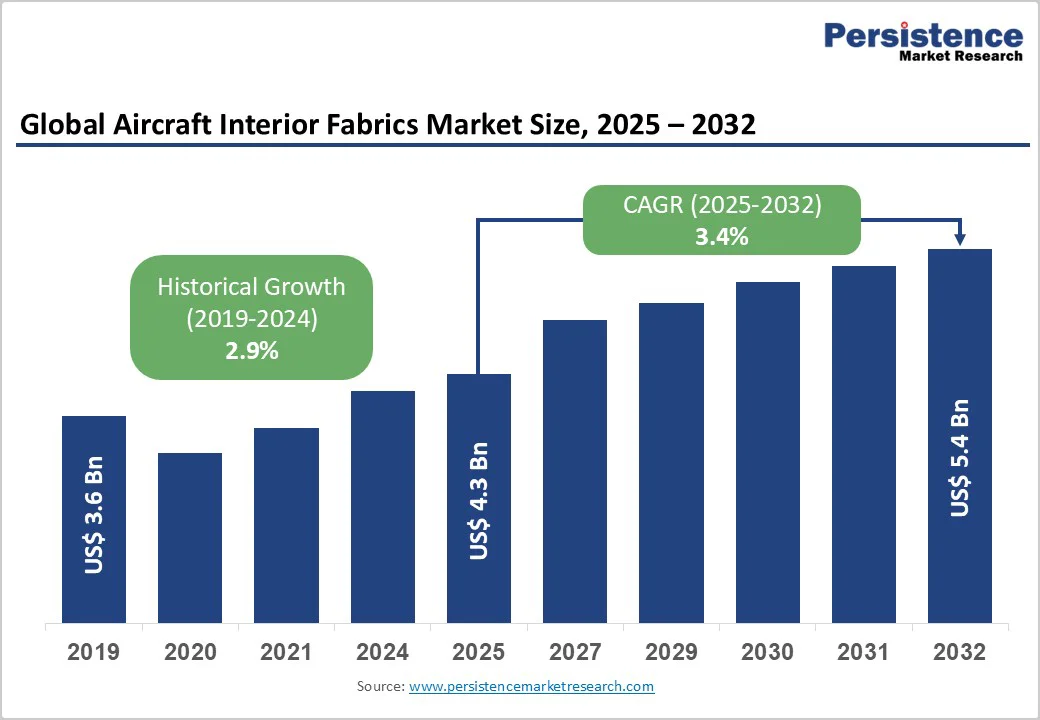
The global aircraft interior fabrics market size is likely to be valued US$4.3 Billion in 2025, projected to reach US$5.4 Billion by 2032, growing at a CAGR of 3.4% during the forecast period from 2025 to 2032, driven by increasing air travel demand, rising focus on passenger comfort and aesthetics, and stringent aviation safety regulations. The market is further propelled by innovations in sustainable and lightweight materials, catering to preferences for eco-friendly and high-performance solutions. The growing acceptance of aircraft interior fabrics for enhancing cabin interiors, especially in premium and budget airlines, is a key growth factor.
Key Industry Highlights:
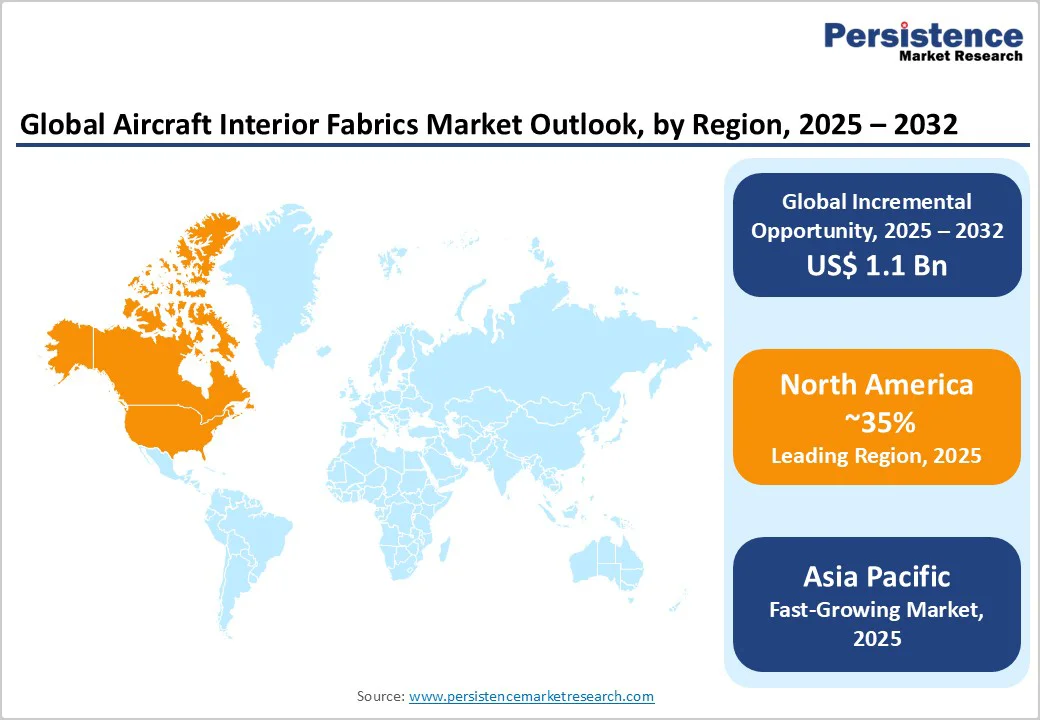
- Leading Region: North America, commanding a 35% market share in 2025, driven by major aircraft manufacturers and airline upgrades in the U.S.
- Fastest-growing Region: Asia Pacific, due to rapid expansion in aviation infrastructure, rising disposable incomes, and increasing air travel across countries such as China, India, and Southeast Asia.
- Dominant Material Type: Synthetic Fibers, holding 45% of the market share, due to their exceptional durability, lightweight nature, and cost efficiency compared to natural materials.
- Leading Fabric Property: Flame Retardant, accounting for over 50% of market revenue, driven by aviation safety standards.
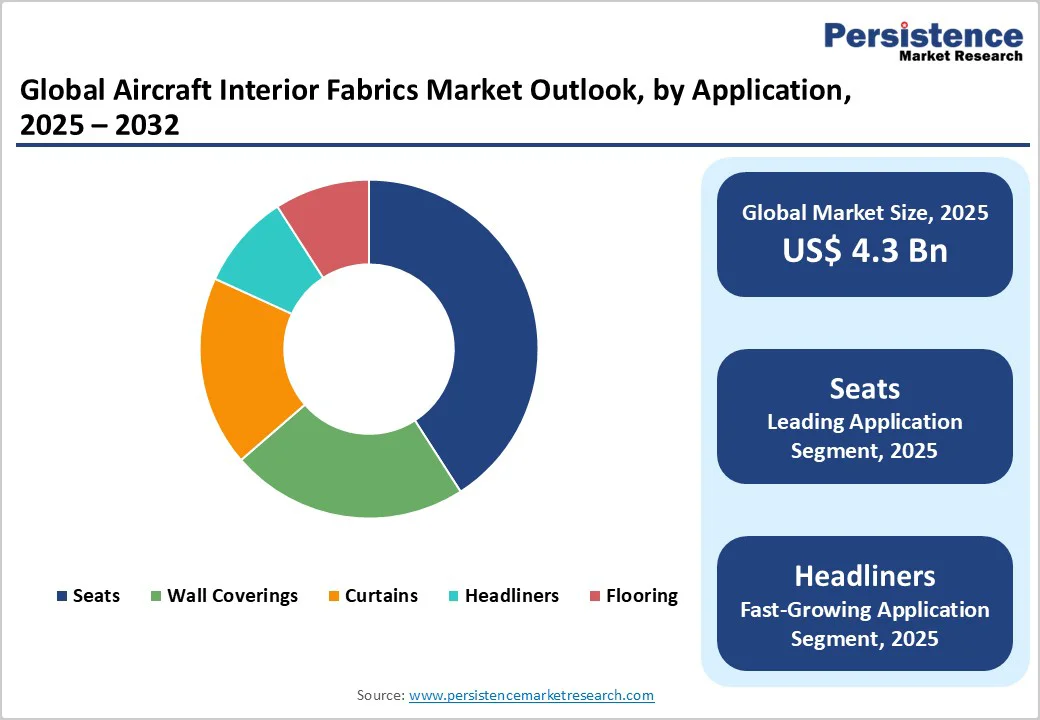
- Leading Application: Seats, contributing nearly 40% of market revenue, owing to high replacement frequency.
- Leading End-use: Commercial Aircraft, holding 60% share, due to the large global fleet size and continuous rise in passenger air travel.
- Key Market Driver: Growing global passenger traffic and airline fleet modernization are boosting demand for durable, lightweight, and comfortable interior fabrics for both new aircraft and retrofits.
| Key Insights | Details |
|---|---|
| Aircraft Interior Fabrics Market Size (2025E) | US$4.3 Bn |
| Market Value Forecast (2032F) | US$5.4 Bn |
| Projected Growth (CAGR 2025 to 2032) | 3.4% |
| Historical Market Growth (CAGR 2019 to 2024) | 2.9% |
Market Factors – Growth, Barriers, and Opportunity Analysis
Rising Air Travel Demand and Focus on Passenger Comfort
The increasing global air travel demand and emphasis on passenger comfort are primary drivers of the aircraft interior fabrics market. The rapid expansion of commercial aviation, particularly in emerging economies such as India and China, has led to increased aircraft deliveries and cabin refurbishments. Airlines are prioritizing passenger experience as a differentiating factor, investing in high-quality, ergonomic, and aesthetically appealing cabin materials. Modern travelers expect enhanced comfort, hygiene, and luxury during flights, prompting manufacturers to develop fabrics with superior breathability, antimicrobial properties, and tactile softness.
The growth of long-haul and premium travel segments has increased demand for advanced fabrics in seats, headliners, and carpets that provide both comfort and durability. Cabin noise reduction and thermal regulation features are also being integrated into interior materials to enhance the in-flight experience. Private jet and business-class upgrades are accelerating innovation in custom design and texture selection.
High Compliance Costs and Regulatory Complexity
High costs of meeting aviation safety standards and regulatory complexity pose significant restraints on market growth. Aviation authorities such as the FAA, EASA, and ICAO impose stringent safety, flammability, toxicity, and durability standards that all materials must meet before certification. Achieving these approvals requires extensive testing, documentation, and quality control significantly increasing development time and cost for manufacturers. Environmental regulations mandating the reduction of volatile organic compounds (VOCs) and the use of sustainable materials further add to compliance burdens.
The need to balance safety, performance, and sustainability often leads to costly R&D investments and complex supply chain management. Smaller suppliers, in particular, face difficulties maintaining profitability due to high certification fees and continuous regulatory updates. Global variations in compliance frameworks also complicate international trade and standardization efforts, requiring region-specific testing and documentation.
Expansion in Sustainable and Smart Fabric Technologies
Advancements in sustainable and smart aircraft interior fabrics present significant growth opportunities. Airlines and manufacturers are increasingly adopting eco-friendly materials, such as recycled polyester, bio-based fibers, and water-based coatings, to reduce environmental impact and comply with global aviation sustainability goals. These innovations not only lower carbon footprints but also meet stringent safety and performance regulations.
The integration of smart fabrics featuring temperature regulation, moisture control, and embedded sensors is enhancing passenger comfort and cabin efficiency. For instance, fabrics with self-cleaning or antimicrobial properties help maintain hygiene standards while reducing maintenance costs. Lightweight sustainable fabrics also contribute to overall aircraft fuel efficiency, aligning with the industry's net-zero emission targets. Major OEMs and interior suppliers are investing in R&D and partnerships to develop advanced textile solutions that combine sustainability, functionality, and luxury.
Category-wise Analysis
Material Type Insights
Synthetic Fibers dominate the market, accounting for 45% of the share in 2025, due to their exceptional durability, flame resistance, and cost-effectiveness. Materials such as nylon and polyester are widely used for seats, carpets, and sidewalls, meeting stringent aviation safety and performance standards while ensuring long service life and ease of maintenance for airlines.
Blended Fibers are the fastest-growing segment, driven by rising demand for lightweight, durable, and eco-friendly materials. Combining natural and synthetic fibers, they offer superior strength, comfort, and sustainability. Airlines increasingly adopt blended fabrics to reduce fuel consumption and meet environmental regulations while enhancing passenger comfort and cabin aesthetics.
Fabric Properties Insights
Flame Retardant leads with over 50% share, driven by strict aviation safety regulations mandating fire resistance in all cabin materials. These fabrics ensure passenger safety, durability, and compliance with FAA and EASA standards. Their widespread use in seats, carpets, and sidewalls underscores their essential role in aircraft interior design and safety.
Lightweight is the fastest-growing, driven by the aviation industry’s focus on fuel efficiency and sustainability. Airlines and manufacturers are adopting advanced textiles that reduce overall cabin weight without compromising durability or safety. These innovations help lower fuel consumption, operational costs, and carbon emissions while maintaining passenger comfort and cabin aesthetics.
Application Insights
Seats hold nearly 40% share, as airlines prioritize comfort, durability, and frequent refurbishments to enhance passenger experience. High-performance fabrics with flame-retardant, antimicrobial, and easy-clean properties are widely used to meet safety and aesthetic standards. Continuous upgrades in commercial and private aircraft cabins sustain strong demand for advanced seating materials.
Headliners are the fastest-growing, driven by rising demand for aesthetic and comfort upgrades. Airlines and private jet owners are investing in premium, lightweight, and fire-resistant materials that enhance cabin ambiance while meeting strict aviation safety standards. This trend reflects growing emphasis on passenger experience and interior design innovation.
End-use Insights
Commercial Aircraft dominate with 60% share, supported by global fleet expansion and increasing retrofitting activities. Airlines are upgrading cabins with lightweight, durable, and sustainable fabrics to enhance passenger comfort and comply with safety regulations. Rising air travel demand and continuous modernization of existing fleets further strengthen this segment’s market leadership.
Private Jets are the fastest-growing, driven by the rising demand for luxury and personalized air travel. High-net-worth individuals and corporate clients seek premium cabin aesthetics, comfort, and customization. This trend fuels demand for high-quality, sustainable, and durable fabrics that offer both elegance and performance, supporting the segment’s rapid growth globally.
Regional Insights
North America Aircraft Interior Fabrics Market Trends
North America accounts for 35% in 2025, driven by strong U.S. aircraft production, modernization programs, and growing demand for retrofitting across commercial and private fleets. The United States, home to major aerospace manufacturers such as Boeing and Textron Aviation, leads the region’s market through continuous investments in next-generation aircraft designs that emphasize lightweight, durable, and sustainable cabin materials. Airlines are increasingly upgrading interiors with advanced fabrics that enhance passenger comfort, reduce maintenance costs, and comply with FAA fire safety standards.
The trend toward aircraft refurbishment is also accelerating, as airlines seek to extend fleet lifespan while improving cabin aesthetics and passenger experience. This has led to a rise in the use of high-performance textiles with antimicrobial, stain-resistant, and eco-friendly properties. The U.K. mirrors North American trends, particularly in the luxury aviation segment.
Europe Aircraft Interior Fabrics Market Trends
Europe holds about 30% market share, led by France and Germany due to their strong aerospace manufacturing base and commitment to sustainability. France, home to Airbus headquarters, drives significant demand for advanced interior fabrics through continuous aircraft production and cabin innovation initiatives. Germany complements this growth with its extensive network of aerospace suppliers and expertise in high-performance materials, contributing to fabric advancements that enhance passenger comfort, durability, and safety.
The region’s market expansion is also shaped by stringent EU sustainability and safety regulations, such as REACH and EASA standards, which promote the use of eco-friendly, flame-retardant, and recyclable materials. European manufacturers are at the forefront of developing lightweight and sustainable textiles to reduce aircraft fuel consumption and carbon emissions. Rising demand for aircraft modernization, refurbishment, and premium cabin aesthetics across commercial and business jets further boosts the market.
Asia Pacific Aircraft Interior Fabrics Market Trends
Asia Pacific commands around 25% share and is the fastest-growing region, driven by rapid expansion in the aviation industry. China and India are at the forefront of this growth, supported by rising air passenger traffic, expanding airline fleets, and government initiatives to strengthen regional air connectivity. China’s robust aircraft manufacturing sector, led by COMAC, and the continuous fleet expansion of major carriers such as Air China and China Eastern, are fueling demand for high-quality, durable, and lightweight interior fabrics.
In India, the aviation boom is spurred by the emergence of low-cost carriers, airport infrastructure development, and growing domestic tourism, all contributing to higher demand for aircraft refurbishment and cabin upgrades. Airlines are increasingly adopting advanced interior fabrics that combine comfort, fire resistance, and eco-friendly properties to enhance passenger experience and comply with safety regulations. The region’s growing focus on sustainability and partnerships with global suppliers encourage the adoption of bio-based and recycled fabric materials.
Competitive Landscape
The global aircraft interior fabrics market is highly competitive, driven by innovation, sustainability, and strategic partnerships with aircraft manufacturers and airlines. Key players are increasingly focusing on developing eco-friendly and lightweight materials that comply with stringent aviation safety and environmental regulations, such as flame resistance, low smoke toxicity, and recyclability. The growing emphasis on sustainable aviation practices has accelerated the use of bio-based textiles, recycled polyester, and advanced composites in seat covers, carpets, and sidewall panels.
Manufacturers are also collaborating closely with aircraft OEMs such as Airbus and Boeing, as well as airline operators, to deliver customized fabric solutions that enhance cabin aesthetics, passenger comfort, and durability. The integration of antimicrobial coatings, stain resistance, and easy-clean technologies further boosts material performance and longevity, reducing maintenance costs for airlines.
Key Industry Developments
In 2022, DuPont, a global leader in advanced materials, unveiled a new bio-based flame-retardant fabric designed specifically for aircraft seat interiors, aimed at combining safety sophistication with environmental responsibility.
Companies Covered in Aircraft Interior Fabrics Market
- Rockwell Collins
- DuPont
- VSMPO-AVISMA
- Safran
- MRA Group
- Balkan Air
- Zodiac Aerospace
- Diehl Stiftung
- Ramco
- Airbus
- Draexlmaier Group
- Alenia Aermacchi
- Trimcraft
- Boeing
- GKN Aerospace
Frequently Asked Questions
The global aircraft interior fabrics market is projected to reach US$ 4.3 Billion in 2025, driven by air travel growth.
The market is driven by air passenger traffic to 8.2 Bn by 2030 and safety regulations, necessitating aircraft interior fabrics for cabins.
The market is poised to witness a CAGR of 3.4% from 2025 to 2032, supported by sustainable fabric innovations.
Expansion in bio-based aircraft interior fabrics offers opportunities for sustainable aviation designs.
Zodiac Aerospace, Safran, Rockwell Collins, and Airbus lead through innovative aircraft interior fabrics solutions.


