




- Smart Packaging
- Active Modified Atmospheric Packaging Market
Active Modified Atmospheric Packaging Market Size, Share, and Growth Forecast 2026 - 2033
Active Modified Atmospheric Packaging Market by Material Type (Polyethylene, Polyvinyl Chloride, Polypropylene, Polyamide, Polyethylene Terephthalate, Ethylene Vinyl Alcohol, Ethylene Vinyl Acetate), Packaging Format (Containers, Sachets and Pouches, Wraps, Trays), Application, End-user, by Regional Analysis, 2026-2033

Active Modified Atmospheric Packaging Market Size and Trend Analysis
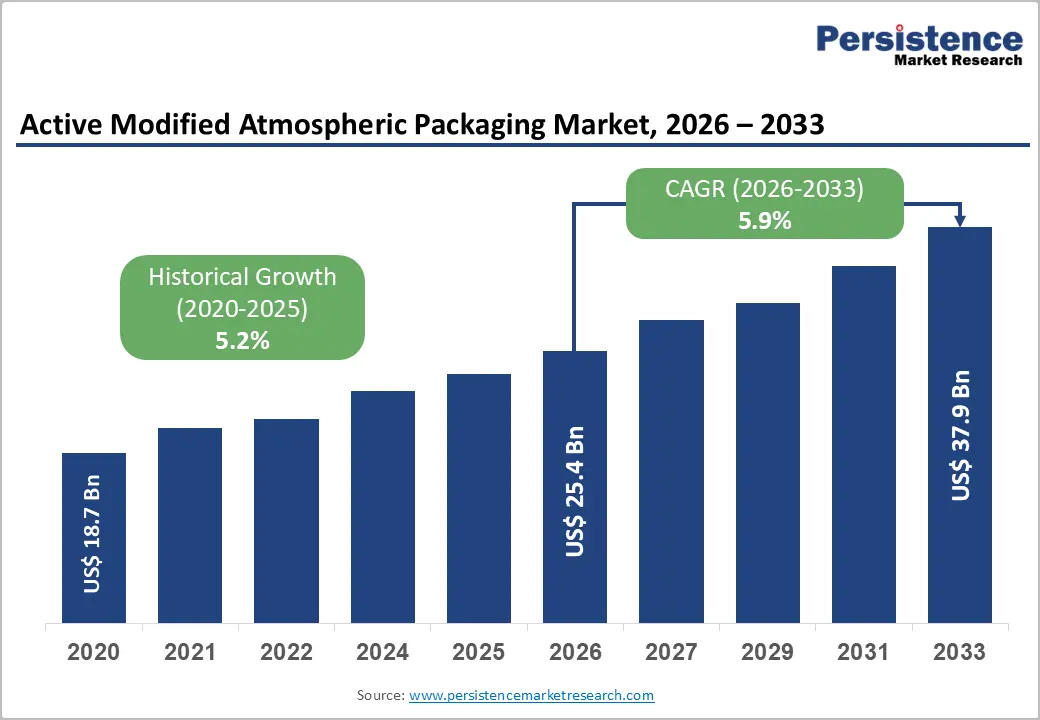
The global active modified atmospheric packaging market size is likely to be valued at US$ 25.4 billion in 2026 and is projected to reach US$ 37.9 billion by 2033, growing at a CAGR of 5.9% between 2026 and 2033. Increasing consumer demand for fresh, minimally processed foods is driving market expansion, aided by advancements in packaging that extend shelf life and cut waste.
Key Market Highlights:
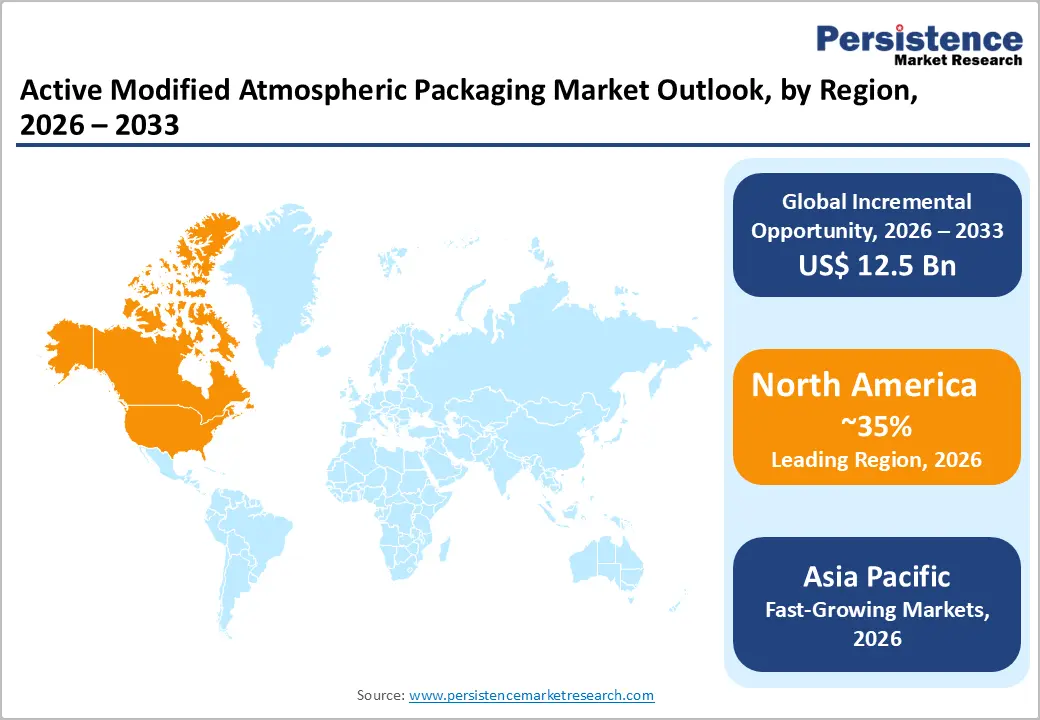
- Leading Region: North America dominates as the leading region with 35% share, due to stringent FDA regulations and advanced innovation ecosystems supporting premium fresh food packaging.
- Fastest-Growing Region: Asia Pacific is the fastest-growing region with rising CAGR of 6%, fueled by urbanization in China and India driving e-commerce demand for perishable goods preservation.
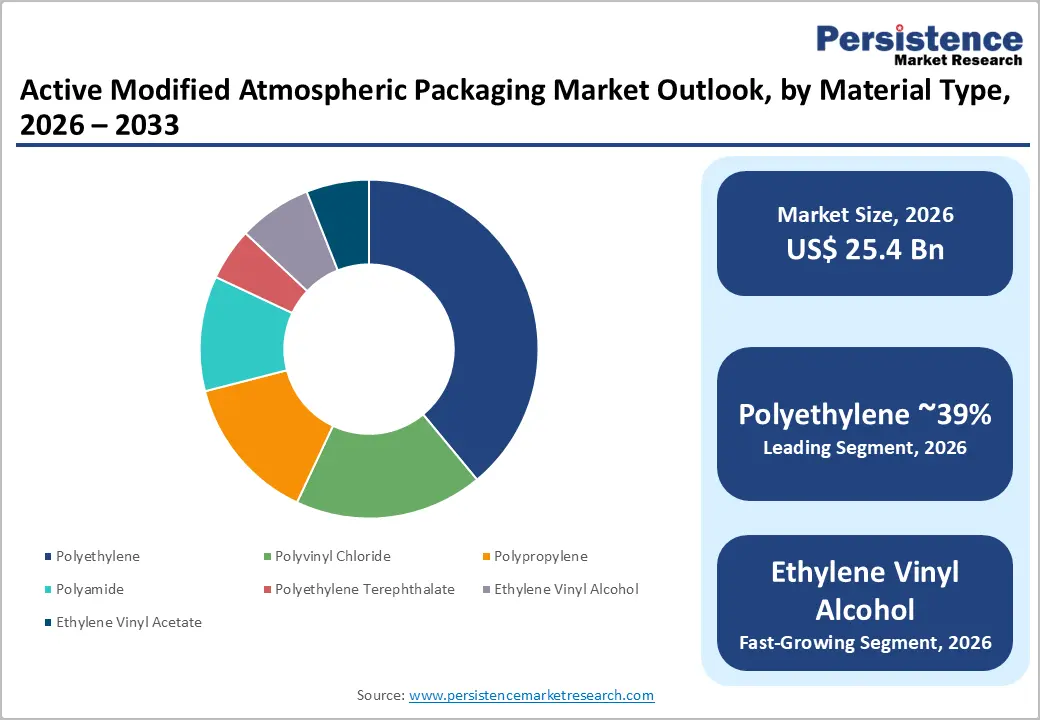
- Leading Category: Polyethylene stands as the dominant material segment leading with a 39% share, offering cost-effective barrier properties essential for high-volume food applications worldwide.
- Fastest-Growing Category: Fruits & Vegetables emerges as the fastest-growing application segment with rising CAGR of 6.4%, benefiting from post-harvest loss reduction technologies in emerging markets.
- Key opportunity in smart packaging integration allows real-time monitoring, targeting healthcare end-uses for enhanced traceability and compliance.
| Key Insights | Details |
|---|---|
| Global Active Modified Atmospheric Packaging Market Size (2026E) | US$ 25.4 Billion |
| Market Value Forecast (2033F) | US$ 37.9 Billion |
| Projected Growth CAGR(2026-2032) | 5.9% |
| Historical Market Growth (2020-2025) | 5.2% |
Market Dynamics
Drivers - Growing Need to Reduce Food Spoilage Drives Adoption of Active Modified Atmospheric Packaging for Longer Freshness
The Active Modified Atmospheric Packaging (MAP) market is the growing need to extend the shelf life of perishable products, especially in the food industry where spoilage causes major financial losses. According to FAO reports, post-harvest losses in fruits and vegetables can reach up to 40% in developing nations. MAP helps reduce these losses by adjusting oxygen and carbon dioxide levels, slowing respiration and microbial activity.
Studies by the USDA show that maintaining oxygen below 5% while increasing CO2 helps preserve freshness for weeks. Retailers benefit through reduced waste, improved stock management, and longer product display time. For example, MAP extends meat shelf life by nearly 25%, improving consumer satisfaction and supply chain efficiency. Overall, the technology supports global food security, ensures quality retention, and strengthens urban food distribution systems that demand longer-lasting, safe, and fresh products.
Innovation in Biodegradable and Recyclable Materials Fuel Eco-Friendly MAP Market Expansion
Technological progress in biodegradable and recyclable materials is a strong growth driver for the Active Modified Atmospheric Packaging market, aligning with global environmental goals. Regulations by the European Union (EU) to reduce plastic waste are encouraging the use of bio-based and recyclable films that offer high oxygen barrier performance. A 20% increase in the use of ethylene vinyl alcohol (EVOH) copolymers as they combine eco-friendly properties with effective gas control. These materials reduce the carbon footprint by 15–20% compared to traditional plastics, as shown in packaging research studies. Many manufacturers are now introducing compostable or recyclable MAP materials to meet consumer and retailer sustainability standards. Companies gaining green certifications for these technologies enjoy higher brand credibility and customer preference, creating long-term competitive advantages in an increasingly sustainability-driven market environment.
Restraint - Expensive Equipment and Setup Costs Limit Adoption among Small And Mid-Sized Producers
One of the major challenges in the Active Modified Atmospheric Packaging market is the high upfront cost required for equipment and specialized materials. Setting up MAP systems demands investment in gas flushing machinery, sealing tools, and barrier films, which can cost over USD 500,000 for a medium-sized facility. These high capital costs make it difficult for small and mid-level producers to adopt MAP technologies, especially in developing regions.
In addition to setup expenses, ongoing costs for maintenance, operator training, and gas supply can raise operational budgets by 10–15%. As a result, many companies continue using conventional packaging methods despite MAP’s proven ability to reduce waste and spoilage. While the long-term savings are significant, the initial financial burden remains a major restraint limiting widespread adoption across price-sensitive markets.
Maintaining Precise Gas Balance and Meeting Strict Regulations Pose Operational Challenges
Another key restraint in the Active Modified Atmospheric Packaging market is the technical difficulty of maintaining accurate gas compositions inside the packaging. Any imbalance can lead to product spoilage, discoloration, or the growth of anaerobic bacteria. Meeting FDA and EU food safety standards requires continuous testing, which increases compliance and quality assurance costs by up to 20%. Condensation issues in high-humidity storage can cause microbial outbreaks, leading to 5–10% failure rates in early installations.
Inconsistent temperature control across cold chains further complicates MAP efficiency, particularly in regions with limited refrigeration infrastructure. Manufacturers must invest in skilled operators, monitoring systems, and certification processes to meet regulatory expectations. These complexities slow down market penetration and discourage smaller players, making regulatory expertise and quality management critical success factors in scaling MAP adoption globally.
Opportunity - Rapid E-Commerce Growth in Developing Regions Boosts Demand for Durable Map Solutions
The Active Modified Atmospheric Packaging market lies in the rapid growth of e-commerce grocery platforms across Asia Pacific and Latin America. Online grocery sales in these regions are expected to grow by 25% annually, increasing demand for packaging that can preserve freshness during extended shipping. Countries like India, China, and Brazil are witnessing a surge in online food retailing, where long-distance transport requires advanced MAP solutions.
Affordable oxygen absorbers and portable MAP systems now allow small retailers to reduce spoilage by up to 40%. Government initiatives supporting cold-chain infrastructure and logistics modernization are driving adoption. This trend presents a profitable avenue for manufacturers to provide cost-effective and sustainable MAP systems suited for e-commerce supply chains, ensuring product safety and freshness from warehouse to doorstep.
Sensor-Based and IoT-Enabled MAP Systems Create Opportunities for Real-Time Product Monitoring
The integration of smart technologies such as sensors, data loggers, and IoT systems presents a promising opportunity for the Active Modified Atmospheric Packaging market. These technologies enable real-time monitoring of gas composition, temperature, and humidity, ensuring product safety throughout the supply chain.
In 2025, the USDA funded a USD 1 million research project to develop sensor-embedded films that detect gas leaks and improve packaging reliability. In healthcare and pharmaceuticals, smart MAP systems are extending drug shelf life by up to 50%, addressing the 15% annual loss caused by expired or damaged products, according to WHO data. By integrating AI-based control systems, companies can optimize gas mixtures automatically for different products. Collaborations between packaging and tech companies will further enhance product integrity, traceability, and consumer trust, driving innovation in high-value sectors like food and pharmaceuticals.
Category-wise Analysis
Material Type Insights
Polyethylene dominates the material type of the Active Modified Atmospheric Packaging market with a strong 39% market share, primarily due to its affordability, flexibility, and suitability for multiple packaging applications. Its lightweight nature and excellent moisture resistance are ideal for high-volume food packaging, supported by FDA approvals for food safety compliance. Polyethylene is recyclable, contributing to reduced environmental impact. It is used in nearly 70% of fresh produce packaging for its superior gas permeability control. Its ability to integrate into multilayer structures enhances barrier performance, aligning with the growing trend toward sustainable packaging solutions.
Packaging Format Insights
Trays hold the leading position in the packaging format segment, accounting for 32% of the global market share. They are preferred for packaging perishable goods such as meat, seafood, and fresh produce due to their durability, visibility, and portion control features. Trays also comply with EU food safety regulations, offering tamper-evident and hygienic packaging options. Trays reduce product handling damage by nearly 25%, making them ideal for supermarket displays. Moreover, their compatibility with automated filling and sealing lines enhances production efficiency, supporting large-scale packaging operations for food processors and retailers.
Application insights
The meat, poultry & seafood leads the application category, holding a 40% market share, driven by the high perishability of protein-based foods and the need for extended shelf life. Modified atmospheres effectively slow bacterial growth, such as Listeria monocytogenes, ensuring product freshness and safety. Studies from the USDA report that this technology extends shelf life by nearly 35%, significantly reducing waste in cold chains and exports. With global demand for protein-rich diets and increasing seafood trade, this segment continues to expand as processors adopt MAP technology to maintain product quality and hygiene standards.
End-user Insights
The food segment dominates the end-use landscape, contributing to over 82% of the market share, as it includes most perishable categories such as dairy, bakery, meat, and fresh produce. The technology’s ability to preserve taste, texture, and color without chemical preservatives makes it a top choice for manufacturers. Regulatory agencies like the EFSA endorse modified atmospheres for their role in minimizing additives and maintaining product safety. Ongoing innovation in biodegradable and bio-based films further supports this segment’s leadership, as food producers increasingly seek eco-friendly and long-lasting packaging solutions to meet consumer expectations and sustainability goals.
Regional Insights
North America Active Modified Atmospheric Packaging Market Trends
North America leads the global Active Modified Atmospheric Packaging market, supported by strict regulations from the FDA and USDA that ensure extended product freshness and safety. The U.S. drives innovation through major R&D investments exceeding USD 100 million annually, focusing on reducing food waste and enhancing cold-chain performance. Government-funded projects promoting smart and eco-friendly packaging solutions contribute to a 6% annual market growth rate.
Large retailers and e-commerce platforms in the region are adopting MAP for fresh food delivery, reducing product returns by nearly 20%. The mature logistics infrastructure and advanced food safety standards enable consistent adoption across the meat, dairy, and produce sectors. Additionally, strong consumer awareness about product quality and environmental responsibility continues to drive North America’s leadership in MAP adoption and innovation.
Europe Active Modified Atmospheric Packaging Market Trends
Europe represents one of the most advanced regions in the Active Modified Atmospheric Packaging market, driven by EU Commission regulations promoting sustainable and recyclable materials. Countries like Germany, France, and the U.K. are adopting MAP systems that reduce plastic usage by approximately 15% while maintaining product integrity. EFSA approvals and harmonized packaging standards across the region encourage consistent quality and trade efficiency.
Northern European nations such as Sweden and Denmark are integrating MAP with circular economy initiatives, leading to a 10% annual increase in eco-certified packaging solutions. Retail chains in Spain and Italy are expanding MAP use for fresh produce to reduce waste and extend freshness. The strong alignment of environmental policies, consumer demand, and technological innovation continues to position Europe as a pioneer in sustainable MAP development.
Asia Pacific Active Modified Atmospheric Packaging Market Trends
Asia Pacific is the fastest-growing region in the Active Modified Atmospheric Packaging market, fueled by industrial expansion, urbanization, and strong manufacturing capabilities in China, India, and Japan. The region’s cost-effective production base allows large-scale adoption of MAP across fresh produce, seafood, and processed food industries. Japan’s advanced seafood packaging technologies deliver 25% higher efficiency, while India’s government initiatives promoting cold-chain development have resulted in a 7% CAGR in MAP applications.
E-commerce and online grocery platforms in ASEAN countries increasingly use MAP trays for fruits and vegetables, ensuring freshness during long-distance transport. With supportive government policies, rising disposable incomes, and growing export potential, the Asia Pacific offers massive opportunities for MAP manufacturers seeking scalability and high-volume demand in food preservation technologies.
Competitive Landscape
The global active modified atmospheric packaging market exhibits moderate consolidation, with top players holding 35-40% share through strategic expansions and R&D investments. Leaders differentiate via sustainable innovations like biodegradable films, while mid-tier firms focus on regional customizations. Emerging models emphasize partnerships for smart tech integration, fostering a dynamic landscape with room for niche entrants in healthcare.
Key Market Developments
- In March 2024, Amcor launched award-winning biodegradable high-barrier packaging in March 2024, advancing the Global Active Modified Atmospheric Packaging Market by enhancing shelf life for perishable foods with sustainable, oxygen-scavenging films that reduce waste by 20%.
- In April 2024, Sealed Air rolled out smart freshness indicators for Active MAP in April 2024, transforming the global market by integrating sensors that monitor oxygen levels in real-time, extending product freshness and minimizing spoilage in supply chains.
- In June 2024, Berry Global commercialized 100% recyclable Modified Atmospheric Packaging in June 2024, boosting the global market through innovative mono-material solutions that maintain gas barriers while meeting circular economy demands for food preservation.
Companies Covered in Active Modified Atmospheric Packaging Market
- Amcor Limited
- Berry Plastics Inc.
- Sealed Air Corporation
- Coveris Holdings S.A
- Linpac Packaging Limited
- Bemis Company Inc.
- Winpak Limited Company
- ULMA Packaging, S. Coop
- Ilapak International
- S.A.
- MULTIVAC Group
- Air Products and Chemicals, Inc.
Frequently Asked Questions
The active modified atmospheric packaging market is expected to reach US$ 37.9 Billion by 2033, growing from US$ 25.4 Billion in 2026 at a CAGR of 5.9%.
Key drivers include the need for extended shelf life in perishable foods and sustainable technologies, reducing waste by up to 30% as per FAO guidelines.
Meat, Poultry & Seafood leads with a 40% share, due to high perishability and regulatory emphasis on preservation.
North America leads, supported by USDA innovations and strict food safety standards.
Integration of smart sensors offers real-time monitoring, particularly in healthcare, with USD 1 million in funding for advancements.
Major Players include Amcor Limited, Sealed Air Corporation, and Berry Plastics Inc., focusing on sustainable and innovative solutions.


