

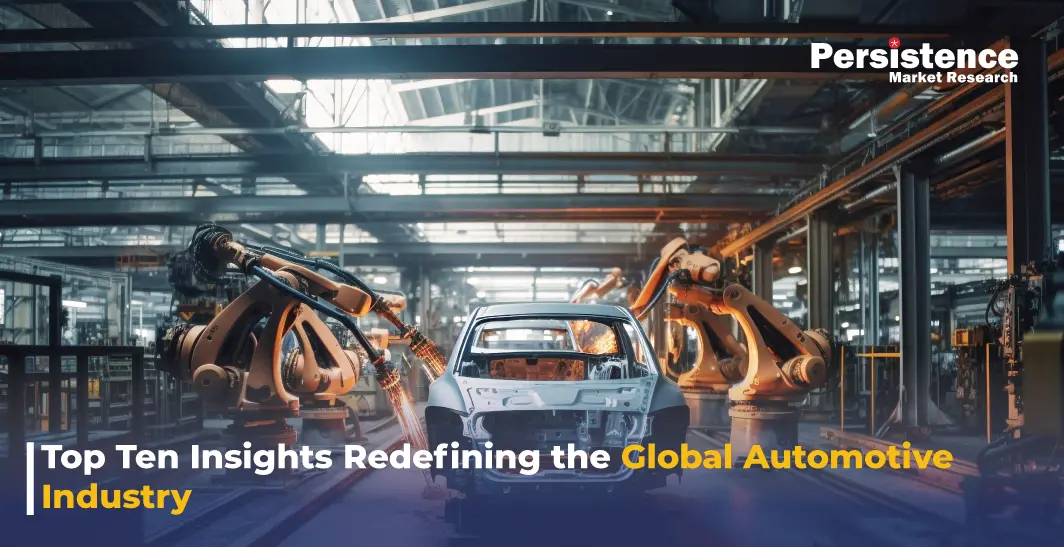
The top ten trends and opportunities that are currently influencing the sector are listed below.
1. The revolution in electric vehicles is gaining unstoppable momentum
Electric cars, or EVs, are becoming mainstream disruptors rather than niche items. As demand picks up speed in China, Europe, and North America, EV adoption will continue to soar in 2025, with a global market share that will probably top 25% of all automobile sales. Over 7 million EVs may have already been sold abroad, according to early 2025 sales estimates, and forecasts indicate that the industry is on track for record growth. EVs are fast spreading beyond passenger cars into commercial fleets, public transportation, and two-wheelers, providing a variety of demand dynamics that manufacturers must monitor.
2. The Rivalry Between New and Legacy OEMs Is Increasing
Chinese OEMs and new competitors are putting tremendous pressure on established automakers due to their rapid advancements in innovation and cost competitiveness. For instance, BYD, a Chinese manufacturer, saw tremendous sales growth in Europe in late 2025, partially surpassing heritage brands in EV registration gains. This notable change indicates a more competitive worldwide market. In addition to electrification issues, legacy manufacturers also have to deal with supply chain flexibility, branding, and international regulatory obstacles that require strategic flexibility.
3. Advancing Toward Autonomous Vehicle Adoption
Even in mid-range automobiles, adaptive driver-assistance systems and Level 2+ automation are becoming standard features, even if completely autonomous cars (Level 5 autonomy) are still in the early stages of development. Adaptive cruise control, lane-centering, and highway autopilot modes are examples of tools that move automobiles toward safer, more intelligent mobility. In the meantime, collaborations between tech giants and automakers, like Qualcomm and BMW, introducing sophisticated automated driving systems, demonstrate how software integration and semiconductor innovation are essential for future competitiveness.
4. Software and Connectivity Are Developing Into Key Revenue Sources
Automobiles are turning into mobile software systems. Today's cars have more code than a fighter jet, and that code isn't idle; it drives safety features, infotainment, navigation, and communication. Over-the-air (OTA) updates, for example, keep cars current long after they are bought, creating opportunities for recurring income from feature upgrades and subscription services. Selling experiences rather than just hardware is quickly emerging as a key strategic priority for both tier-1 suppliers and OEMs.
5. Innovation is rapidly shaping battery technology.
Battery chemistry is still changing as the demand for EVs rises. While alternatives like lithium-iron-phosphate (LFP) and next-generation sodium-ion chemistries gain ground due to lower cost and resource stability, traditional lithium-nickel-cobalt (NCM) formulations confront growing inventory and ethical problems. The true story in 2025 is not just electrification but also which batteries will be the most popular in the long run and how this rivalry will change manufacturing priorities and supply chains.
6. Industry Fragmentation Driven by Geopolitical Dynamics
Geopolitical fragmentation is emerging as a significant influence in 2025, in contrast to previous decades when globalization promoted uniform vehicle rollouts. Trade restrictions and local laws are changing how CASE (Connected, Autonomous, Shared, Electric) technology spreads around the world, according to industry analysts. For manufacturers, this entails customizing cars and technology stacks to meet local regulations and supply chains, a task that calls for quick strategic planning.
7. The Next Frontier Is Software-Defined Vehicles (SDVs)
Software will be the primary focus of car design in the future. Software-Defined Vehicles (SDVs) enable feature-on-demand upgrades over the course of a vehicle's lifetime by using a centralized computer platform to govern everything from infotainment to driving assistance. SDV designs are expected to grow rapidly in the industry, opening up new revenue streams and lowering hardware complexity. Additionally, this architectural change enhances performance, safety, and personalization, transforming automobiles from machines into living platforms.
8. Sustainability is essential to business and is not optional.
Both authorities and consumers are demanding sustainability in everything from manufacturing procedures to emissions. Nowadays, automakers are assessed not just on their products but also on their manufacturing processes. Low-impact production, recyclable parts, and lightweight materials are slowly becoming standard requirements. Sustainability affects everything from supply chain design to procurement, so businesses that adhere to circular economy concepts are better positioned for future expansion.
9. The Services and Aftermarket Economies are Expanding
Vehicles are service ecosystems in addition to hardware. The aftermarket is growing beyond repairs to include digital services, predictive maintenance, and paid upgrades due to the growing popularity of EVs and connected features. This implies that the automotive sector now offers ongoing value, such as software subscriptions and customized telemetry solutions, in addition to producing automobiles.
10. The Brand Experience Is Just as Important as the Vehicle
As technology becomes more complicated and consumer expectations rise, brand experience is becoming a key differentiation. Automakers are making investments in digital customer experiences, loyalty programs, experiential showrooms, and direct-to-consumer sales models. This shift lets them build deeper engagements that go beyond the physical vehicle. For instance, businesses like Tesla, Rivian, and legacy OEMs are placing a greater emphasis on brand ecosystems, incorporating loyalty programs, concierge services, and mobile apps that turn transactional customers into devoted supporters.
Conclusion- A decade of change has begun, and it is only getting started.
In 2025, the automotive sector will be a convergence of energy, software, data, mobility services, and environmental objectives rather than just being focused on automobiles. Value creation is being redefined by electrification, connectivity, autonomy, and artificial intelligence (AI), while global rivalry is shaped by geopolitics and customer experience tactics. For industry players and observers alike, the landscape presents massive disruption and equally massive opportunity. The winners won’t just produce cars, they will provide mobility solutions that are safer, smarter, more sustainable, and deeply connected to the way people live and work.


