




- Medical Devices
- Personal Protective Gowns Market
Personal Protective Gowns Market Size, Share, and Growth Forecast, 2026 - 2033
Personal Protective Gowns Market by Product Type (Surgical Gowns, Isolation Gowns, Surgical Isolation Gowns, Nonsurgical Gowns, Procedural Gowns), Usage (Single/Disposable Gowns, Multiple/Non-Disposable Gowns), and Regional Analysis for 2026 - 2033

Personal Protective Gowns Market Size and Trends Analysis
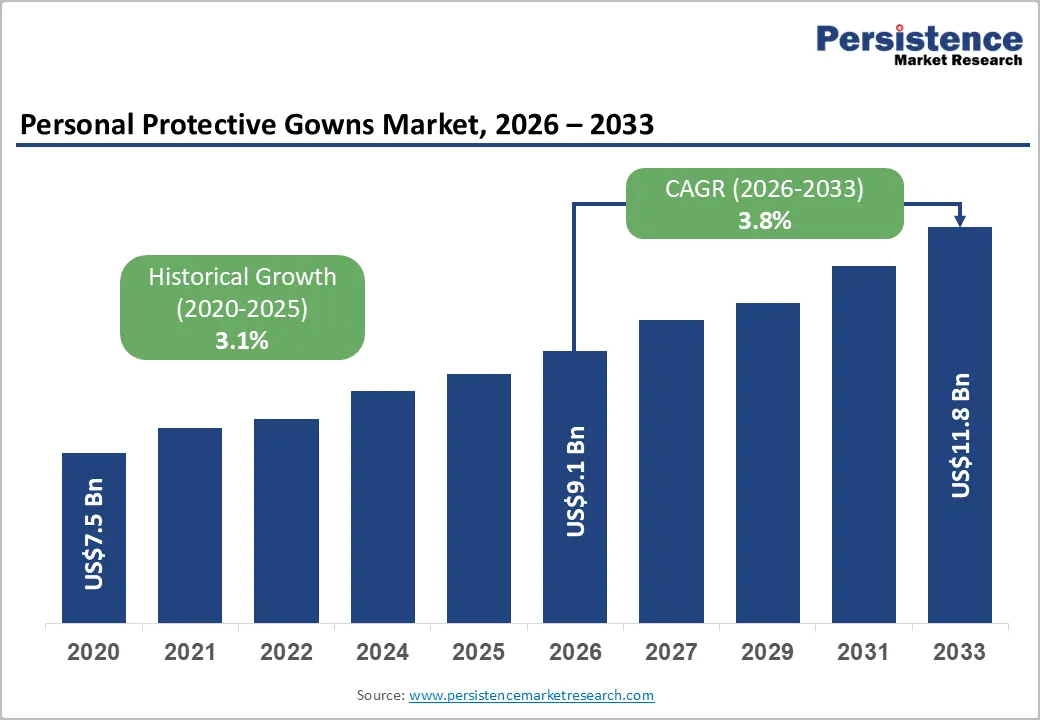
The global personal protective gowns market size is likely to be valued at US$9.1 billion in 2026 and is expected to reach US$11.8 billion by 2033, growing at a CAGR of 3.8% during the forecast period from 2026 to 2033, driven by sustained infection prevention requirements across healthcare and laboratory environments.
According to the World Health Organization (WHO, 2023), strengthening infection prevention and control (IPC) practices remains a critical priority to reduce healthcare-associated infections across hospitals and clinical settings. Guidelines from the Centers for Disease Control and Prevention (CDC, 2024) continue to emphasize the consistent use of protective apparel, including gowns, during clinical procedures to limit exposure risks.
Key Industry Highlights:
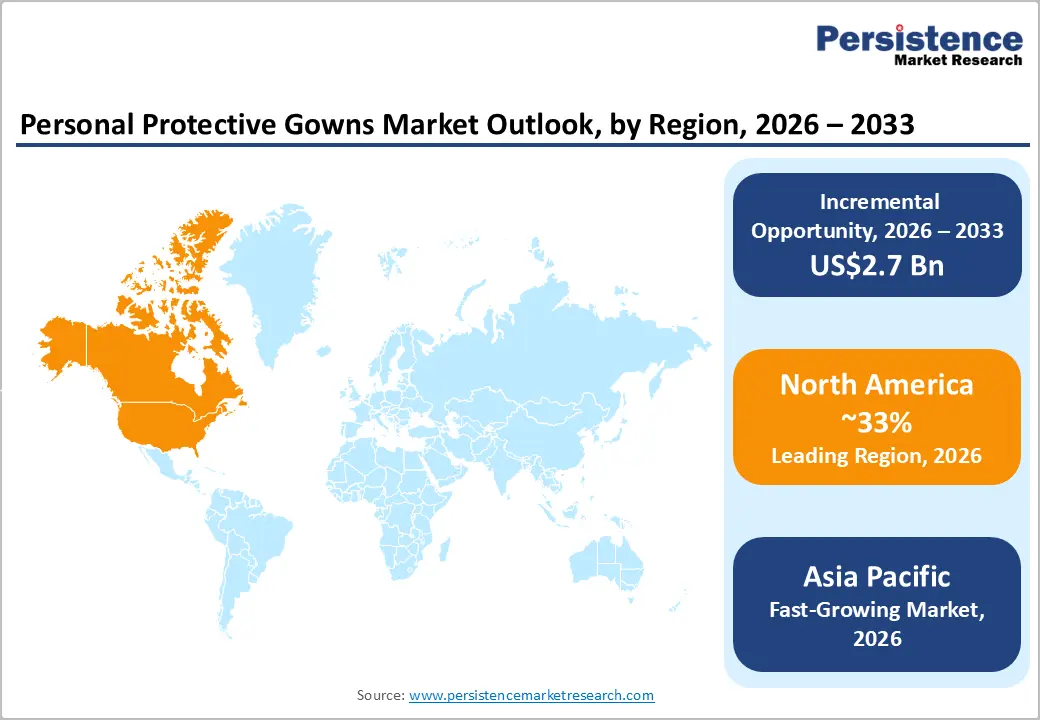
- Leading Region: North America is anticipated to be the leading region, accounting for a market share of 33% in 2026, driven by strong healthcare infrastructure, strict regulatory standards, and high adoption of advanced protective medical textiles.
- Fastest-growing Region: Asia Pacific is likely to be the fastest-growing region, supported by strong manufacturing capabilities, expanding healthcare infrastructure, and rapid demand growth.
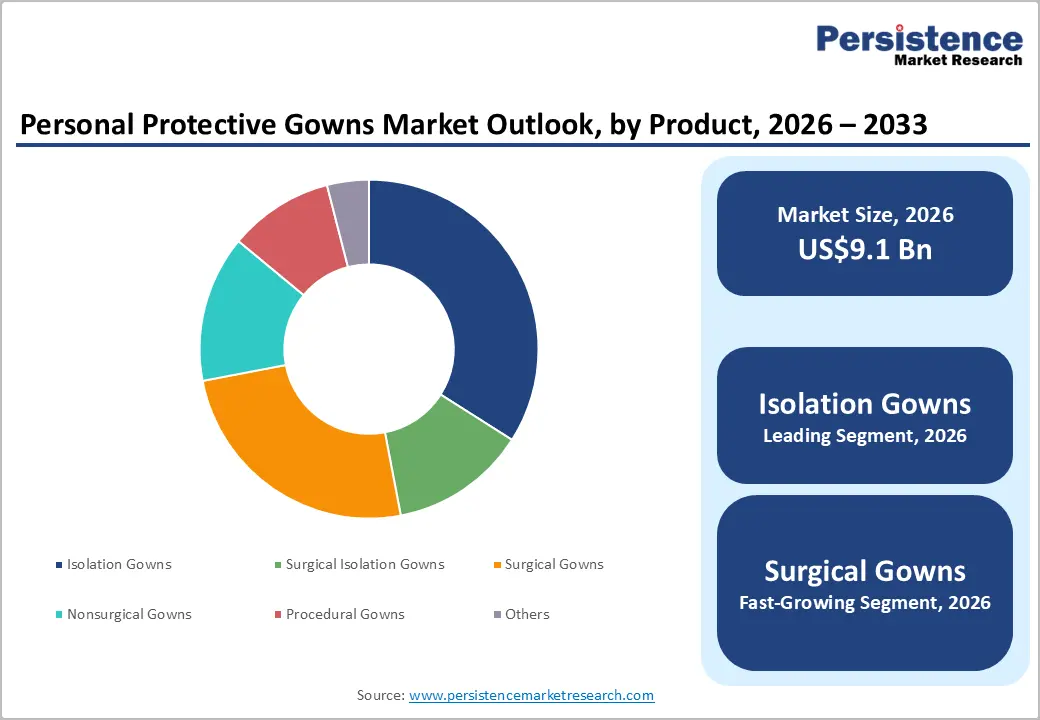
- Leading Product Type: Isolation gowns are projected to represent the leading product type in 2026, accounting for 38% of the revenue share, due to their extensive use in routine infection control across healthcare settings.
- Leading Usage: Single/disposable gowns are anticipated to be the leading usage, accounting for over 75% of the revenue share in 2026, supported by their strong infection prevention efficiency and convenience.
- Key Opportunity: A key opportunity in the personal protective gowns market lies in expanding demand for sustainable, high-performance protective gowns supported by rising infection control standards, healthcare infrastructure growth, and advancements in reusable medical textile technologies.
DRO Analysis
Driver - Rising Focus on Infection Control and HAI Prevention
Healthcare systems worldwide are strengthening infection control protocols in hospitals, surgical centers, and diagnostic laboratories to reduce cross-contamination risks. Organizations such as the World Health Organization (WHO, 2023) emphasize strict adherence to infection prevention and control (IPC) measures, including the use of protective gowns during clinical procedures.
Increasing surgical volumes, intensive care admissions, and chronic disease treatments amplify gown consumption. Hospitals are continuously updating safety standards, ensuring the routine use of high-barrier protective apparel across medical environments. Growing awareness among healthcare workers regarding occupational safety has significantly increased the adoption of protective gowns in both developed and emerging economies.
Regulatory bodies such as the CDC (2024) reinforce PPE compliance, especially in high-risk exposure areas. Governments are also investing in healthcare infrastructure expansion, which directly increases PPE procurement. Growing emphasis on healthcare preparedness, stricter hospital safety protocols, and continuous expansion of infection prevention programs have led to sustained demand for protective gowns.
Restraint - Environmental and Waste Management Challenges
Large-scale usage of single-use gowns in hospitals and emergency settings leads to substantial medical waste accumulation. According to the World Health Organization (WHO, 2025), healthcare activities generate significant quantities of hazardous waste, with PPE contributing a major share during peak infection periods. Improper disposal can result in environmental pollution, including plastic contamination and increased landfill burden, raising sustainability concerns among regulators and healthcare institutions.
Stricter environmental regulations are pushing hospitals to reconsider excessive reliance on disposable protective gowns. Waste management infrastructure in many emerging economies remains limited, creating challenges in the safe disposal and treatment of contaminated materials. Incineration and chemical treatment methods increase operational costs and carbon emissions.
Opportunity - Technological Convergence and Sustainable Innovations
Advancements in nonwoven fabric technologies, including SMS (spunbond-meltblown-spunbond) materials, are improving barrier efficiency, breathability, and wearer comfort. Research and development in antimicrobial coatings and fluid-resistant nanotechnology are enabling higher protection levels without compromising usability.
Healthcare institutions are increasingly adopting advanced PPE solutions that balance safety with operational efficiency. Healthcare innovation trends, supported by regulatory frameworks such as AAMI standards, are encouraging manufacturers to develop next-generation protective gowns with enhanced performance characteristics.
Sustainability-driven innovation is also reshaping market opportunities, with rising demand for reusable and recyclable gown solutions. Hospitals are investing in laundering technologies and closed-loop PPE systems to reduce environmental impact and long-term procurement costs. Digital supply chain integration and smart manufacturing processes are improving production efficiency and inventory management. Emerging economies are witnessing increased investment in local PPE manufacturing capacity, reducing import dependency.
Category-wise Analysis
Product Type Insights
Isolation gowns are expected to lead accounting for 38% of revenue in 2026, due to their widespread use in routine infection prevention across hospitals, emergency care units, and outpatient departments. Their dominance is driven by continuous demand for barrier protection during patient care activities involving potential exposure to infectious fluids. For example, Mayo Clinic (U.S.) widely follows stringent infection prevention protocols where isolation gowns are routinely used for contact precautions across multiple care units, reflecting established clinical practice in major healthcare institutions.
Surgical gowns are likely to represent the fastest-growing segment, supported by rising surgical procedures and increasing demand for advanced protective performance standards such as AAMI Level 3 and 4 protections. A notable example includes major healthcare systems in Japan and Europe, which are increasingly adopting high-performance surgical gowns for complex cardiovascular and orthopedic surgeries, where maximum barrier protection is critical.
Usage Insights
Single or disposable gowns are projected to lead the market, capturing around 75% of the revenue share in 2026, supported by their strong infection control efficiency, convenience, and elimination of cross-contamination risks. For instance, Johns Hopkins Hospital (United States) follows rigorous infection prevention and control (IPC) guidelines where disposable gowns are routinely used for contact precautions.
Multiple or non-disposable gowns are likely to be the fastest-growing usage, due to increasing sustainability initiatives and cost-efficiency pressures in healthcare systems. These gowns are gaining adoption due to advancements in industrial laundering technologies and improved fabric durability that allow repeated safe usage without compromising protection. A notable example includes hospitals in parts of Europe that are increasingly implementing reusable gown programs integrated with centralized sterilization and laundering systems to reduce medical waste and long-term procurement costs.
Regional Insights
North America Personal Protective Gowns Market Trends
North America is anticipated to be the leading region, accounting for a market share of 33% in 2026, supported by strong infection prevention protocols and advanced healthcare infrastructure. The region is witnessing increasing adoption of high-performance gowns with enhanced fluid resistance and comfort, supported by stringent regulatory frameworks from the FDA and CDC. For example, DuPont de Nemours Inc. is actively supplying advanced medical protective materials used in gown manufacturing, supporting improved fluid resistance and durability across healthcare facilities.
U.S. Personal Protective Gowns Market Trends
The U.S. is expected to dominate the regional market, accounting for approximately 72% share in 2026, driven by strong CDC infection prevention guidelines, high surgical volumes, and widespread use of disposable gowns in hospitals. Recent developments include increased federal and hospital-level investments in PPE stockpiling and domestic manufacturing expansion under healthcare preparedness programs. Large hospital networks are also integrating advanced infection control protocols across critical care units.
Canada Personal Protective Gowns Market Trends
Canada is set to be a significant market for personal protective gowns, holding approximately 28% of the regional share in 2026, supported by rising healthcare expenditure and strong public healthcare systems. Provincial governments are improving centralized PPE procurement systems to enhance efficiency and cost control. Recent initiatives include strengthening domestic PPE manufacturing capacity and improving emergency preparedness. Canadian hospitals are increasingly adopting standardized infection prevention protocols across surgical and general care units.
Europe Personal Protective Gowns Market Trends
Europe is likely to be a significant market for personal protective gowns, due to strict EU medical device regulations, strong infection control standards, and growing sustainability initiatives. Hospitals are also upgrading procurement strategies to meet stringent compliance requirements under MDR guidelines. For instance, 3M Europe supplies certified protective gowns and advanced nonwoven materials widely used across hospitals.
U.K. Personal Protective Gowns Market Trends
The U.K. is expected to account for approximately 12% of the Europe personal protective gowns market in 2026, driven by the NHS’s centralized procurement framework and stringent infection prevention standards. Ongoing initiatives are emphasizing reduced dependence on disposable PPE and greater adoption of sustainable gowns across healthcare facilities. In addition, hospitals are strengthening infection control training programs and introducing standardized gown-use protocols across various care units.
Germany Personal Protective Gowns Market Trends
Germany is expected to dominate the regional market, capturing around 20% of the share in 2026, due to advanced healthcare infrastructure and high surgical volumes. Hospitals are increasingly adopting reusable gowns to meet strict environmental regulations and reduce waste generation. Government-supported healthcare modernization programs are improving infection control standards across public hospitals.
Asia Pacific Personal Protective Gowns Market Trends
The Asia Pacific region is likely to be the fastest-growing region, driven by large patient populations, expanding healthcare infrastructure, and strong PPE manufacturing hubs. The region benefits from cost-effective production, rising export demand, and increasing infection prevention awareness. A notable example includes Cardinal Health (Asia-Pacific operations), which supplies a wide range of certified protective gowns across hospital networks in the region, supporting both surgical and isolation applications.
China Personal Protective Gowns Market Trends
China is projected to dominate the regional market, holding around 25% of the market share, supported by large hospital networks, strong domestic PPE manufacturing, and government healthcare modernization initiatives. Recent developments include the expansion of automated PPE production facilities and the strengthening of medical textile clusters. Hospitals are increasingly adopting standardized infection control protocols, increasing gown demand across surgical and general care settings.
India Personal Protective Gowns Market Trends
India is a significant market for personal protective gowns, accounting for approximately 10% share of the market, due to rapidly expanding healthcare infrastructure and increasing surgical procedures. Government initiatives, such as Make in India, are increasing domestic PPE manufacturing capacity and reducing import dependency. Hospitals are adopting stricter infection prevention protocols, increasing demand for certified protective gowns.
Competitive Landscape
The global personal protective gowns market exhibits a moderately fragmented structure, driven by increasing demand for infection prevention, stringent healthcare safety regulations, and rising adoption of advanced medical protective textiles. Growth is supported by expanding hospital infrastructure, higher surgical volumes, and continuous emphasis on healthcare-associated infection (HAI) control across both developed and emerging economies.
With key leaders including 3M, Cardinal Health, DuPont de Nemours Inc., Medline Industries, and Ansell Limited, along with several regional manufacturers in Asia Pacific and Europe, the market remains highly competitive across both premium and cost-sensitive segments. These players compete through product innovation, expansion of sustainable reusable gown offerings, and strengthening distribution networks.
Key Industry Developments:
- In November 2025, DuPont introduced Tyvek® APX™, an advanced breathable protective garment fabric developed to enhance worker safety, comfort, and durability without compromising barrier protection performance.
- In July 2025, Medline Industries launched the ComfortTemp® Patient Warming System, featuring disposable warming gowns and blankets designed to improve patient temperature regulation and perioperative comfort in healthcare settings.
Companies Covered in Personal Protective Gowns Market
- 3M
- Cardinal Health
- DuPont de Nemours Inc.
- Medline Industries
- Ansell Limited
- Owens & Minor
- Halyard Health
- GLA Family
- Novolex
- Mediklin Healthcare Limited
- Radiance Inc.
- National Safety Apparel
- Angelica
Frequently Asked Questions
The personal protective gowns market is projected to reach US$9.1 billion in 2026.
The personal protective gowns market is driven by rising focus on infection prevention, increasing surgical procedures, and stringent healthcare safety regulations across hospitals and clinical settings.
The personal protective gowns market is expected to grow at a CAGR of 3.8% from 2026 to 2033.
Key opportunities lie in the development of sustainable reusable gowns, advanced protective textile technologies, and expanding healthcare infrastructure in emerging economies.
3M, Cardinal Health, DuPont de Nemours Inc., Medline Industries, and Ansell Limited are the leading players.


