




- Medical Devices
- Sleep Aids Market
Sleep Aids Market Size, Share, and Growth Forecast 2026 – 2033
Sleep Aids Market by Product (Mattresses & Pillows, Medications, Sleep Apnea Devices, Others), Sleep Disorder (Insomnia, Sleep Apnea, Restless Legs Syndrome, Narcolepsy, Sleepwalking, Other), and Regional Analysis, 2026–2033

Sleep Aids Market Size and Trend Analysis
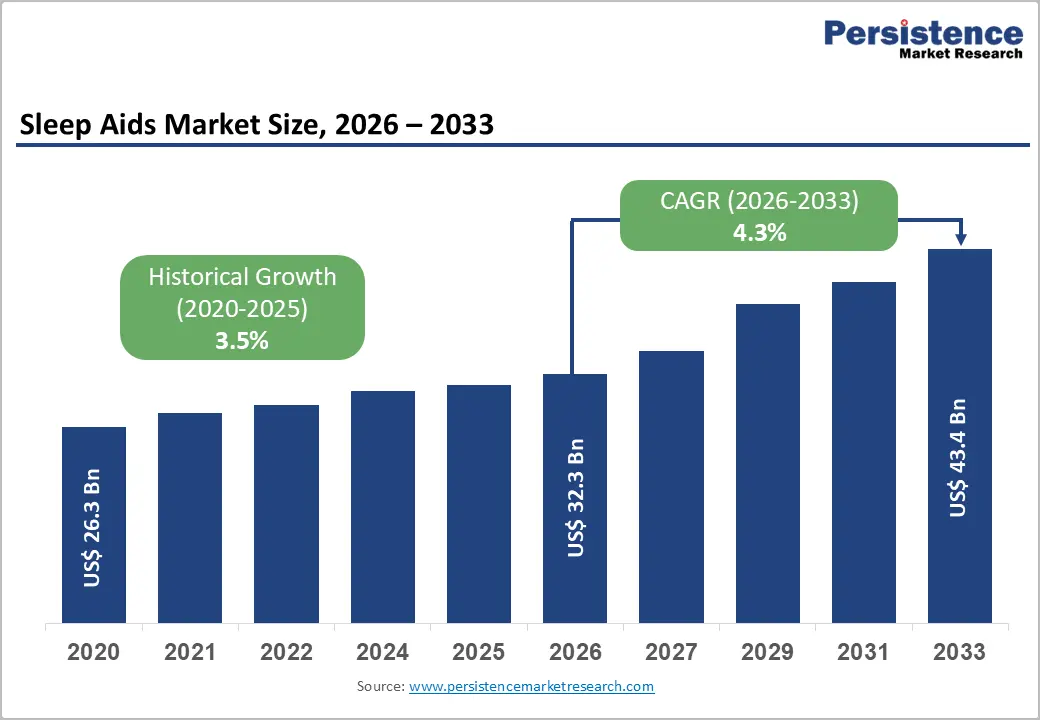
The global sleep aids market size is expected to be valued at US$ 32.3 billion in 2026 and projected to reach US$ 43.4 billion by 2033, growing at a CAGR of 4.3% between 2026 and 2033. The growing prevalence of insomnia, sleep apnea, restless leg syndrome, and other sleep-related disorders encourages the need for sleep aid products. Increasing stress levels, changing lifestyles, excessive screen time, and growing mental health concerns have significantly contributed to poor sleep quality worldwide. Consumers are becoming more aware of the importance of sleep for overall health, cognitive function, immunity, and emotional well-being, driving demand for effective sleep solutions. Regionally, North America emerges as a leader owing to the high diagnosis rates and healthcare spending, while the Asia Pacific is a fast-growing market known for its urban lifestyle awareness.
Key Industry Highlights
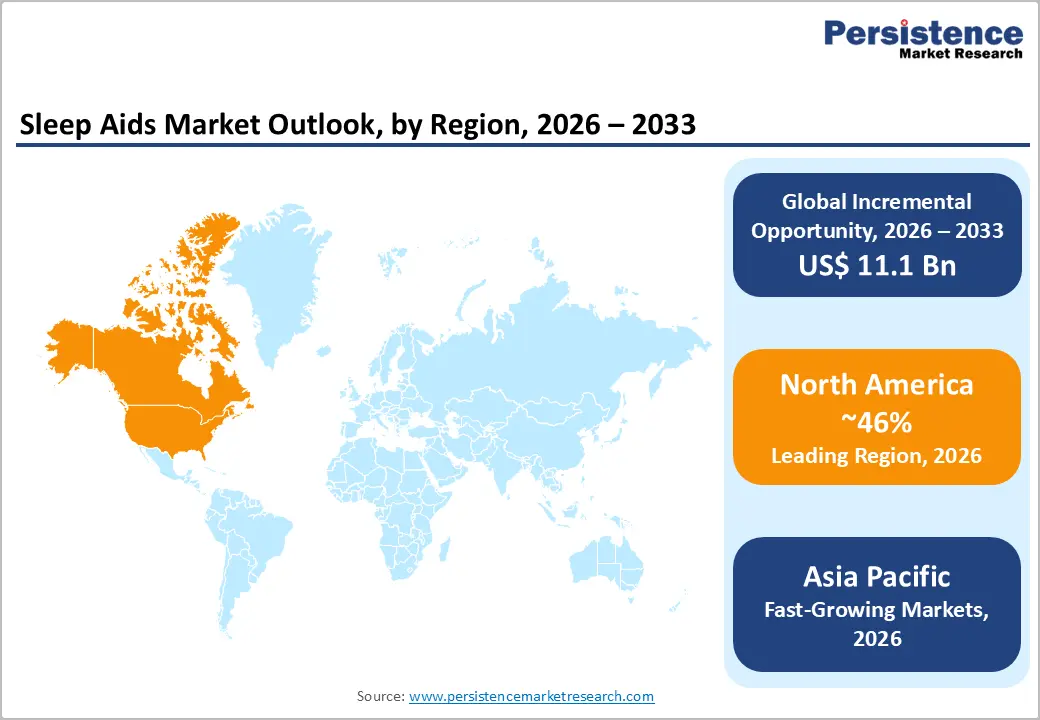
- Leading Region: North America leads with 46% share due to strong healthcare spending, reimbursement support, and premium sleep product adoption.
- Fastest Growing Market: Asia Pacific is likely to attain a positive growth due to the sleep disorders, and increasing middle-class health awareness.
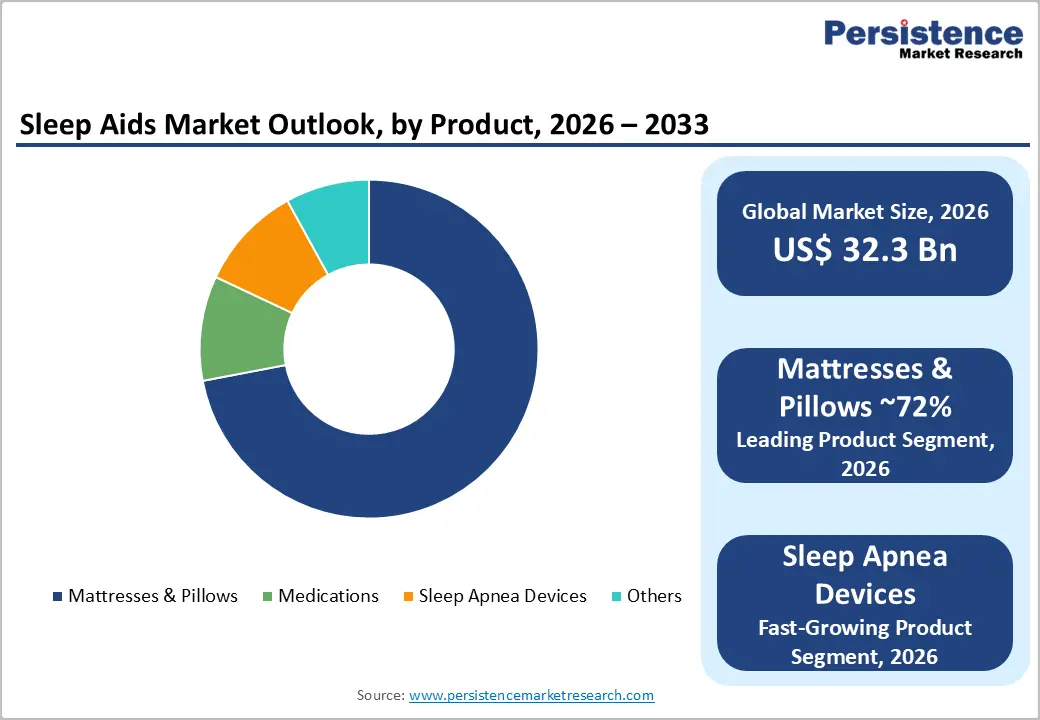
- Dominant Product Type: Mattresses and pillows dominate with 72% share driven by comfort demand, premiumization, and strong direct-to-consumer sales.
- Fastest Growing Segment: Sleep apnea devices are likely to reach a fast-growth due to rising OSA diagnoses, home testing access, and large untreated patient population.
- Key Opportunity: Orexin receptor antagonists offer strong growth potential with better tolerability, lower dependency risk, and rising physician adoption.
Market Dynamics
Drivers - Increasing Prevalence of Sleep Disorders
Sleep disorders disrupt normal sleep patterns, impacting the overall health and quality of life. Causes can be genetic, environmental, psychological, and physiological. Insomnia is linked to sleep apnea, obesity, and circadian disorders. According to a National Library of Medicine study, insomnia affects ~30–35% of adults globally at some point, with 6–15% meeting clinical criteria. Women and older adults are more prone. As per a 2024 Science Direct study, 14.7% of people in Canada used prescription sleep medications, 28.7% used over-the-counter or natural sleep aids, and 9.7% used alcohol to help them sleep.
Sleep ability declines with age, and the National Sleep Foundation recommends minimum sleep durations for all age groups. Sleep disorders negatively impact the quality of life by causing daytime fatigue, cognitive impairment, mood disturbances, reduced productivity, and increased risk of chronic health conditions. Approximately 50–60% of the elderly suffer from sleep disorders, including sleep apnea, restless legs syndrome, and REM sleep behavior disorder. Chronic sleep deprivation in older adults is linked to increased risks of neurodegenerative diseases such as Alzheimer’s and Parkinson’s. Sleep disturbance is a core symptom of the menopausal transition.
Restraints - Side Effects and Dependency Risks of Sleep Aids Such as Prescription Drugs
The sleep aids, specifically sleep medications, face significant restraints due to the associated side effects and dependency risks. Prescription drugs, such as benzodiazepines, Z-drugs, and antihistamines, can lead to tolerance, dependence, and withdrawal symptoms, with studies indicating that 20–50% of long-term users may experience withdrawal and 3–5% may become dependent. These drugs are also associated with cognitive impairments, including memory loss, reduced attention, and psychomotor slowing. The next-day drowsiness, dizziness, dry mouth, stomach discomfort, vivid dreams or nightmares, and impaired coordination increase the risk of falls, motor vehicle accidents, and confusion.
Z-drugs have been linked to sleepwalking or eating while unconscious. Long-term use has also been associated with increased risks of mortality, cancer, and respiratory issues. Regulatory agencies such as the FDA and the American Geriatrics Society now recommend limiting these medications to short-term use, further restricting market growth. These concerns are contributing to a transition toward non-pharmacological treatments such as cognitive behavioral therapy for insomnia (CBT-i).
Opportunities - Innovative Uses and Advanced Applications to Drive Market Growth
Smart sleep technology is rapidly transforming sleep health by integrating AI, the Internet of Things (IoT), and wearable systems to deliver highly personalized and real-time solutions. Advanced wearables such as Apollo Neuro’s SmartVibes use predictive AI to gently prevent mid-sleep wakeups by calming the nervous system, while devices such as Masimo W1 Sport’s Sleep Halo track sleep stages and oxygen levels through machine learning and continuous pulse oximetry.
Neurofeedback-based tools such as the Bia Smart Sleep Mask monitor brain waves and use audio stimuli to guide users into deep sleep. Contact-free sensors embedded in pillows and mattresses will gather sleep metrics without physical discomfort, offering real-time insights and making dynamic recommendations. These technologies enable sleep tracking, snore detection, oxygen saturation monitoring, and sleep stage analysis.
AI-enhanced beds and mattresses are transforming the sleep aids market. Products such as the DeRUCCI T11 Pro and QREM AI Smart Mattress use adaptive air chambers and AIoT algorithms to adjust support, regulate temperature, and detect the underlying health issues. The OptimizeME Smart Mattress has bio-AI-driven real-time incline control to counteract obstructive sleep apnea by adjusting posture while sleeping. CES-recognized innovations such as the ERA Smart Layer allow traditional beds to be retrofitted with AI capabilities for spinal alignment and pressure relief.
Category-wise Analysis
Product Insights
By product, the mattresses & pillows segment is expected to dominate the market with approximately 72% market share during the forecast period. Pillows and mattresses are leading as they directly impact the physical comfort and sleep posture. Unlike temporary aids such as medication or wearables, these products continuously support the body over the night, thereby reducing discomfort, pain, and pressure points that can disturb sleep. Smart mattresses and sleep monitors incorporate advanced sensors and AI algorithms to monitor sleep metrics, including body movement, heart rate, and breathing patterns.
Key features such as adjustable firmness, temperature regulation, built-in massage, and contactless biometric sensors further improve comfort and restfulness. Leading players, including Sleep Number, Eight Sleep, Tempur Sealy International, Serta Simmons Bedding, Casper, and The Sleep Company, are heavily investing in AI integration and IoT.
The sleep apnea devices segment is likely to be the fastest-growing segment over the forecast period. Obstructive sleep apnea (OSA) is a prevalent sleep disorder affecting approximately 936 million adults globally. A study conducted by Charles University in Prague found that OSA significantly increases mortality risks in diabetics. Sleep apnea treatments focus on keeping the airway open during sleep. Common sleep apnea devices include Continuous Positive Airway Pressure (CPAP) machines, BiPAP machines, oral appliances, and nasal EPAP devices. The CPAP machine delivers steady air through a mask to prevent airway collapse. Leading CPAP machine manufacturers include ResMed, Philips Respironics, Fisher & Paykel Healthcare, and Drive DeVilbiss Healthcare. Oral appliances such as mandibular advancement devices (MADs) and tongue-retaining devices, hypoglossal nerve stimulation (an implantable device that activates tongue muscles to keep the airway open), are also other devices.
Sleep Disorder Insights
By sleep disorder, the insomnia segment is expected to dominate the market in 2026, accounting for around 42% of the market share. Insomnia affects roughly 10–30% of adults at any given time, with about 6% suffering from chronic insomnia. Insomnia causes daytime fatigue, mood disturbances, impaired concentration, obesity, diabetes, cardiovascular disease, and depression. Causes include stress, anxiety, poor sleep habits, substance use, certain medications, and environmental disruptions. Older people, females, and individuals with irregular work shifts are prone to insomnia.
Having a consistent sleep schedule, a comfortable sleep environment, limiting stimulants and screen time before bed, and regular physical activity may reduce insomnia. People also adopt cognitive behavioral therapy for insomnia (CBT-I). Recent advances include FDA-approved drugs such as daridorexant and lemborexant that promote natural sleep without next-day grogginess.
The sleep apnea segment is projected to be the fast-growing in the sleep aids market, driven by both rising global prevalence and innovative treatment advancements. Sleep apnea is a potentially serious sleep disorder in which breathing repeatedly stops and starts. Treatment options for OSA have advanced beyond traditional CPAP machines to include more personalized and less invasive solutions. FDA-approved tirzepatide, a GLP-1 receptor agonist, has shown a 63% reduction in apnea-hypopnea index by supporting weight loss. Inspire® Upper Airway Stimulation offers implantable and mask-free alternatives. eXciteOSA® and Oral Pressure Therapy (OPT) provide daytime and non-invasive treatment options. The epilepsy medication sulthiame has shown promise in improving oxygen levels and reducing apneic events.
Regional Insights
North America Sleep Aids Market Trends and Insights
North America leads the global sleep aids market with approximately 46% market share in 2025, supported by high consumer health expenditure, well-developed healthcare reimbursement infrastructure for sleep disorder diagnosis and treatment, and a mature direct-to-consumer premium mattress and pillow market. Strong awareness of sleep health among U.S. consumers, supported by National Sleep Foundation (NSF) public health campaigns, and active pharmaceutical innovation by leading companies, sustains the region's market leadership.
U.S. Sleep Aids Market Size
The U.S. dominates the North American sleep aids market, accounting for approximately 85% of regional revenue with an estimated market value of around US$ 12.7 billion in 2026. High OSA and insomnia prevalence, expansive healthcare coverage for sleep medicine, and the booming direct-to-consumer mattress sector led by premium brands collectively underpin the U.S. market's dominant position.
Europe Sleep Aids Market Trends and Insights
Europe is the second-largest regional market for sleep aids, characterized by strong pharmaceutical regulatory frameworks overseen by the European Medicines Agency (EMA), high awareness of sleep health, and growing demand for premium and organic sleep comfort products. Increasing diagnosis of sleep apnea, supported by expanding national sleep medicine services across Germany, the U.K., and France, is driving device and therapeutic growth. Natural and herbal sleep supplement categories are particularly well-developed across European retail channels.
Germany Sleep Aids Market Size
Germany is the largest European sleep aids market, estimated at approximately US$ 2.1 billion in 2026, representing around 24% of the European market. Germany's advanced healthcare system, strong public awareness of sleep disorders, and robust premium mattress retail sector supported by brands such as Tempur-Pedic and Emma Sleep underpin market leadership.
U.K. Sleep Aids Market Size
The United Kingdom sleep aids market is estimated at approximately US$ 1.6 billion in 2026, representing around 18% of the European market. The NHS actively promotes sleep health guidelines, and growing consumer demand for CBD-based sleep supplements, premium mattresses, and digital sleep therapy platforms is accelerating category diversification and value growth across the U.K. market.
France Sleep Aids Market Size
France's sleep aids market is estimated at approximately US$ 1.2 billion in 2026, holding around 14% of the European market. French consumers demonstrate a strong preference for natural and herbal sleep remedies alongside conventional pharmaceutical options. The Institut National du Sommeil et de la Vigilance (INSV) regularly publishes French sleep health surveys highlighting growing insomnia prevalence, supporting sustained demand for sleep aid products.
Asia Pacific Sleep Aids Market Trends and Insights
Asia Pacific is the fast-growing regional market for sleep aids over 2026–2033, driven by rapidly increasing sleep disorder awareness, expanding healthcare infrastructure, and growing middle-class health expenditure. China is the largest and most commercially dynamic market within the region, with the Chinese Sleep Research Society reporting that over 300 million Chinese adults experience sleep disorders, creating an enormous addressable market for medications, devices, and premium sleep comfort products.
India Sleep Aids Market Size
India's sleep aids market is emerging as a significant growth opportunity, estimated at approximately US$ 480 million in 2026 and representing around 8% of the Asia Pacific market. Rising urban stress, increased screen time, and growing clinical recognition of sleep disorders are fueling demand. The expanding Indian middle class and improving healthcare access are accelerating the adoption of both pharmaceutical and comfort-based sleep aid products.
Japan Sleep Aids Market Size
Japan is a well-developed sleep aids market estimated at approximately US$ 1.1 billion in 2026, representing around 18% of the Asia Pacific market. Japan has one of the world's shortest average sleep durations, documented by the OECD, creating a chronic high demand for sleep medications and comfort products. Japanese innovation in sleep technology wearables and functional sleep-support foods further distinguishes the market.
Competitive Landscape
The global sleep aids market exhibits a fragmented competitive structure across its three principal product pillars: sleep comfort (dominated by premium mattress and bedding companies), pharmaceuticals (led by Merck and Co. Inc., Eisai Co., Ltd., GlaxoSmithKline Plc., and AstraZeneca Plc), and medical devices (anchored by sleep diagnostics and CPAP specialists including Compumedics Limited, Cadwell Industries Inc., and SleepMed Inc.).
Key differentiators include clinical evidence portfolios, regulatory approvals, DTC marketing investment, and technology integration. Digital sleep health platforms and AI-powered sleep coaching apps represent the most disruptive emerging business model trend, challenging traditional product-based incumbents.
Key Developments
- In January 2026, South Korean company Dong-A Pharmaceutical launched a liquid sleep aid product along with a range of health functional foods developed in collaboration with the Korean Pharmaceutical Association.
- In May 2025, Eisai received FDA approval in China for its orexin receptor antagonist DAYVIGO® (lemborexant), marking its availability there for adults with insomnia; the drug is expected to launch in Q2 of fiscal 2025.
- In December 2024, Eli Lilly’s Zepbound (tirzepatide) was approved by the FDA as the first-ever medication to treat moderate-to-severe obstructive sleep apnea in adults with obesity.
Companies Covered in Sleep Aids Market
- AstraZeneca Plc
- Biodiem
- Cadwell Industries Inc.
- Compumedics Limited
- CSL Limited
- GlaxoSmithKline Plc.
- Eisai Co., Ltd.
- Emergent Biosolutions
- Merck and Co. Inc.
- SleepMed Inc.
Frequently Asked Questions
The global sleep aids market is expected to be valued at US$ 32.3 billion in 2026.
Market growth is driven by the increasing prevalence of sleep disorders due to rising stress levels, growing incidence of sleep apnea, restless leg syndrome, and obesity, along with the rising awareness of the importance of sleep for overall health.
North America leads the global sleep aids market with approximately 46% of market share in 2025.
Smart sleep technology is rapidly transforming sleep health by integrating AI, the Internet of Things (IoT), and wearable systems to deliver highly personalized and real-time solutions.
Major players in the Global Sleep Aids Market include AstraZeneca Plc, Biodiem, Cadwell Industries Inc., Compumedics Limited, and CSL Limited.


