




- Food Ingredients & Additives
- Isomaltulose Market
Isomaltulose Market Size, Share, and Growth Forecast, 2026 - 2033
Isomaltulose Market by Grade Type (Food, Pharma), End-user (Confectionery, Bakery Products, Breakfast and Cereals, Dairy Products, Pharmaceuticals), and Regional Analysis for 2026 - 2033

Isomaltulose Market Size and Trends Analysis
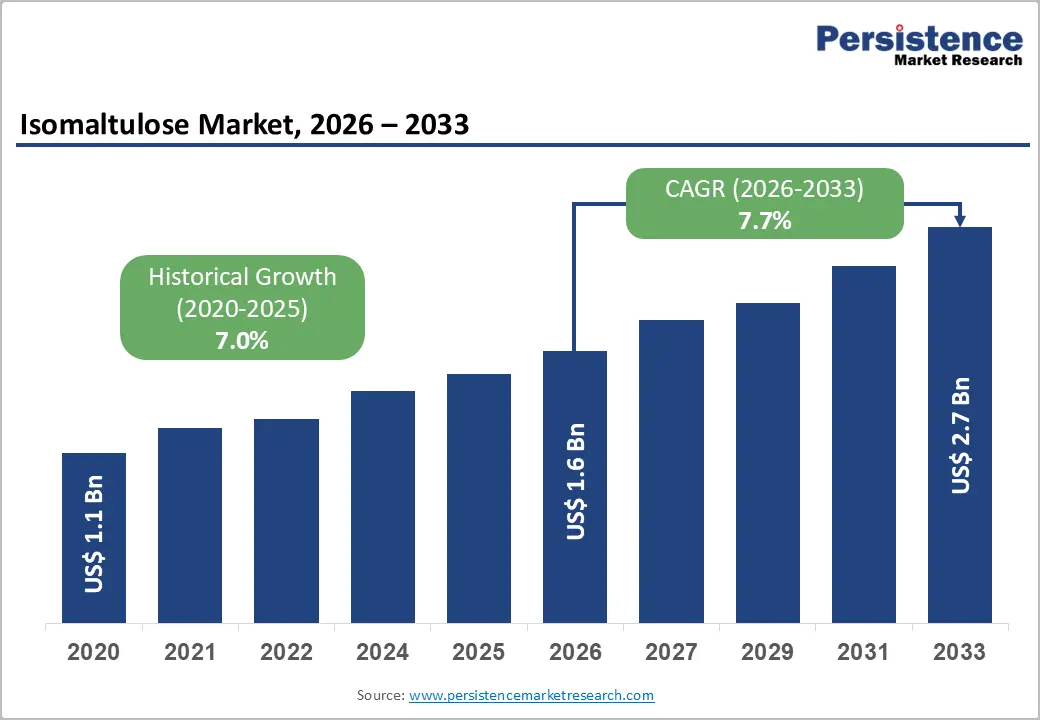
The global isomaltulose market size is likely to be valued at US$1.6 billion in 2026 and is expected to reach US$2.7 billion by 2033, growing at a CAGR of 7.7% during the forecast period from 2026 to 2033, driven by rising concerns over metabolic health and diabetes management, with the World Health Organization reporting that over 830 million people were living with diabetes globally in 2025.
Isomaltulose’s low glycemic index and slow-release carbohydrate profile make it increasingly attractive for manufacturers developing clean-label and functional food formulations. Regulatory acceptance across major regions, particularly in Europe and North America, has strengthened confidence in its large-scale commercial use. Demand is accelerating across confectionery, bakery, dairy, and beverage applications as food and beverage companies reformulate products to reduce added sugars without compromising taste or texture.
Key Industry Highlights:
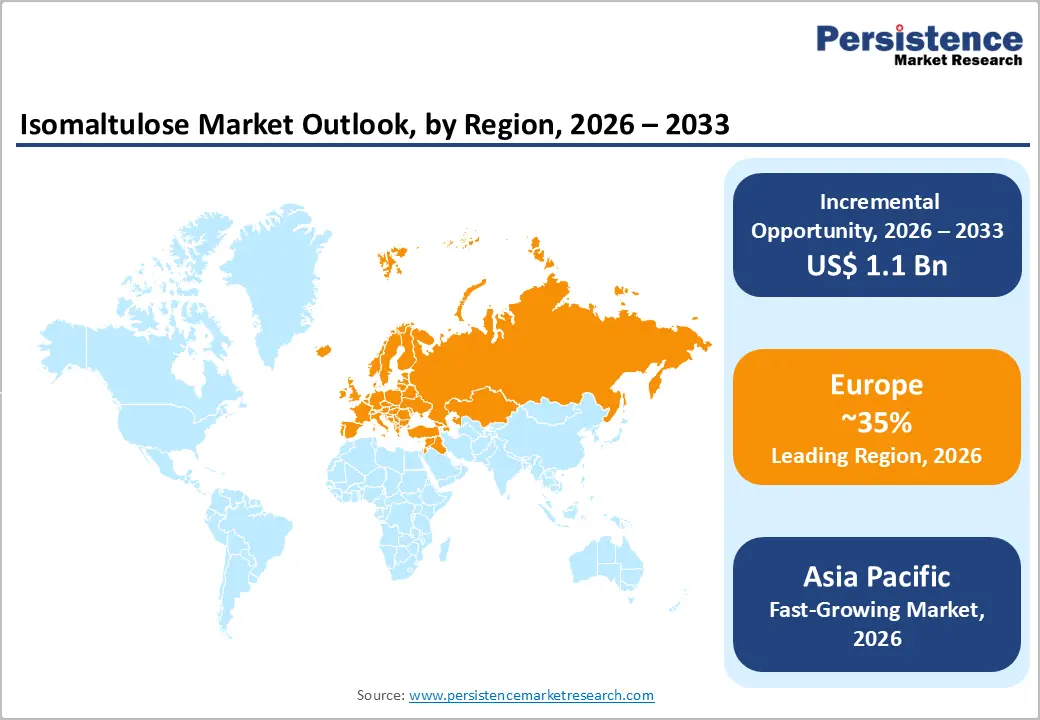
- Leading Region: Europe is anticipated to be the leading region, accounting for a market share of 35% in 2026, driven by strong demand for low-glycemic functional ingredients and favorable regulatory frameworks.
- Fastest-growing Region: Asia Pacific is likely to be the fastest-growing region, supported by expanding demand for functional foods, growing health awareness, and increasing adoption of low-glycemic sweeteners.
- Leading Grade Type: Food grade is projected to represent the leading grade type in 2026, accounting for 92% of the revenue share, due to its widespread use in functional foods, beverages, confectionery, and bakery products as a low-glycemic carbohydrate ingredient.
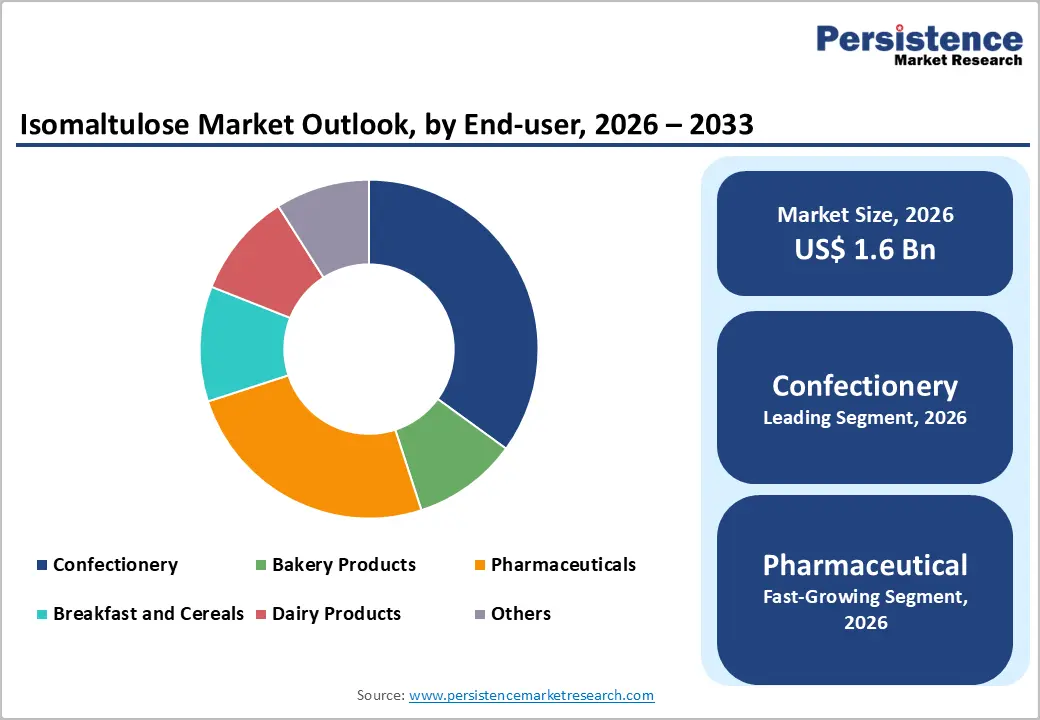
- Leading End-user: The confectionery segment is anticipated to be the leading application, accounting for over 55% of the revenue share in 2026, supported by growing demand for sugar-reduced products, sustained-energy formulations, and healthier sweetening alternatives.
- Key Opportunity: The isomaltulose market presents a strong opportunity to expand its use across functional foods, sports nutrition, and clinical nutrition as a natural low-glycemic sugar alternative driven by sugar reduction and metabolic health trends.
DRO Analysis
Driver - Growing Consumer Focus on Functional Foods and Oral Health
Consumers increasingly seek ingredients that provide health benefits beyond basic nutrition, creating strong demand for functional foods and beverages. Isomaltulose offers a low-glycemic carbohydrate source that delivers sustained energy release, making it attractive for sports nutrition, diabetic-friendly products, meal replacements, and wellness beverages.
As concerns regarding obesity, diabetes, and blood sugar management continue to rise, manufacturers are incorporating isomaltulose into new formulations. Its ability to support balanced energy metabolism aligns with consumer preferences for healthier alternatives to conventional sugars. Oral health awareness is accelerating adoption of isomaltulose across multiple food categories.
Unlike conventional sugars, isomaltulose is recognized as a tooth-friendly carbohydrate and is increasingly used in confectionery, chewing gums, dairy products, and nutritional snacks. Consumers are paying closer attention to ingredient labels and seeking products that support dental wellness while maintaining taste and functionality. Food manufacturers are responding by developing reduced-sugar and health-positioned products featuring isomaltulose as a key ingredient.
Restraint - Market Fragmentation and Competition from Alternatives
Manufacturers must compete against numerous alternatives, including stevia, erythritol, xylitol, allulose, monk fruit sweeteners, and other low-glycemic ingredients. Many of these substitutes benefit from stronger consumer awareness, broader product availability, and established distribution networks. As food and beverage companies evaluate ingredient costs and performance characteristics, isomaltulose is not always selected despite its functional advantages.
Market fragmentation restricts growth by creating a highly competitive landscape with varying regional suppliers and product offerings. Differences in production capabilities, regulatory approvals, and marketing strategies often result in inconsistent adoption rates across countries. Some manufacturers remain hesitant to reformulate existing products due to formulation costs, supply chain considerations, and consumer acceptance concerns. Alternative ingredients frequently receive greater promotional support and investment, influencing purchasing decisions among food producers.
Opportunity - Technological Convergence in Pharma and Nutraceuticals
Growing interest in personalized nutrition, metabolic health management, and preventive healthcare is encouraging the development of advanced formulations incorporating functional carbohydrates. Isomaltulose is increasingly evaluated for use in medical nutrition products, dietary supplements, and specialized health formulations due to its sustained energy release characteristics.
Research focusing on glycemic control, endurance performance, and nutritional support is expanding the ingredient’s potential applications. As healthcare systems place greater emphasis on preventive interventions, manufacturers have opportunities to develop innovative products targeting specific consumer health requirements. Advancements in ingredient processing technologies, formulation science, and clinical nutrition research are creating new pathways for commercial expansion.
Pharmaceutical and nutraceutical companies are increasingly collaborating to develop evidence-based products that combine functional ingredients with scientifically supported health benefits. Isomaltulose can be integrated into next-generation supplements, meal replacement products, and therapeutic nutrition solutions designed for active lifestyles and metabolic wellness. Digital health trends and growing demand for personalized dietary solutions support innovation opportunities.
Category-wise Analysis
Grade Type Insights
Food-grade isomaltulose is expected to account for 92% of revenue in 2026, due to its extensive utilization across mainstream food and beverage applications. The segment benefits from strong demand for low-glycemic sweetening ingredients that provide sustained energy release while maintaining desirable taste and functionality. The ingredient is particularly valued in functional food development where manufacturers seek to differentiate products through health-oriented positioning. A notable example includes Beneo, which markets Palatinose™ isomaltulose for use in sports nutrition, beverages, and dairy products.
Pharma grade isomaltulose is likely to represent the fastest-growing segment, supported by expanding applications in clinical nutrition, medical foods, and pharmaceutical formulations. Healthcare providers and product developers are increasingly recognizing the benefits of controlled carbohydrate release in specialized nutritional products designed for metabolic health support. For example, pharmaceutical-grade isomaltulose is increasingly used in clinical nutrition supplements to provide sustained energy release and support glycemic management.
End-user Insights
The confectionery segment is projected to lead the market, capturing around 55% of the revenue share in 2026, supported by the ingredient’s ability to provide sweetness, texture, and functional performance while enabling sugar-reduction strategies. Manufacturers are increasingly reformulating traditional confectionery and baked goods to meet consumer demand for healthier alternatives without compromising sensory characteristics. For instance, the incorporation of isomaltulose into reduced-sugar confectionery products manufactured by brands utilizing ingredients supplied by Mitsui Sugar Co. Ltd. and other leading suppliers.
Pharmaceuticals are likely to be the fastest-growing end-user due to the increasing adoption of isomaltulose in health-focused formulations, clinical nutrition products, and metabolic care applications. The segment is benefiting from rising demand for medical nutrition products, therapeutic dietary solutions, and specialized supplements developed for consumers seeking improved metabolic wellness. For example, isomaltulose is widely incorporated into clinical nutrition beverages and medical foods to provide sustained energy release and improved carbohydrate management.
Regional Insights
North America Isomaltulose Market Trends
North America is likely to be a significant market, supported by growing demand for low-glycemic sweeteners, sports nutrition products, and functional beverages. Consumers increasingly prefer ingredients that support sustained energy release and blood sugar management, encouraging food manufacturers to reformulate products with healthier carbohydrate sources. A notable example includes Cargill Inc., which continues expanding its portfolio of specialty ingredients supporting sugar reduction and healthier food formulations.
U.S. Isomaltulose Market Trends
The U.S. is expected to dominate the regional market, accounting for approximately 80% of the market share in 2026. Rising rates of obesity and diabetes continue driving demand for low-glycemic food ingredients. Sports nutrition brands are increasingly incorporating sustained-energy carbohydrates into beverages and performance products. Consumer preference for clean-label and functional foods remains strong. Major food manufacturers are investing in sugar-reduction initiatives and healthier formulations.
Canada Isomaltulose Market Trends
Canada is likely to be a significant market for isomaltulose, holding approximately 20% of the market share in 2026. Consumers are increasingly focused on healthier lifestyles and balanced energy nutrition. Demand for low-sugar and reduced-glycemic products continues to rise across food categories. Manufacturers are introducing innovative bakery, beverage, and dairy products featuring healthier ingredient profiles. The sports nutrition sector is expanding steadily, creating new application opportunities. Functional ingredient adoption is increasing among domestic food producers.
Europe Isomaltulose Market Trends
Europe is anticipated to be the leading region, accounting for a market share of 35% in 2026, due to strong consumer awareness of healthy nutrition, established regulatory support, and extensive use of functional ingredients in food products. Demand is driven by sugar-reduction initiatives, growing interest in metabolic health, and increasing consumption of functional foods and beverages. A notable example includes Beneo, which continues expanding applications of Palatinose™ isomaltulose across multiple functional food and beverage categories throughout Europe.
U.K. Isomaltulose Market Trends
The U.K. is likely to be a significant market for isomaltulose, with estimates for 15% of Europe market share in 2026, supported by consumers increasingly seeking products for balanced nutrition and reduced sugar intake. Food manufacturers are reformulating products to align with changing dietary preferences. Functional snack products and nutritional beverages are gaining popularity. Interest in sports nutrition and wellness products remains strong among consumers. Demand for low-glycemic carbohydrate ingredients is increasing across multiple applications.
Germany Isomaltulose Market Trends
Germany is anticipated to dominate the regional market, accounting for around 37% of the share in 2026, due to strong consumer preference for healthier food ingredients and functional nutrition products. The country has an established market for sports nutrition and dietary supplements. Food manufacturers actively pursue sugar-reduction strategies across various categories. Research institutions and ingredient suppliers continue exploring new applications for low-glycemic carbohydrates.
Asia Pacific Isomaltulose Market Trends
The Asia Pacific region is likely to be the fastest-growing region, driven by rising disposable incomes, expanding health awareness, and increasing demand for functional foods. Growing concerns regarding diabetes and lifestyle-related health conditions are encouraging consumers to seek healthier carbohydrate alternatives. For example, Mitsui Sugar Co. Ltd has strengthened the availability of specialty carbohydrate ingredients for food and nutrition applications.
China Isomaltulose Market Trends
China is projected to dominate the regional market, holding around a 30% share in 2026. Rising health awareness is driving demand for functional and low-glycemic food products. Consumers are increasingly seeking healthier alternatives to traditional sugars. The sports nutrition and functional beverage sectors continue expanding rapidly. Food manufacturers are investing in premium nutrition-focused product development. Demand for metabolic health solutions is increasing among urban consumers.
India Isomaltulose Market Trends
India is expected to emerge as a significant market, accounting for approximately a 22% share in 2026, due to increasing health consciousness and rising demand for functional foods. The growing prevalence of diabetes is encouraging interest in low-glycemic carbohydrate ingredients. Consumers are becoming more aware of nutrition and preventive healthcare. Functional beverages and sports nutrition products are gaining popularity among younger populations. Food manufacturers are expanding healthier product portfolios to address evolving preferences.
Competitive Landscape
The global isomaltulose market exhibits a moderately fragmented structure, driven by the presence of specialized ingredient manufacturers, sugar-processing companies, and functional nutrition suppliers focused on low-glycemic carbohydrate solutions. Market competition is influenced by increasing demand for healthier sugar alternatives, expanding applications in functional foods and beverages, and growing adoption in sports nutrition and clinical nutrition products.
With key leaders including Beneo, Mitsui Sugar Co. Ltd., Cargill Inc, Merck KGaA, Fooding Group Limited, Anhui Elite Industrial Co., Ltd., Frusano GmbH, and Qingdao Oriental Tongxiang International Trading Co., Ltd., the competitive environment remains dynamic. These players compete through product innovation, strategic partnerships, distribution network expansion, application-specific formulation development, and investments in functional nutrition research.
Key Industry Developments:
- In February 2026, Mitsui Sugar focused on improving production efficiency and expanding isomaltulose applications in confectionery and nutraceutical formulations, supporting rising demand in Asia Pacific functional food markets.
- In November 2025, Cargill expanded its clean-label and low-glycemic ingredient portfolio, supporting demand for healthier sugar alternatives in functional beverages, dairy alternatives, and sports nutrition products, aligning with global sugar reduction trends.
Companies Covered in Isomaltulose Market
- Now Foods
- Frusano GmbH
- Qingdao Oriental Tongxiang International Trading Co., Ltd.
- Anhui Elite Industrial Co., Ltd.
- Merck KGaA
- Gerfro
- Cargill Inc.
- ErgoNutrition
- Fooding Group Limited
- Mitsui Sugar Co. Ltd.
Frequently Asked Questions
The global isomaltulose market is projected to reach US$1.6 billion in 2026.
The isomaltulose market is driven by rising demand for low-glycemic, sustained-energy functional ingredients in sports nutrition, diabetic-friendly foods, and clean-label health-focused products.
The isomaltulose market is expected to grow at a CAGR of 7.7% from 2026 to 2033.
Key opportunities lie in expanding applications across functional beverages, clinical nutrition, and nutraceuticals, supported by growing health awareness and sugar-reduction trends worldwide.
Now Foods, Frusano GmbH, Qingdao Oriental Tongxiang International Trading Co., Ltd, and Anhui Elite Industrial Co., Ltd are the leading players.


